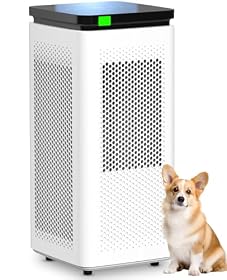
A properly sized air purifier with a HEPA filter can reduce fine particles from wildfire smoke indoors. Carbon may help with some smoke odors and gases, but room size, filter condition, and keeping outdoor smoke out also matter.
Yes—air purifiers can reduce wildfire smoke indoors
A portable air purifier with a properly fitted, high-efficiency particle filter can reduce fine particles from wildfire smoke, including PM2.5, in the room where it runs. It cannot remove all smoke-related gases, protect you outdoors, or make a room safe if smoke levels are severe. Follow local health and emergency guidance, especially if authorities advise staying indoors or evacuating.
Product prices and availability are accurate as of the date/time indicated and are subject to change. Any price and availability information displayed on Amazon.com at the time of purchase will apply to the purchase of this product.
Which filters help with wildfire smoke?
HEPA or high-efficiency particle filtration: The main feature to look for. It captures airborne particles, including much of the fine particulate matter in smoke. Check that the purifier is designed to use the filter and that air cannot bypass it around the edges.
Activated carbon: Can reduce some odors and gases, but performance varies with the type and amount of carbon. A thin carbon-coated sheet may do less for odors than a filter containing more adsorbent material. Particle CADR does not tell you how well a unit removes gases.
Ozone-generating features: Avoid devices that intentionally produce ozone. Ozone can irritate the lungs. If a purifier has ionizing, plasma, or similar features, check the manufacturer’s information and applicable safety guidance; choose a filtration-only setting if available.
Product prices and availability are accurate as of the date/time indicated and are subject to change. Any price and availability information displayed on Amazon.com at the time of purchase will apply to the purchase of this product.
Choose a purifier for the room
Check the purifier’s recommended room size and, when available, its smoke CADR (clean air delivery rate). CADR indicates how quickly a unit delivers filtered air for particles; a higher smoke CADR is generally more suitable for a larger room. Do not rely on a large maximum room-area claim if it assumes fewer air changes than you want. When uncertain, choose a unit sized conservatively for the room and run it at a speed you can tolerate.
Keep doors and windows closed when outdoor smoke is heavy, while following guidance about ventilation and indoor heat. Place the purifier where its intake and outlet are not blocked, and run it continuously during smoky conditions if the manufacturer allows. A portable unit works best in the room where people spend the most time; one purifier may not clean an entire home evenly.
Get the most from the filter
Check the filter on the schedule in the manual, and replace it when the manufacturer recommends or when it is damaged, heavily loaded, or causing airflow to drop. Smoke can load filters faster than ordinary household use. Do not wash a filter unless the instructions specifically say it is washable. Keep the pre-filter clean as directed, since a clogged pre-filter can restrict airflow.
A purifier is one part of reducing exposure. Avoid activities that add particles indoors, such as smoking, burning candles, or frying without ventilation. If you have central HVAC, use a compatible high-efficiency filter only if the system can handle it, and follow the HVAC manufacturer’s guidance. People with breathing or heart conditions should consult a healthcare professional about their individual precautions.
FAQ
Will a HEPA air purifier remove the smell of wildfire smoke?
A HEPA filter captures particles but does not reliably remove smoke odors or gases. An activated-carbon filter may reduce some odors, depending on its design and the amount of carbon.
Should I run an air purifier all day during wildfire smoke?
If the manufacturer permits continuous operation, running it continuously in the occupied room can help maintain cleaner air. Keep windows closed when outdoor smoke is heavy and follow local guidance.
Can an air purifier make indoor air completely safe during a wildfire?
No. A purifier can reduce particles in a room, but it cannot guarantee safe air or protect you outside. Follow public-health and emergency instructions, including evacuation orders.
How often should I replace an air purifier filter after wildfire smoke?
Follow the purifier’s manual. Smoke may load a filter faster than normal use, so check it for heavy buildup, damage, or reduced airflow and replace it as directed.