Houseplants can make a room more inviting, but they are not a practical substitute for an air purifier. Some plant studies were conducted in small, enclosed chambers; ordinary homes have much more air volume and ongoing air exchange, so a few pots are not expected to remove indoor pollutants at a useful rate. If you want cleaner air, address pollution sources and ventilation first, then choose a purifier suited to the room and the type of pollutant you want to reduce.
Comparisons · Wed Sep 16
Houseplants are not an air purifier alternative
Plants may offer visual and personal benefits, but the air-cleaning results seen in small experiments do not translate to meaningful pollution removal in a typical home. For airborne particles, use source control, ventilation, and a properly sized air purifier.
Why houseplants don’t clean indoor air effectively
Plants and the microbes in their potting soil can interact with certain pollutants under controlled conditions. But those experiments do not show that a typical number of houseplants can noticeably clean the air throughout a lived-in home. Room size, air movement, pollutant sources, and the number of plants all matter—and adding enough plants to make a meaningful difference is not a realistic air-cleaning strategy.
Plants can still be worth keeping for their appearance and enjoyment. Just don’t rely on them to control smoke, pollen, dust, or other airborne particles. Overwatering can also encourage mold in potting soil, which may be a concern for people sensitive to mold.
Room air cleaning for airborne particles
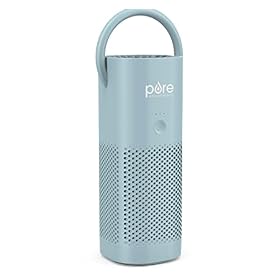 Pure Enrichment® PureZone™ Mini Portable Air Purifier - Cordless True HEPA Filter Cleans Air &…Pure Enrichment
$39.99 as of
View on Amazon Air Purifiers for Bedroom, FULMINARE H13 True HEPA FilterFULMINARE
$24.99 as of
View on Amazon Levoit Air Purifiers for Home Bedroom Dorm Room, Small Quiet Air PurifiersLevoit
$48.49 as of
View on Amazon
Product prices and availability are accurate as of the date/time indicated and are subject to change. Any price and availability information displayed on Amazon.com at the time of purchase will apply to the purchase of this product.
Choose the response that matches the pollutant
Start by reducing pollution at its source when possible. Avoid smoking indoors, use kitchen and bathroom exhaust fans that vent outdoors, and follow product directions when using cleaners, paints, or other chemicals. Ventilation can help dilute some indoor pollutants when outdoor air is suitable, but it is not a substitute for filtration in every situation.
For airborne particles such as dust, pollen, and smoke particles, a portable air purifier with a particle filter can help. Check that its clean air delivery rate (CADR) is appropriate for the room; a unit that is too small may not clean the air quickly enough. Run it as directed, and keep doors and windows in mind because air moving in from other spaces can affect performance.
A HEPA filter is designed to capture particles, not gases. If odors or certain gaseous pollutants are a concern, look for a purifier with an activated-carbon filter. Carbon performance depends on the filter’s amount and design, and no general-purpose purifier removes every gas or chemical. For specific chemical exposures, reducing or eliminating the source is usually the more dependable step.
Odor and some gaseous pollutant reduction
 MOOKA Air Purifiers for Home Room up to 1076ft², True HEPA Filter, B-D02LMOOKA
$49.99 as of
View on Amazon WINIX 5510 Air Purifier (New Generation of 5500-2 with App Support) for Home Large Room…Winix
$179.99 as of
View on Amazon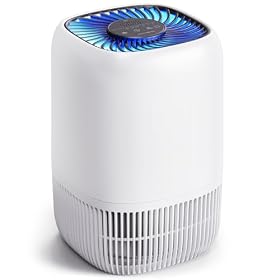 VOOPNU Air Purifiers for Home, High Efficiency Filter Up to 1076 Ft², WhiteVOOPNU
$26.98 as of
View on Amazon
Product prices and availability are accurate as of the date/time indicated and are subject to change. Any price and availability information displayed on Amazon.com at the time of purchase will apply to the purchase of this product.
What to do instead of relying on plants
- Identify the problem. Dust, pollen, smoke, musty odors, and chemical smells have different causes and may need different responses.
- Reduce the source. Keep smoke and strong chemical sources out of living areas where possible, and fix moisture problems rather than masking musty smells.
- Use ventilation thoughtfully. Exhaust fans can remove moisture and odors when they vent outdoors. Bring in outdoor air when conditions outside are appropriate.
- Add filtration for particles. Choose a purifier based on the room where it will run, and replace or clean filters according to the manufacturer’s instructions.
- Keep plants if you enjoy them. Avoid overwatering, remove dead leaves, and address any moldy soil rather than treating plants as filtration equipment.
FAQ
How many houseplants would it take to clean the air in a room?
There is no practical number that makes houseplants a reliable replacement for an air purifier. Small-chamber research does not translate directly to typical homes, where air volume and ongoing pollutant sources are much larger.
Do houseplants remove dust or pollen from indoor air?
They should not be relied on to remove dust or pollen at a meaningful rate. For airborne particles, source reduction and a properly sized particle-filtering air purifier are more practical options.
Can houseplants make indoor air worse?
Overwatered plants can encourage mold in potting soil, and decaying leaves can add debris. Keep soil from staying excessively wet and remove plant material that is dead or moldy.