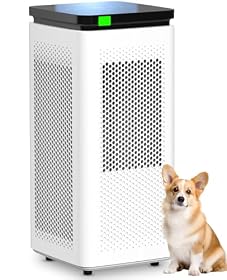
An air purifier draws room air through one or more filters, then sends cleaner air back into the room. The filter type and airflow determine what it can remove and how quickly it works.
How an air purifier works
An air purifier uses a fan to pull room air through filters and return cleaner air to the room. A particle filter—often a HEPA filter—captures airborne particles, while an optional activated-carbon layer can reduce some odors and gases. The purifier recirculates indoor air; it does not replace ventilation or remove every type of air contaminant.
How airflow and filtration work
Most portable air purifiers follow the same basic path: air enters through an intake, passes through one or more filters, and exits through a clean-air outlet. The fan keeps that air moving so the unit can repeatedly treat the room’s air.
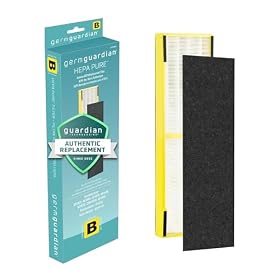
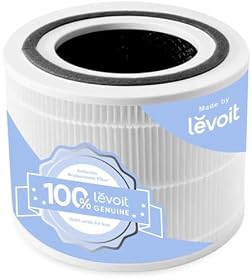
A pre-filter may catch larger material such as hair and lint before it reaches the main filter. A HEPA filter captures small airborne particles, including many particles from dust, pollen, and smoke. It works through several particle-capture mechanisms—not simply by acting like a screen with holes smaller than every particle.
Some units also include activated carbon. Carbon can adsorb certain gases and odors, but effectiveness depends on the amount and type of carbon and the substance involved. A thin carbon-coated sheet may have less capacity than a substantial carbon bed.
Product prices and availability are accurate as of the date/time indicated and are subject to change. Any price and availability information displayed on Amazon.com at the time of purchase will apply to the purchase of this product.
What CADR and room size tell you
CADR, or clean air delivery rate, indicates how quickly a purifier supplies filtered air for particular particle categories, commonly smoke, dust, and pollen. A higher CADR generally means faster particle removal in a given space. Compare CADR with the room size you intend to treat, using the manufacturer’s guidance and the room’s ceiling height.
A purifier may still reduce particles in a room larger than its recommended coverage, but it will generally clean the air more slowly. Running a suitable unit continuously at a tolerable fan speed often provides steadier cleaning than using a small unit at maximum speed only occasionally.
Product prices and availability are accurate as of the date/time indicated and are subject to change. Any price and availability information displayed on Amazon.com at the time of purchase will apply to the purchase of this product.
What an air purifier does—and does not—remove
A correctly sized, maintained purifier can reduce airborne particles that pass through its filters. Results depend on airflow, filter condition, room layout, and how much pollution is being produced.
It is not a substitute for source control: for example, reducing smoke at its source or addressing the cause of persistent dampness. Most portable purifiers also do not remove carbon dioxide or provide outdoor air. Their standard particle filters do not reliably remove all gases or volatile organic compounds; that requires appropriate sorbent media and enough of it. Avoid devices that intentionally produce ozone, which can irritate the lungs.
Keeping the purifier effective
Follow the manual for filter installation, cleaning, and replacement intervals. A clogged filter can restrict airflow, while a poorly seated filter can let air bypass the filter. Keep the intake and outlet clear, and place the unit where air can circulate around it as directed by the manufacturer.
If performance drops, check that the unit is assembled correctly and that the filter is not due for replacement. Filter life varies with use and air quality, so a timer is only a guide. Use replacement filters specified as compatible with the exact purifier model; a filter that fits physically may not seal or perform correctly.
FAQ
Does an air purifier bring fresh air into a room?
Usually not. Most portable air purifiers recirculate indoor air through filters. They do not replace ventilation with outdoor air.
Does a HEPA filter remove odors?
A HEPA filter captures particles, not most odor-causing gases. Some purifiers add activated carbon to reduce certain odors, with effectiveness depending on the amount and type of carbon.
How long does an air purifier take to clean a room?
There is no single time. It depends on the purifier’s clean-air delivery rate, room size and layout, fan setting, filter condition, and ongoing pollution sources.