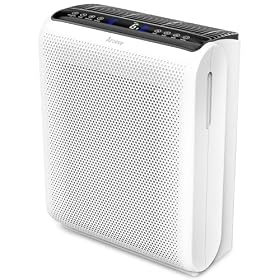
A basement apartment often has more dust, musty odors, limited ventilation, and higher humidity than an above-ground room. Choose an air purifier with a true HEPA filter and a published CADR suitable for the space; add substantial activated carbon if odors are a major concern. An air purifier can capture airborne particles, but it cannot fix leaks, remove standing moisture, or eliminate radon.
What to look for
True HEPA filtration
A true HEPA filter is the main feature for airborne particles such as dust, pollen, pet dander, and many mold spores. Look for a purifier that clearly identifies its HEPA or high-efficiency particle filter rather than relying on vague claims such as “removes allergens.”
HEPA filtration does not remove mold growing on walls, flooring, furniture, or insulation. If you see visible mold or have recurring water intrusion, contact the landlord or a qualified remediation professional instead of treating the purifier as the solution.
CADR matched to the room
CADR, or Clean Air Delivery Rate, indicates how quickly a purifier supplies filtered air. A commonly used sizing guideline is a smoke CADR of at least two-thirds of the room’s square footage. For example, a 300-square-foot room would call for roughly 200 CFM or more under that guideline.
Use the actual room where the purifier will operate, not necessarily the entire apartment. For an open basement layout, sizing becomes less predictable because walls, doorways, and furniture restrict airflow. A larger unit running at a lower speed may be quieter than a small unit running continuously at maximum speed. Two smaller units can also make sense when bedrooms are separated from the main living area.
Activated carbon for musty odors
HEPA filters do not remove gases and odors effectively. For a musty basement smell, cooking odors, smoke, or some household VOCs, choose a unit with an activated-carbon stage.
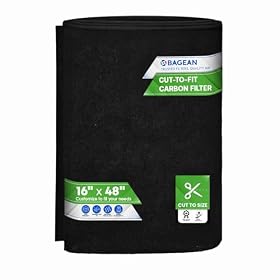
Carbon performance depends heavily on the amount and design of carbon. A thin carbon-coated sheet may help with light odors but is unlikely to perform like a filter containing a substantial bed of carbon. Manufacturers do not always disclose carbon weight, so be cautious about treating the word “carbon” alone as a guarantee of strong odor removal.
Quiet operation and usable controls
A purifier in a bedroom or small apartment may need to run for many hours each day. Check the manufacturer’s noise information, especially at the speed you expect to use. Sleep mode can be useful, but it often reduces airflow and therefore cleans the room more slowly.
Useful controls may include a timer, filter-life indicator, adjustable fan speeds, and an auto mode. A particle sensor can adjust airflow for dust, but it may not detect musty odors or every type of gas.
Replacement-filter availability
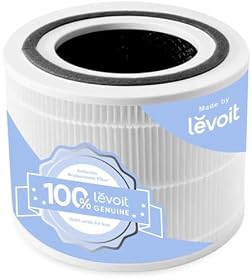
Before buying, confirm that replacement HEPA and carbon filters are available for the specific model. Check the replacement schedule in the manual and the installation direction. A clogged filter reduces airflow and can make the purifier much less effective.