An HVAC filter upgrade can reduce airborne particles throughout a home, while a portable air purifier can deliver stronger filtration in one room. Here is how to decide which approach fits your home, air-quality problem, and HVAC system.
An HVAC filter upgrade and a portable air purifier solve different parts of the same air-quality problem. A higher-efficiency HVAC filter can treat air whenever the central system runs, while a portable purifier is designed to clean air continuously in a specific room. For whole-home coverage, start with the HVAC system; for stronger, targeted filtration in a bedroom, office, or nursery, a properly sized portable purifier is usually the more direct solution.
The basic difference
An HVAC filter sits in the return-air path of a furnace, air handler, or central air-conditioning system. It filters air that passes through the system, but only when the blower is operating. Coverage can extend through the home's ductwork, although actual results depend on system runtime, duct leakage, room layout, and whether air from each space reaches the return.
A portable air purifier circulates air within one room or open area. It normally uses a fan, a particle filter such as HEPA, and sometimes an activated-carbon layer. It can run independently of heating and cooling and may clean the air more frequently in the space where it is placed.
Neither option removes every type of pollutant. Particle filters are useful for dust, pollen, many mold spores, and some airborne particles. They do not replace source control for smoke, moisture, combustion problems, or chemical emissions.
When an HVAC filter upgrade makes more sense
Choose an HVAC filter upgrade when you want a relatively simple way to improve filtration across several connected rooms and your system can safely handle the filter's airflow resistance.
An upgraded filter may be a good fit when:
The central HVAC system runs regularly.
You want filtration in multiple rooms rather than one sleeping or work area.
Your existing filter is inexpensive, damaged, poorly fitted, or changed inconsistently.
You have adequate space for the selected filter thickness and the system manufacturer permits its efficiency rating.
You prefer a solution that does not take up floor or tabletop space.
The key limitation is runtime. If the blower is off for long periods, the HVAC filter is not actively cleaning room air. Running the fan continuously or using a circulation schedule may increase filtration, but it can also increase energy use and may affect comfort or humidity. Follow the HVAC manufacturer's guidance.
Understand MERV ratings
MERV, or Minimum Efficiency Reporting Value, describes an HVAC filter's ability to capture particles under a standardized test method. A higher MERV rating generally indicates finer particle filtration, but it does not automatically mean the filter is appropriate for every system.
A dense filter can increase pressure drop across the filter. If the blower, ductwork, or filter cabinet is not designed for that restriction, the system may move less air, operate less efficiently, produce more noise, or experience heating and cooling problems. Before moving to a substantially higher MERV rating, check the equipment documentation or ask a qualified HVAC professional.
Do not rely on a filter's advertised rating alone. A filter that does not fit tightly can allow air to bypass the filter, reducing the benefit of the upgrade.
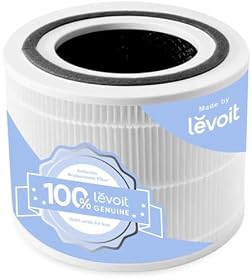
Room air purifier for targeted particle filtration
Product prices and availability are accurate as of the date/time indicated and are subject to change. Any price and availability information displayed on Amazon.com at the time of purchase will apply to the purchase of this product.
When a portable air purifier makes more sense
A portable purifier is usually the better choice when you need concentrated cleaning in a specific room, want filtration independent of the HVAC schedule, or cannot safely increase HVAC filter efficiency.
It can be especially useful for:
A bedroom where someone spends many hours sleeping.
A home office, nursery, or other frequently occupied room.
Seasonal pollen or outdoor smoke entering one part of the home.
A rental property where HVAC modifications are limited.
Homes without central HVAC filtration.
Situations where the central system's fan does not run often enough for the desired air cleaning.
Size the purifier by airflow, not just room labels
Look for a purifier's clean air delivery rate, commonly called CADR, and compare it with the room's floor area and ceiling height. A larger room, high ceiling, open doorway, or unusually polluted environment may require more airflow than a basic room-size label suggests.
A purifier rated for a small closed bedroom may not clean an open living area effectively. Conversely, a high-output unit in a small room can often be operated at a lower, quieter speed, provided its controls and manufacturer guidance allow that use.
Place the unit where air can enter and leave freely. Avoid pushing it against a wall, covering the intake or outlet, or placing it behind furniture. Keep doors and windows closed when trying to reduce outdoor smoke or pollen infiltration, unless ventilation is needed for a separate safety reason.
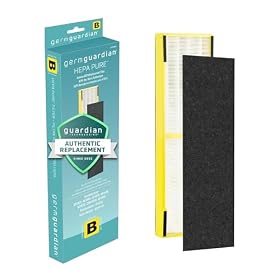
Product prices and availability are accurate as of the date/time indicated and are subject to change. Any price and availability information displayed on Amazon.com at the time of purchase will apply to the purchase of this product.
HEPA filtration versus HVAC filter upgrades
A true HEPA filter is designed for high-efficiency particle filtration, but the purifier's overall performance still depends on fan airflow, filter area, sealing, and operating speed. A HEPA filter in a low-airflow unit may clean less air per hour than a less restrictive filter in a high-airflow unit.
HVAC filters are selected as part of an air-moving system. Their efficiency must be balanced against the blower's ability to move air. Portable purifiers are designed around their particular filter and fan combination, so the practical comparison is not simply “HEPA versus MERV.” It is:
How much filtered air reaches the occupied space?
How consistently does the system operate?
How well is unfiltered air prevented from bypassing the filter?
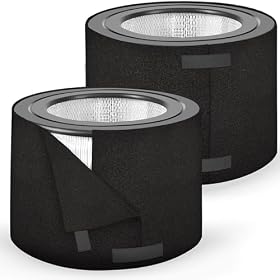
Product prices and availability are accurate as of the date/time indicated and are subject to change. Any price and availability information displayed on Amazon.com at the time of purchase will apply to the purchase of this product.
Carbon filters and odors
Particle filtration and odor control are different functions. A HEPA or other particle filter can remove airborne particles but is not designed to eliminate every odor or gaseous pollutant.
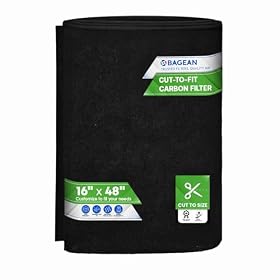
Activated carbon can adsorb some gases and odors, but performance depends on the amount and quality of carbon, the pollutant, airflow, and how quickly the carbon becomes saturated. Thin carbon-coated filters may provide limited odor reduction compared with a purifier containing a larger carbon bed. Be cautious of products that promise removal of every chemical or odor without explaining the filter design.
Neither an upgraded HVAC filter nor a portable purifier should be used as the primary solution for a gas leak, carbon monoxide, combustion problem, persistent dampness, or mold growth. Correct the source and use appropriate detectors or professional help where needed.
Product prices and availability are accurate as of the date/time indicated and are subject to change. Any price and availability information displayed on Amazon.com at the time of purchase will apply to the purchase of this product.
Operating cost and maintenance
An HVAC filter upgrade usually means buying replacement filters more frequently or paying more for each filter. Check the filter at the interval recommended by the equipment or filter manufacturer, and inspect it sooner if you have pets, construction dust, wildfire smoke, or unusually high particle levels.
A portable purifier adds electricity use, replacement filter costs, and space requirements. Its filter life varies with use and pollution levels. A visibly dirty pre-filter can restrict airflow, so clean or replace it only as the manufacturer directs. Do not wash a filter unless it is specifically labeled washable.
If a purifier has an air-quality sensor, remember that the sensor may measure only conditions near the unit. Automatic mode can be convenient, but it does not guarantee equal cleaning throughout an entire home.
Can you use both?
Yes. Using both can be sensible when the HVAC system provides broad background filtration and a portable purifier supplies higher cleaning capacity in a priority room. This arrangement is often more practical than forcing a very restrictive filter into an HVAC system that was not designed for it.
A reasonable setup might include:
A correctly sized, well-sealed HVAC filter approved for the system.
A portable purifier sized for the bedroom or room where filtration matters most.
Regular source control, such as using kitchen exhaust during cooking and repairing moisture problems.
Routine filter inspection and replacement.
The two systems do not need to use the same filter technology. Choose each according to its airflow limits, coverage area, and pollutant target.
Which option should you choose?
Choose an HVAC filter upgrade if whole-home distribution, low clutter, and simple maintenance are your priorities—and the HVAC manufacturer or a qualified professional confirms that the filter rating is suitable.
Choose a portable air purifier if you need stronger filtration in one room, independent operation, more control over runtime, or a solution that does not alter the HVAC system.
Choose both if you want broad background filtration plus concentrated cleaning where people spend the most time.
Do not make the decision from the MERV or HEPA label alone. Check airflow, room size, system compatibility, filter sealing, noise, replacement intervals, and the specific pollutant you are trying to reduce. For persistent indoor-air problems, identify and control the source before relying on filtration.
FAQ
Is a portable air purifier better than a higher-MERV HVAC filter?
Neither is universally better. A higher-MERV HVAC filter can provide broad coverage when the central system runs and is compatible with the equipment. A portable purifier can provide more consistent, concentrated cleaning in one room without increasing resistance in the HVAC system.
Can a high-MERV filter damage an HVAC system?
A filter with greater airflow resistance can reduce system airflow if the equipment is not designed for it. Check the HVAC manufacturer's guidance before making a major MERV increase, and consult a qualified HVAC professional when compatibility is uncertain.
Does a HEPA air purifier remove odors?
HEPA filtration primarily targets particles, not gases and odors. Odor reduction requires activated carbon or another gas-phase filter, and effectiveness depends on the amount of media, the pollutant, and how quickly the filter becomes saturated.
Should I run my HVAC fan continuously for better air filtration?
Continuous fan operation may increase the amount of air passing through the HVAC filter, but it can also increase energy use and affect temperature or humidity. Use the equipment manufacturer's recommended settings and consider a circulation schedule if available.
Can an air purifier clean an entire house?
A portable purifier is mainly intended for a room or open area. It may have limited effect in closed-off rooms or across multiple floors. Whole-home results depend on airflow, open doors, HVAC circulation, and the purifier's clean air delivery rate.