Portable air purifiers are flexible and easy to deploy in individual rooms, while whole-house systems can treat air throughout a home through the HVAC system. The right choice depends on room size, airflow, filtration needs, and whether you want a simple plug-in solution or a professional installation.
A portable air purifier is usually the better choice for one bedroom, office, nursery, or other specific room. A whole-house unit makes more sense when you want air filtration distributed through the home’s central HVAC system and are willing to account for installation, filter compatibility, and ongoing system operation.
Neither option automatically removes every airborne problem. Portable units depend on their clean-air delivery rate and placement, while whole-house systems depend on the HVAC system running and moving air through the filter. Use the comparison below to match the system to your home and the problem you are trying to address.
Portable air purifier: best for targeted cleaning
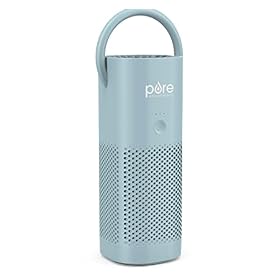
A portable purifier is a self-contained appliance with a fan, filter, and controls. It is placed in the room where you want filtration and plugged into a standard outlet.
Advantages
Fast, simple setup: No ductwork or HVAC modification is required.
Room-by-room control: You can move the unit or operate it only where needed.
Useful for renters: Portable models do not require permanent installation.
Lower initial commitment: You can start with one room rather than outfitting the entire home.
Good for sleeping areas: A properly sized unit can run in a bedroom while you sleep.
Targeted response: You can place it near a source of smoke, dust, pet dander, or seasonal allergens, while still following safe-use guidance.
Limitations
It treats the air in the room where it is located more effectively than air in distant rooms.
Several rooms may require several units, especially when doors are closed.
The fan creates noise, particularly at higher speeds.
Filters need periodic replacement, and replacement costs vary by design and size.
A small unit may circulate air without cleaning it quickly enough for a large or open room.
Whole-house air purifier: best for central HVAC coverage
A whole-house system is installed in or connected to the home’s central heating and cooling system. Depending on the design, it may use a high-efficiency HVAC filter, a dedicated air-cleaning cabinet, or another filtration method in the ducted system.
Advantages
Coverage through the duct system: Air can be filtered as the HVAC system circulates it.
Less visible equipment: There is no separate appliance occupying floor or table space in each room.
One main filter location: Filter maintenance can be simpler than maintaining several portable units.
Potentially better for larger homes: A central system can support filtration across multiple connected rooms.
Continuous integration: Filtration occurs as the HVAC system operates, rather than requiring separate room appliances.
Limitations
Installation may require professional work: The system must fit the HVAC equipment, cabinet, ductwork, and available space.
Filtration depends on HVAC operation: If the blower is not running, the system may not be actively circulating and filtering indoor air.
A restrictive filter can affect airflow: Higher-efficiency filtration may increase resistance, so the HVAC manufacturer’s requirements matter.
Less room-specific control: You generally cannot filter only one bedroom without circulating air through the central system.
Upfront cost and maintenance vary: Installation, filter size, accessibility, and HVAC compatibility all affect the total cost.
Open doors and duct design matter: Air from rooms with limited return-air circulation may not pass through the filter as effectively.
Product prices and availability are accurate as of the date/time indicated and are subject to change. Any price and availability information displayed on Amazon.com at the time of purchase will apply to the purchase of this product.
The most important specification: airflow and coverage
For a portable purifier, look for a published CADR, or clean air delivery rate, and compare it with the room’s size. A higher CADR generally means the unit can deliver cleaned air more quickly. Check whether the stated coverage is based on a standard room-height assumption and whether the rating applies to dust, smoke, or pollen.
Do not choose a portable unit solely by its advertised square-foot coverage. A unit may cover a large area at a lower air-change rate than you want. For smoke, significant allergies, or other persistent particles, a higher-capacity model can provide more useful airflow and allow you to run it at a quieter lower setting.
For whole-house systems, the relevant questions are different:
What filter size and efficiency does the HVAC system support?
Is the filter cabinet designed for the selected filter thickness?
Can the blower handle the filter’s airflow resistance?
Does the system filter only when heating or cooling operates, or can the fan run independently?
Does the duct layout adequately circulate air from all occupied rooms?
The HVAC manufacturer or a qualified technician should confirm compatibility before installing a higher-resistance filter or modifying the blower settings.
Product prices and availability are accurate as of the date/time indicated and are subject to change. Any price and availability information displayed on Amazon.com at the time of purchase will apply to the purchase of this product.
Filter types and the problems they address
Particle filtration
A true HEPA filter is designed to capture very small airborne particles, but portable units vary in whether they use a true HEPA filter, a HEPA-type filter, or another high-efficiency design. Review the manufacturer’s stated filtration claims rather than assuming that every product labeled “air purifier” offers the same performance.
Particle filtration can help reduce airborne dust, pollen, pet dander, and other particles that actually pass through the purifier. It does not remove particles that have settled on floors, furniture, bedding, or other surfaces.
Carbon filtration
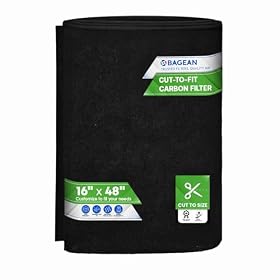
Activated carbon can help reduce some odors and gaseous pollutants. Its effectiveness depends on the amount and type of carbon, the airflow rate, and the specific pollutant. A thin carbon-coated pre-filter may provide less odor capacity than a purifier with a substantial carbon bed.
Carbon filtration is not a substitute for removing the source of smoke, chemicals, mold moisture, or other pollution. Persistent indoor odors should be investigated rather than covered up.
Pre-filters
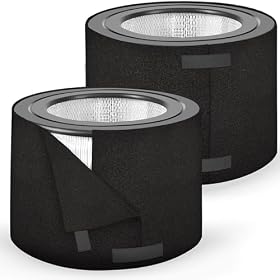
A washable or replaceable pre-filter captures larger particles before they reach the main filter. Keeping it clean can protect the primary filter and help maintain airflow. Follow the manufacturer’s cleaning instructions; a filter that is not completely dry can create problems in some systems.
Product prices and availability are accurate as of the date/time indicated and are subject to change. Any price and availability information displayed on Amazon.com at the time of purchase will apply to the purchase of this product.
Portable versus whole-house: which should you choose?
Choose a portable air purifier when:
You need filtration in one or two rooms.
You rent or do not want HVAC modifications.
You want to move filtration between rooms.
You need a unit for a bedroom, nursery, home office, or other priority space.
Your home does not have central heating and cooling.
You want to start with a smaller purchase and expand only if needed.
Choose a whole-house system when:
Your home already has a compatible central HVAC system.
You want filtration distributed through multiple connected rooms.
You prefer not to keep portable appliances in living spaces.
You can budget for professional evaluation or installation.
You are prepared to replace the central filter on the required schedule.
For many homes, a combination approach is practical: use the central HVAC filter for general circulation and a portable purifier in a bedroom, office, or room with a specific air-quality concern. The portable unit can provide local cleaning even when the HVAC system is off.
Noise, energy use, and maintenance
Portable purifiers typically become louder as fan speed increases. If quiet operation matters, choose a unit with enough capacity that it can clean the room at a lower speed. Place it where air can enter and exit freely, not directly behind furniture or against a wall unless the instructions allow it.
Whole-house filtration does not usually add a separate appliance fan, but it can affect HVAC operation. A filter that is too restrictive or left clogged can reduce airflow and place additional strain on the system. Never exceed the filter efficiency or size recommendations for the HVAC equipment without qualified guidance.
For either option:
Replace disposable filters when the manufacturer recommends it or when airflow visibly declines.
Clean accessible pre-filters only as instructed.
Keep air inlets and outlets clear.
Check for unusual noises, burning smells, or overheating.
Do not operate a damaged electrical appliance.
Can a whole-house unit replace a portable purifier?
Sometimes, but not always. A whole-house system can be sufficient for general particle filtration when the HVAC system circulates air effectively and the filter is correctly selected. A portable unit may still be useful in a closed bedroom, room with weak return-air circulation, or area where a household member needs more concentrated filtration.
Likewise, a portable purifier cannot truly replace whole-house filtration if the goal is to treat air throughout multiple rooms at once. It will mainly clean the air that reaches its intake, so closed doors and poor air mixing reduce its practical coverage.
Bottom line
Choose a portable purifier for flexibility, targeted room coverage, and simple installation. Choose a whole-house unit for centralized filtration across a home with compatible HVAC equipment. Compare portable models by CADR and room size, and compare whole-house options by HVAC compatibility, filter resistance, duct coverage, installation requirements, and maintenance.
If you are unsure whether your HVAC system can handle a higher-efficiency filter, consult the equipment manufacturer or a qualified HVAC professional before changing filter type or thickness.
FAQ
Is a portable air purifier better than a whole-house air purifier?
Neither is universally better. A portable unit is usually better for one room, rental homes, or targeted filtration. A whole-house system is better for centralized filtration through compatible HVAC equipment across multiple connected rooms.
Can a portable air purifier clean an entire house?
One portable unit generally works best in the room where it is placed. Open doors and air circulation may allow some benefit beyond that room, but closed doors, multiple floors, and weak air mixing limit whole-home coverage.
Does a whole-house air purifier run when the HVAC is off?
Most systems filter air when the HVAC blower circulates air. Some setups may allow the fan to run independently, but operation depends on the equipment and controls. Check the manufacturer’s instructions or ask an HVAC professional.
Do whole-house air purifiers use HEPA filters?
Some whole-house systems use high-efficiency filters, and some systems may use HEPA filtration, but not every central HVAC installation can accommodate a true HEPA filter. Compatibility, airflow resistance, cabinet size, and blower capacity must be confirmed.
Should I use a portable purifier with my central HVAC filter?
That combination can be useful. The HVAC filter provides general circulation-based filtration, while a portable purifier can concentrate cleaning in a bedroom, office, or other priority room. Keep both systems maintained according to their instructions.