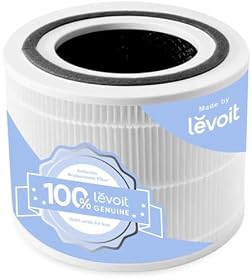
Running an air purifier continuously usually costs less than many people expect. Calculate the monthly cost from its wattage, daily run time, and your electricity rate, then add filter replacement costs for the full operating expense.
Running an air purifier 24/7 for a month can cost anywhere from roughly $1 to more than $12 in electricity, depending mainly on the purifier’s actual wattage and your utility rate. The quickest calculation is:
For a 30-day month running continuously, use 720 hours. Check the purifier’s label or manual for its power consumption, and use the per-kilowatt-hour rate on your electric bill.
How to calculate the cost
Find the purifier’s power draw in watts.
Divide watts by 1,000 to convert to kilowatts.
Multiply by the number of hours it runs.
Multiply by your electricity rate in dollars per kilowatt-hour.
For example, if a purifier draws 25 watts and your electricity rate is $0.16 per kWh:
(25 ÷ 1,000) × 720 × $0.16 = $2.88 per month
This assumes the purifier draws 25 watts continuously. A 31-day month has 744 hours, so the actual cost would be slightly higher.
Product prices and availability are accurate as of the date/time indicated and are subject to change. Any price and availability information displayed on Amazon.com at the time of purchase will apply to the purchase of this product.
Monthly cost examples by wattage
The following examples use a 30-day month, 24-hour operation, and an illustrative electricity rate of $0.16 per kWh. They show the calculation—not the consumption of a particular purifier model.
Continuous power draw
Approximate monthly energy use
Cost at $0.16/kWh
10 watts
7.2 kWh
$1.15
25 watts
18 kWh
$2.88
50 watts
36 kWh
$5.76
75 watts
54 kWh
$8.64
100 watts
72 kWh
$11.52
To make the estimate specific to your home, replace $0.16 with your electricity rate. If your utility uses different rates at different times of day, the result may vary.
Product prices and availability are accurate as of the date/time indicated and are subject to change. Any price and availability information displayed on Amazon.com at the time of purchase will apply to the purchase of this product.
Why the real cost may be different
Fan speed changes power use
A purifier generally uses more electricity at a higher fan speed than at a low or sleep setting. Its maximum wattage may therefore overstate the cost of quiet, low-speed operation, while an estimate based only on the lowest setting may understate the cost during heavy use.
If the manual lists wattage for multiple fan speeds, calculate each setting separately. If it lists only one figure, treat that number as an estimate rather than a guarantee of constant real-world consumption.
Auto mode does not always run at one wattage
In auto mode, the fan may speed up when the particle sensor detects more pollution and slow down when air quality improves. The monthly cost will depend on how often the purifier runs at each speed.
A simple estimate is to calculate the cost at the low and high settings to create a reasonable range:
High estimate: high-speed watts × 720 hours × electricity rate
Standby power can add a small amount
Some purifiers continue using a small amount of electricity when switched off but left plugged in. This is usually much less than the cost of running the fan, but unplugging the unit or using a switched outlet can avoid it when the purifier will not be used for an extended period.
Optional features may use additional power
Features such as UV lights, air-quality displays, Wi-Fi connectivity, and ionization may affect energy use. Follow the manufacturer’s instructions, especially for ionization or ozone-related features. If a feature can be switched off, compare the purifier’s stated power consumption with the feature enabled and disabled when that information is available.
Do filter costs matter more than electricity?
They can. Electricity is only one part of the cost of operating an air purifier. Replacement HEPA, carbon, or combination cartridges may be needed on a schedule set by the manufacturer and by the amount of dust, smoke, pet hair, or other pollution in the room.
Do not assume a washable pre-filter replaces the main filter. A pre-filter can capture larger particles and may be cleanable, while the primary particle filter and carbon filter typically have separate replacement requirements. Clean or replace each part only as directed by the manufacturer.
How to lower the monthly cost
Use the lowest fan speed that adequately manages the room’s air quality.
Use auto mode if it reliably reduces fan speed when conditions improve.
Keep doors and windows closed when outdoor pollution or smoke is high, unless ventilation is needed for safety.
Clean a washable pre-filter as directed so dust does not restrict airflow.
Replace clogged or saturated filters on schedule. A heavily loaded filter can reduce airflow and may make the purifier work harder.
Match the purifier to the room instead of relying on a small unit at maximum speed all day.
Turn off optional features you do not need, if the manufacturer permits it.
Do not block the intake or outlet to save power. Restricted airflow can reduce cleaning performance and may cause the unit to operate improperly.
Is running an air purifier 24/7 worth it?
Continuous operation may make sense when the goal is steady particle removal, such as managing smoke, dust, pollen, or pet-related particles. At low wattage, the electricity cost can be modest compared with many household appliances.
However, nonstop operation is not automatically necessary. If the room is occupied only part of the day, a timer or schedule may reduce electricity use. For smoke or other serious indoor-air concerns, source control and ventilation decisions matter as much as purifier runtime. An air purifier should not replace required carbon-monoxide detection, safe ventilation, or professional help with a hazardous source.
What information to check before buying
For a meaningful operating-cost comparison, look for:
Power consumption: Prefer a stated wattage or energy-use figure rather than guessing from the purifier’s size.
Fan-speed information: Multiple wattage figures make it easier to estimate real use.
Room coverage and CADR: A lower-wattage unit is not necessarily cheaper overall if it cannot clean the room effectively and must run at maximum speed.
Filter replacement requirements: Check the type, number, and expected replacement interval of the filters.
Controls and scheduling: Timers, auto mode, and programmable schedules can reduce unnecessary runtime.
A purifier with a slightly higher rated wattage may still be the more practical choice if it cleans the room effectively at a lower fan setting. Compare electricity, filter, and replacement costs together rather than choosing solely by the lowest wattage.
How much does it cost to run a 50-watt air purifier 24/7 for a month?
At an electricity rate of $0.16 per kWh, a 50-watt purifier running for 720 hours uses 36 kWh and costs about $5.76 for a 30-day month. Replace $0.16 with your utility rate for a more accurate estimate.
Does running an air purifier all day use a lot of electricity?
Many air purifiers use relatively little electricity at low fan speeds, but consumption varies by model and setting. Use the purifier's stated wattage in the formula: watts ÷ 1,000 × hours used × your electricity rate.
Is it cheaper to run an air purifier on sleep mode?
Usually, a lower fan speed uses less electricity than a higher speed, but the exact difference depends on the purifier. Sleep mode may also dim lights or disable features, so check the manual for its power consumption and cleaning performance.
Do air purifier filters add significantly to the monthly cost?
They can. Filter costs vary by filter type, replacement interval, and indoor air conditions. Divide the annual replacement-filter cost by 12 and add it to the average monthly electricity cost.
Should I unplug an air purifier when I am not using it?
Unplugging can eliminate standby power, but standby use is generally much lower than fan operation. If the purifier is needed for ongoing air-quality control, use its schedule or lowest effective setting instead of unplugging it.