The best place to put an air purifier in a bedroom is generally an open location near the area where you breathe, with unobstructed intake and exhaust vents. Keep it away from walls, curtains, bedding, and furniture, and follow the clearance distance in the owner's manual. A nightstand or sturdy dresser can work for a compact unit, while larger units are often better on the floor.
Setup · Mon Sep 07
Where to Place an Air Purifier in a Bedroom
The best bedroom location is usually an open spot with several inches of clearance around the purifier, away from curtains, furniture, walls, and moisture. Placement should also account for airflow, noise, outlets, and the type of air problem you are trying to address.
Best placement for most bedrooms
Start with an open area near the bed, but do not push the purifier directly against the headboard or place its outlet toward your face. A position a few feet from the bed can clean air in the sleeping area without creating an uncomfortable draft or adding unnecessary noise close to your head.
Use these general placement guidelines:
- Leave clearance around every intake and exhaust vent. The manual's required clearance takes priority.
- Keep the purifier away from curtains, blankets, clothing, and other materials that can block airflow.
- Place it on a stable, level surface that can support its weight.
- Keep the power cord away from walking paths and areas where it can be pulled.
- Avoid placing it in a damp location, such as next to a humidifier, bathroom door, or open window during wet weather.
- Do not cover the purifier while it is operating.
An air purifier cannot clean effectively if its intake is blocked or its cleaned-air outlet is pressed against a wall.
Compact bedroom air purifier
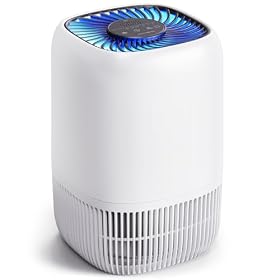 VOOPNU Air Purifiers for Home, High Efficiency Filter Up to 1076 Ft², WhiteVOOPNU
$26.99 as of
View on Amazon Air Purifiers for Bedroom, FULMINARE H13 True HEPA FilterFULMINARE
$22.49 as of
View on Amazon Levoit Air Purifiers for Bedroom Home Pets Dorm Room, Small Air PurifiersLevoit
$43.99 as of
View on Amazon
Product prices and availability are accurate as of the date/time indicated and are subject to change. Any price and availability information displayed on Amazon.com at the time of purchase will apply to the purchase of this product.
Should an air purifier go on the floor or a table?
Either can work, depending on the unit's design and the room's layout.
Floor placement
The floor is usually appropriate for a medium or large bedroom purifier designed to stand vertically. Place it on a hard, level surface rather than deep carpet if the carpet blocks a bottom intake or makes the unit unstable. Keep it away from the bed skirt, blankets, and furniture that could restrict airflow.
Floor placement is often practical when the purifier has a large room rating or a bottom-to-top airflow path. It also avoids putting a heavy appliance on a nightstand or dresser.
Nightstand or dresser placement
A compact purifier may work well on a nightstand or dresser, especially if the unit draws air from the sides and releases it upward. Confirm that the furniture can safely support it and that the airflow is not blocked by a wall, lamp, books, or bedding.
Do not place a purifier where vibration could make objects fall, or where the exhaust blows directly across your face while you sleep. The height itself is less important than clear airflow and safe, stable placement.
Replacement filter for a bedroom purifier
 Leemone Core Mini Replacement Filter for LEVOIT Air Purifier, 2 PackLeemone
$16.98 as of
View on Amazon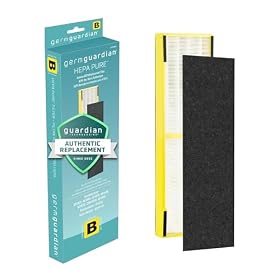 GermGuardian, Filter B HEPA Pure Genuine Air Purifier Filter, Removes 99.97% of Pollutants, Wildfire Smoke,…GermGuardian
$19.88 as of
View on Amazon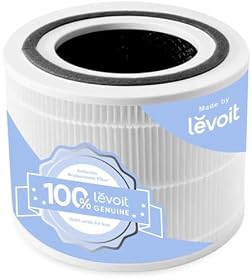 Levoit Core 300-P Air Purifier Replacement Filter, Genuine Air FiltersLevoit
$25.99 as of
View on Amazon
Product prices and availability are accurate as of the date/time indicated and are subject to change. Any price and availability information displayed on Amazon.com at the time of purchase will apply to the purchase of this product.
Where to place an air purifier for allergies
For bedroom allergies, place the purifier in the room where you spend the most time, with the clean-air outlet able to circulate air throughout the space. Near the bed can be useful because you spend many hours there, but leave enough distance to prevent the airflow from disturbing sleep.
Keep doors and windows closed while the purifier is operating if the goal is to reduce indoor airborne particles. An open window can continually introduce pollen, smoke, or outdoor dust, making the purifier work harder.
Also reduce particle sources where possible. Wash bedding regularly, vacuum with suitable filtration, and address visible dust or mold rather than expecting the purifier to solve those problems by itself.
Where to place an air purifier for smoke or odors
For smoke or strong odors, position the purifier relatively close to the source without putting it in a hot, wet, greasy, or hazardous area. For example, a bedroom unit can be placed between the sleeping area and the direction smoke or odor enters, while still maintaining the required clearance.
A purifier's carbon filter is the part intended to reduce many gases and odors. Thin carbon layers may have limited capacity compared with a purifier designed with a larger amount of activated carbon. Replace the filter according to the manufacturer's guidance, or sooner if odors return and the filter is visibly dirty or saturated.
Never use an air purifier as a substitute for removing a smoke source, improving ventilation when appropriate, or installing required smoke and carbon monoxide alarms.
Where not to place an air purifier
Avoid these locations unless the manufacturer specifically allows them:
- Inside a closet, cabinet, or enclosed shelf
- Directly against a wall or behind furniture
- Under a bed or beneath a desk where the intake is restricted
- Next to curtains, drapes, loose bedding, or piles of clothing
- Immediately beside a humidifier or other water-producing appliance
- In a bathroom or other damp area
- Where children or pets can pull it down or chew the cord
- On an unstable nightstand, narrow shelf, or uneven surface
- Near an open window when outdoor pollution or pollen is high
Do not place it in a corner simply because the corner is unused. Two nearby walls can restrict intake and exhaust, reducing circulation through the room.
Should the bedroom door be open or closed?
For the fastest effect in one bedroom, closing the door and windows can limit the amount of new polluted air entering the room. This is useful when you are targeting bedroom dust, pollen, or smoke that has already entered the room.
Leave the door open if you want the purifier to influence a larger area, but understand that the unit may not clean the entire home effectively. A purifier's room-size rating generally assumes a particular air-exchange rate, and performance falls when the actual area is much larger or divided by hallways and doors.
If the bedroom has a central HVAC return, do not block it. The purifier and HVAC system can operate together, but the purifier should not obstruct vents or the normal movement of heated or cooled air.
How to improve circulation without creating a draft
Air purifiers clean more air when room air can circulate through the unit. Practical steps include:
- Point the outlet toward open room space rather than directly into a wall.
- Keep furniture from forming a tight enclosure around the purifier.
- Use a lower fan speed at night if higher speeds disturb sleep.
- Run the purifier continuously on an automatic or low setting when recommended by the manufacturer.
- Use a higher setting temporarily after cleaning, cooking, or a known particle event, if the unit is designed for that use.
Higher fan speeds usually move more air but can produce more noise and use more electricity. A quieter setting that runs consistently may be more practical for sleeping than a high setting used only occasionally.
Check these details before choosing a location
Airflow direction
Look at where the purifier draws air in and where it releases cleaned air. Some models intake from the sides and exhaust from the top; others use a front, rear, or bottom intake. The correct placement depends on this design, so the manual's diagram is more reliable than a general rule.
Room size and clean-air delivery
A purifier rated for a small room may not provide enough air circulation in a large bedroom. Compare the unit's published room-size guidance or clean-air delivery information with the actual room, especially if the room has high ceilings or an open doorway to another area.
Filter access
Leave enough space to remove the filter cover and replace the filter. A location may provide good airflow but be impractical if you have to move furniture every time the filter needs cleaning or replacement.
Noise and light
Check whether the purifier's lowest setting is quiet enough for sleep and whether its display or indicator lights can be dimmed. If noise is a concern, do not place the unit right next to the head of the bed unless its sleep mode is suitable for you.
Common placement problems
The purifier seems weak
Check whether the intake or outlet is blocked, the filter is dirty, or the unit is being used in a space larger than its recommended room size. Move it away from walls and furniture, then verify that the filter is installed in the correct direction.
The room still smells
Confirm that the unit has a functional carbon filter if odor reduction is the goal. Check for a continuing source, such as damp materials, smoke, dirty laundry, or a trash container. Air purifiers can reduce airborne contaminants, but they do not remove every odor source from a room.
The purifier is noisy at night
Try a lower fan speed, sleep mode, or a location farther from the bed while keeping the vents clear. If the noise is new or includes rattling, turn the unit off and check for loose covers, debris, or a filter that is not seated correctly.
The purifier gets damp or develops an odor
Move it away from humidifiers, leaks, and condensation. Turn it off and follow the manufacturer's cleaning instructions. Do not operate an electrical appliance that has been exposed to water until it is considered safe by the manufacturer or a qualified professional.
Bottom line
Place an air purifier in an open, stable location near the bedroom's main breathing area, with clear space around its intake and exhaust. Keep it away from walls, curtains, bedding, moisture, and direct drafts toward the bed. Use the manufacturer's clearance, room-size, and filter-access instructions as the final authority, because airflow designs vary between purifiers.
FAQ
Is it better to put an air purifier near the bed?
It can be useful because you spend many hours near the bed, but do not place the unit so close that its airflow, noise, or lights disturb sleep. Keep the vents clear and follow the required clearance in the manual.
Can I put an air purifier on a nightstand?
Yes, if the purifier is compact, the nightstand is stable, and the unit's intake and exhaust are unobstructed. Do not place a heavy floor model on furniture unless the manufacturer allows it.
Should I leave my bedroom door open with an air purifier?
A closed door usually helps the purifier focus on one bedroom. Leave the door open if you want some air exchange with nearby rooms, but a bedroom purifier may not effectively clean a much larger connected area.
Can an air purifier be placed next to a humidifier?
Usually it is better to keep them apart. Moisture can affect filters, sensors, and electrical components, and the purifier may pull damp air through its filter. Follow both manufacturers' placement instructions.