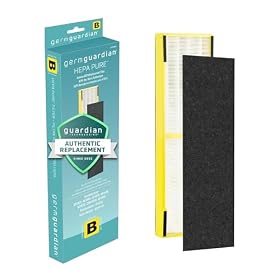
Two appropriately sized air purifiers usually provide better bedroom coverage than one large unit, especially when doors are closed. One large purifier can make sense in an open layout, but its published coverage does not automatically extend through walls or hallways.
Two bedroom air purifiers are usually the better choice when the bedrooms are separated by walls or doors. Each purifier can be placed where people sleep and sized for that room. One large unit may be simpler and cheaper to operate, but it primarily cleans the room where it is located—not two closed bedrooms at the same time.
The right decision depends on the layout, room sizes, desired noise level, filter costs, and whether you want both bedrooms cleaned overnight.
Two bedroom air purifiers versus one large unit
Consideration
Two bedroom units
One large unit
Coverage
Directly serves both bedrooms
Best in the room where it is placed
Closed doors
Works well because each room has its own airflow
Limits airflow to the other room
Placement
One unit per bedroom
Requires an open or connected layout
Noise
Two low-speed units may be quieter than one unit on high
One unit may be quieter overall if it can run gently
Filter replacement
Two sets of filters
One set of filters
Controls and maintenance
Two units to monitor
Simpler to manage
Initial purchase
Usually higher
Usually lower
Flexibility
Can move or run each unit separately
Less flexible if rooms need different schedules
When two bedroom air purifiers are the better choice
Choose one purifier for each bedroom when:
The bedrooms are separated by walls, a hallway, or closed doors.
Both rooms need cleaning while people are sleeping.
One bedroom is much larger than the other.
Occupants have different schedules or noise preferences.
You want to run one unit without cleaning the entire home.
Allergens or odors are concentrated in both rooms.
A purifier’s coverage rating describes the space around the machine under specified conditions. It does not mean the unit can deliver the same cleaning rate to several closed rooms. Air may move through door gaps, but that airflow is not predictable enough to treat a single purifier as two room-sized units.
Size each unit for its own bedroom
Start with the floor area of each bedroom. Compare that area with the purifier’s stated room size and, more importantly, its CADR. CADR—clean air delivery rate—indicates how quickly a purifier delivers filtered air. Higher CADR generally means faster particle removal.
For a more useful comparison:
Measure each bedroom’s length and width.
Account for unusually high ceilings, since published room ratings often assume a standard ceiling height.
Check the smoke CADR or the manufacturer’s recommended room size.
Avoid treating a maximum coverage claim as an ideal setting for quiet, continuous bedroom use.
If the room is near the purifier’s limit, choose more capacity so it can run at a lower, quieter speed.
A bedroom purifier does not need to be identical to the other one. A larger bedroom may need more CADR, while a smaller room may be adequately served by a quieter, lower-capacity model.
Product prices and availability are accurate as of the date/time indicated and are subject to change. Any price and availability information displayed on Amazon.com at the time of purchase will apply to the purchase of this product.
When one large purifier can work
One large unit can be a reasonable choice when the bedrooms are part of a genuinely open area, such as a loft or suite with unobstructed airflow. It can also work if you only need to clean one bedroom at a time and are willing to move the purifier.
It is less suitable when:
Bedroom doors are normally closed.
The purifier sits in a living room far from both bedrooms.
A hallway separates the unit from the rooms.
You need simultaneous nighttime coverage.
The unit must run at a high setting to push air toward distant rooms.
For an open layout, place the purifier where air can circulate freely. Keep the intake and exhaust clear, and avoid pushing filtered air directly into a wall, curtain, or large piece of furniture.
Product prices and availability are accurate as of the date/time indicated and are subject to change. Any price and availability information displayed on Amazon.com at the time of purchase will apply to the purchase of this product.
Noise and sleep comfort
Noise can change the practical result more than a coverage number. A large purifier may clean effectively on high but be too loud for sleep. Two smaller units can allow each bedroom to run at a lower speed, although they create two separate sound sources.
Before buying, check whether the manufacturer lists noise levels for multiple fan speeds. The lowest setting is not the only one that matters: a purifier should have enough CADR at a tolerable setting to handle the room’s needs.
Features that may help in bedrooms include:
A sleep mode that reduces fan speed or dims lights.
Adjustable fan speeds.
A display-off setting.
A timer or scheduling control.
Automatic mode, if its sensor behavior suits your use.
Do not place a purifier where its airflow, vibration, or indicator lights will disturb sleep. A stable, level surface can also reduce rattling.
Product prices and availability are accurate as of the date/time indicated and are subject to change. Any price and availability information displayed on Amazon.com at the time of purchase will apply to the purchase of this product.
Filter costs and maintenance
Two units mean two filters to inspect and eventually replace. That can make one large unit less expensive to maintain, but the difference depends on filter size, replacement interval, and how much dust, smoke, pet hair, or cooking residue each purifier encounters.
Look for:
A washable or vacuumable pre-filter, if specified by the manufacturer.
A separately replaceable HEPA or particle filter.
An activated carbon filter for odors and some gaseous pollutants.
Clear replacement guidance and readily available cartridges.
A filter-life indicator that is treated as a reminder rather than an exact measurement.
Do not wash a HEPA or carbon filter unless the manufacturer specifically says it is washable. Cleaning or replacing the pre-filter as directed can help preserve airflow and reduce the load on the main filter.
If bedrooms have pet hair or visible dust, a pre-filter that is easy to access may matter more than a small difference in headline coverage. If odors are the main concern, examine the amount and type of carbon media; a particle-only filter is not a complete odor solution.
Product prices and availability are accurate as of the date/time indicated and are subject to change. Any price and availability information displayed on Amazon.com at the time of purchase will apply to the purchase of this product.
Energy use and operating cost
Two purifiers may use more electricity if both run continuously, but each may be able to operate at a lower speed. One large unit may use less power overall in an open area, especially if it does not need to run at high speed.
To estimate electricity cost, use the wattage listed by the manufacturer and your local electricity rate:
Actual consumption varies with fan speed and automatic controls. Compare the power draw at the settings you are likely to use, not only the maximum rating.
A practical buying decision
Choose two bedroom air purifiers if both rooms need cleaning at the same time, doors are often closed, or occupants need separate controls. Size each unit to its bedroom and favor enough CADR to run comfortably at a lower speed.
Choose one large unit if the space is open, only one room needs cleaning at a time, or minimizing filter replacements and controls is the priority. Place it near the main source of particles or odors rather than assuming it will clean every connected room equally.
If you are uncertain, two appropriately sized units are the safer coverage decision for two separate bedrooms. One large unit is mainly a convenience and cost-saving choice when airflow between rooms is genuinely open.
FAQ
Is one large air purifier enough for two bedrooms?
Usually not if the bedrooms are separated by walls or closed doors. A large purifier mainly cleans the room where it is placed. It can serve both spaces more effectively only when airflow is open and unobstructed, or when you move the unit between rooms.
Are two small air purifiers better than one large purifier?
Two units are usually better for two separate bedrooms because each room receives direct airflow. One large unit may be preferable in an open layout or when you want fewer filters and controls to maintain.
Should both bedroom air purifiers have the same CADR?
Not necessarily. Match each purifier to the size and conditions of its bedroom. A larger room, a room with more dust or smoke, or a room where you want faster cleaning may need higher CADR.
Can I leave bedroom doors open so one purifier cleans both rooms?
An open door may allow some air exchange, but the result depends on room layout, airflow resistance, and purifier placement. Do not assume the purifier provides its full rated cleaning rate in both rooms; direct placement is more reliable.