The right air purifier can reduce airborne pollen indoors, but room coverage, airflow, filter condition, and placement matter as much as the filter label. Here is how to choose and use one during pollen season.
An air purifier for pollen season should combine a genuine particle filter—typically a HEPA filter—with enough clean-air delivery for the room where you spend time. Look for a published CADR or room-size rating, check replacement-filter availability, and run the purifier consistently with doors and windows closed when outdoor pollen levels are high.
What to look for in a pollen air purifier
HEPA or high-efficiency particle filtration
Pollen is a relatively large airborne particle, so a properly designed particle filter can capture it. A true HEPA filter is a strong choice because it is designed to remove very small airborne particles when air passes through the filter.
Check the product documentation rather than relying only on phrases such as “allergy filter” or “medical-grade.” Also look for a sealed filter compartment. Air can bypass the filter if the housing, gasket, or filter installation leaves significant gaps.
CADR and room coverage
CADR, or clean air delivery rate, describes how quickly a purifier supplies filtered air. Higher CADR generally means faster air cleaning in the same room.
Room-size claims are not always measured under identical conditions, so compare CADR when it is available. Choose a purifier rated for at least the room’s actual size, and consider a higher-capacity unit if:
A bedroom purifier does not need to clean the entire home if the bedroom door is usually closed. For an open living area, measure the whole connected space before choosing a size.
A washable or replaceable pre-filter
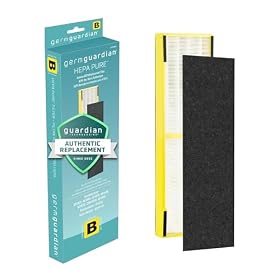
A pre-filter catches larger debris such as hair and dust before it reaches the main filter. A washable pre-filter can reduce the amount of debris loading the HEPA filter, but follow the manufacturer’s cleaning instructions and reinstall it only when fully dry.
Some units use a disposable pre-filter instead. Replacement intervals vary, so check the manual and inspect the filter during heavy pollen season.
Activated carbon for odor, not pollen
Carbon filters can help reduce some odors and gases, but carbon is not the main feature to prioritize for pollen. If odors, smoke, or household fumes are also concerns, compare the amount and design of the carbon media rather than assuming every “carbon filter” performs the same way.
Low noise and useful controls
A purifier is more useful when you can run it for long periods. For a bedroom, compare the manufacturer’s noise information at the speeds you are likely to use—not only the quietest setting.
Useful features may include:
A genuine low-speed or sleep setting.
A filter-change indicator.
A timer or scheduling control.
An automatic mode with a particle sensor.
A child lock if the unit will be used in a family room.
An automatic mode can be convenient, but it should not replace regular operation during high-pollen periods if the sensor does not directly measure pollen.
How to use an air purifier during pollen season
Place it in the room you use most. Keep the air intake and outlet clear, following the clearance instructions in the manual.
Close windows and exterior doors when pollen is high. Otherwise, the purifier is continually trying to clean newly introduced outdoor air.
Run it before symptoms or exposure become a problem. Continuous operation, or a scheduled routine, is usually more useful than a short session after the room has already become dusty.
Use a higher fan speed after opening a door, cleaning, or bringing items indoors. Return to a quieter speed when the room has had time to circulate.
Keep the pre-filter and main filter in serviceable condition. A loaded filter can restrict airflow and reduce cleaning performance.
Reduce other sources of indoor particles. Avoid smoking indoors, use ventilation when cooking, and clean pollen from pets or clothing before bringing it into the bedroom.
Do not place a purifier where curtains, furniture, or walls block the intake. Do not cover the unit or operate it in a wet location unless the manufacturer specifically permits it.
Product prices and availability are accurate as of the date/time indicated and are subject to change. Any price and availability information displayed on Amazon.com at the time of purchase will apply to the purchase of this product.
One purifier or several?
One purifier can work well in a single bedroom, office, or living room. It will not reliably clean closed-off rooms elsewhere in the home. Consider separate units when:
Bedrooms are far from the main living area.
Interior doors are usually closed.
Family members have different sleeping or work spaces.
The home has multiple floors.
A larger central unit may be more convenient for an open area, while smaller units can provide better control in individual bedrooms. Compare the combined filter cost, noise, and electricity use before buying several units.
Product prices and availability are accurate as of the date/time indicated and are subject to change. Any price and availability information displayed on Amazon.com at the time of purchase will apply to the purchase of this product.
Filter replacement and operating costs
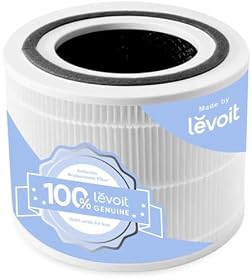
Pollen eventually loads the particle filter. A dirty filter may reduce airflow, increase noise, and make the purifier less effective. Replace it according to the manufacturer’s schedule or sooner if it is visibly loaded, airflow is weak, or the filter indicator activates.
Before choosing a purifier, search for its replacement filter and confirm:
The filter is currently available.
The replacement part matches the exact purifier version.
The filter combines the required layers, such as particle and carbon media.
The expected replacement interval fits your budget and pollen exposure.
Never wash a disposable HEPA or carbon filter unless the manufacturer explicitly says it is washable. Water can damage filter media and leave it unsafe to reinstall.
Product prices and availability are accurate as of the date/time indicated and are subject to change. Any price and availability information displayed on Amazon.com at the time of purchase will apply to the purchase of this product.
Common buying mistakes
Choosing by advertised square footage alone
Large coverage claims may assume ideal conditions or a lower number of air changes than you want. CADR and the actual layout are more useful than the headline coverage number.
Buying the smallest unit for a large room
A small purifier may filter air, but it may need to run at its loudest setting and still circulate air too slowly. Match the unit to the room where it will operate.
Focusing on ionizers instead of filtration
For pollen, prioritize mechanical particle filtration and adequate airflow. If a purifier includes an ionizer, ozone-generating feature, or optional electronic function, review the manufacturer’s safety information and consider whether you need that feature at all.
Ignoring filter access
If the filter is difficult to remove or expensive to replace, maintenance is more likely to be delayed. Check the replacement process before buying.
Product prices and availability are accurate as of the date/time indicated and are subject to change. Any price and availability information displayed on Amazon.com at the time of purchase will apply to the purchase of this product.
When an air purifier may not solve the problem
An air purifier only addresses airborne particles that pass through its filter. It will not remove pollen settled on floors, bedding, furniture, or clothing. Regular cleaning, washing bedding, showering or changing clothes after outdoor exposure, and keeping windows closed during high-pollen periods may still be necessary.
If symptoms are severe, persistent, or associated with breathing difficulty, seek medical advice. An air purifier should complement—not replace—professional care or prescribed allergy treatment.
FAQ
Is a HEPA air purifier good for pollen?
Yes. A properly designed HEPA air purifier can capture airborne pollen that passes through its filter. Its effectiveness also depends on sufficient airflow, a reasonably sealed filter compartment, and correct room placement.
Should I leave an air purifier on all day during pollen season?
Continuous operation at a comfortable fan speed can help maintain cleaner air, especially when windows and doors are closed. Follow the manufacturer’s operating instructions and use a higher speed when pollen or indoor particles increase.
Where should I place an air purifier for allergies?
Place it in the room where you spend the most time, such as a bedroom or living room. Keep the intake and outlet unobstructed and follow the clearance guidance in the manual.
How often should I change an air purifier filter during pollen season?
Follow the manufacturer’s replacement schedule, but inspect the filter more often during heavy pollen exposure. Replace it sooner if airflow drops, noise increases, the filter is visibly loaded, or the filter indicator activates.