An air purifier in every bedroom is not usually necessary. One properly sized purifier can be effective in a single bedroom or another frequently occupied room, but it will not clean the air equally well throughout a home—especially with doors closed. Prioritize bedrooms where someone sleeps, rooms used by allergy or asthma sufferers, and any area with noticeable smoke, dust, or odors.
Setup · Mon Sep 07
Do you need an air purifier in every bedroom
Most homes do not need an air purifier in every bedroom. The right number depends on room size, door placement, airflow, allergies, and whether specific rooms have higher pollution or odor concerns.
When one air purifier may be enough
One purifier may be enough if:
- You mainly want cleaner air in one bedroom.
- The bedroom door stays open and the purifier is sized for that room.
- You move the purifier between rooms during the day.
- Your home has effective central HVAC filtration and you are adding portable filtration as a supplement.
- Your main concern is a temporary issue, such as wildfire smoke or a dusty renovation.
A portable purifier works best in the room where it is running. Air can move between rooms, but walls, closed doors, distance, and weak circulation limit how much cleaning reaches other bedrooms.
Bedroom unit for dedicated overnight filtration
 Levoit Air Purifier for Home Pets Hair Allergens in Bedroom Quiet PurifiersLevoit
$84.99 as of
View on Amazon Purivortex Air Purifiers for Bedroom, Covers Up to 880 Sq Ft, PX500 BlackPurivortex
$29.99 as of
View on Amazon Air Purifiers for Bedroom, FULMINARE H13 True HEPA FilterFULMINARE
$22.49 as of
View on Amazon
Product prices and availability are accurate as of the date/time indicated and are subject to change. Any price and availability information displayed on Amazon.com at the time of purchase will apply to the purchase of this product.
When a purifier in each bedroom makes sense
Separate bedroom units are more useful when:
- Bedroom doors are commonly closed at night.
- Multiple people have allergies, asthma, or different air-quality needs.
- Bedrooms are far apart or on different floors.
- One person is sensitive to pet dander, smoke, or fragrances.
- A bedroom has poor ventilation or persistent dust.
- You want quiet overnight filtration without running a larger, noisier unit elsewhere.
If only one household member has a specific need, start with that person’s bedroom rather than buying several units immediately. You can add another purifier if the first unit does not adequately cover the rooms that matter most.
Replacement particle filter
 HPA300 HEPA Air Purifier Filter R for Honeywell Air Purifier HPA100/200/300Cabiclean
$29.99 as of
View on Amazon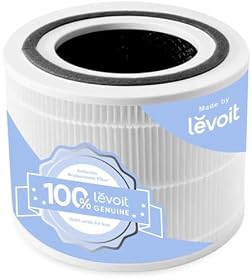 Levoit Core 300-P Air Purifier Replacement Filter, Genuine Air FiltersLevoit
$25.99 as of
View on Amazon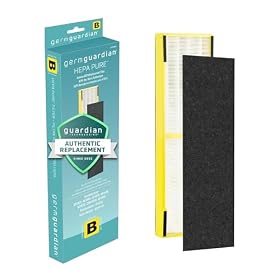 GermGuardian, Filter B HEPA Pure Genuine Air Purifier Filter, Removes 99.97% of Pollutants, Wildfire Smoke,…GermGuardian
$19.88 as of
View on Amazon
Product prices and availability are accurate as of the date/time indicated and are subject to change. Any price and availability information displayed on Amazon.com at the time of purchase will apply to the purchase of this product.
How to decide which rooms get priority
1. Start with sleeping rooms
People spend many continuous hours in a bedroom, so it is often the best location for a purifier. A bedroom unit also avoids relying on air movement from another room while you sleep.
2. Prioritize rooms with the biggest air-quality problem
A room with visible dust, pet activity, cooking odors, smoke intrusion, or poor ventilation may deserve a purifier before a cleaner but rarely used bedroom.
3. Consider who uses the room
A purifier may be more valuable in the bedroom of someone with allergies or asthma. Air purifiers do not replace medical treatment or remove every trigger, but reducing airborne particles can be a useful part of an overall plan.
4. Account for doors and floors
A purifier in an upstairs hallway is not automatically an effective substitute for units in closed bedrooms. Separate floors and closed doors make room-by-room filtration more practical.
Odor-focused replacement filter
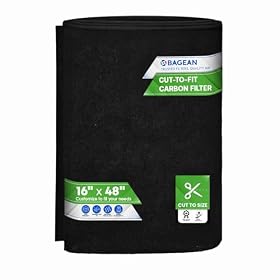 Bagean Cut to Fit Activated Carbon Filter Sheet 16” x 48” Carbon Air FilterBagean
$15.93 as of
View on Amazon Bagean Cut to Fit Activated Carbon Filter Sheet 16” x 48” Carbon Air FilterBagean
$20.98 as of
View on Amazon Core 300 Replacement Filter for LEVOIT Core 300-P Core 300S-P Air Purifierisinlive
$26.99 as of
View on Amazon
Product prices and availability are accurate as of the date/time indicated and are subject to change. Any price and availability information displayed on Amazon.com at the time of purchase will apply to the purchase of this product.
How many purifiers do you need?
There is no universal number. Use the number of rooms that need dedicated filtration, then check each purifier’s coverage information against the room where it will operate.
A simple approach is:
- Choose the bedroom or room with the highest priority.
- Select a purifier with a suitable clean air delivery rate (CADR) or room-size rating.
- Run it consistently, particularly when the room is occupied.
- Check whether dust, odors, smoke, or allergy symptoms improve.
- Add another unit only if other occupied rooms still need dedicated filtration.
Do not treat the manufacturer’s largest advertised room size as a guarantee of identical performance in every setting. Coverage claims may be based on a particular number of air changes per hour, and a purifier may clean a smaller room more quickly or more quietly.
What specifications matter for bedrooms?
HEPA or high-efficiency particle filtration
A true HEPA filter is designed to capture very small airborne particles, including many particles associated with dust and pollen. Check the manufacturer’s specifications rather than assuming that terms such as “HEPA-type” or “high-efficiency” mean the same thing.
CADR
CADR indicates how quickly a purifier can deliver filtered air for certain particle categories. A higher CADR is generally useful for larger rooms, smoke, or faster cleaning. If a manufacturer provides separate CADR values, the smoke or fine-particle rating may be especially relevant for smoke concerns.
Carbon filtration
Activated carbon can help reduce some odors and gaseous pollutants, but the amount and quality of carbon vary widely. A thin carbon-coated filter may provide less odor capacity than a filter containing a larger quantity of carbon. Carbon also becomes saturated and must be replaced according to the manufacturer’s guidance.
Noise and speed controls
Bedroom purifiers should be quiet enough for the sleeper at the required operating speed. A very quiet unit that moves little air may clean more slowly, while a stronger unit can often be run at a lower setting if it has adequate capacity. Look for a sleep mode, adjustable fan speeds, and a display that can be dimmed if light is distracting.
Replacement-filter availability
Before buying several units, check whether replacement HEPA, pre-filter, and carbon cartridges are available and reasonably easy to source. Filter costs and replacement intervals can affect the long-term cost more than the initial purchase.
Placement matters
Place the purifier in the bedroom where air can move freely around the intake and outlet. Avoid pushing it tightly against a wall, hiding it behind furniture, or blocking the intake with bedding or curtains. Keep it away from damp areas unless the manufacturer specifically allows that use.
For a bedroom, a location with clear space around the unit and some distance from the bed is usually more practical than placing it directly beside your pillow. Follow the clearance requirements in the manual, and keep cords away from walkways.
What if you have central HVAC?
Central HVAC filtration may reduce airborne particles throughout the home, but it is not always a complete substitute for a portable bedroom purifier. Results depend on the filter, fan runtime, duct layout, system condition, and how much air actually circulates through the system.
Use only the HVAC filter type and rating approved for your system. A filter that is too restrictive can reduce airflow or place extra strain on equipment. An HVAC professional can help if you are unsure what your system can safely handle.
A portable purifier can provide more direct filtration in a bedroom, particularly when the HVAC fan is off or the bedroom door is closed.
Common mistakes to avoid
- Buying one small purifier and expecting it to clean several closed bedrooms.
- Using the advertised maximum room size without considering CADR or desired cleaning speed.
- Placing the unit behind furniture or against a wall.
- Ignoring replacement-filter cost and availability.
- Assuming carbon filtration removes all odors or chemical pollutants.
- Running the purifier only briefly when the concern is continuous dust, pollen, or smoke.
- Choosing an ionizer or ozone-producing mode without understanding the potential safety concerns.
For occupied indoor spaces, avoid ozone-generating devices unless a qualified professional and the product’s safety instructions specifically address their use. Do not use ozone as a routine substitute for mechanical filtration.
Bottom line
You do not need an air purifier in every bedroom by default. Start with the bedroom that is occupied most, has the worst air-quality issue, or belongs to someone with greater sensitivity. Choose a properly sized unit, run it consistently, and add separate bedroom purifiers when closed doors, multiple floors, or different household needs make room-to-room filtration ineffective.
FAQ
Can one air purifier clean an entire house?
Usually not by itself. A portable purifier works best in the room where it is operating. It may help nearby open areas, but closed doors, separate floors, and weak air circulation limit whole-home coverage.
Should I put an air purifier in my bedroom or living room?
Choose the room where people spend the most time or where the air-quality problem is greatest. A bedroom is often the priority when the purifier is needed overnight, while a living room may be better for shared household use.
Should I sleep with an air purifier on?
You can generally run a properly maintained purifier while sleeping if the manufacturer allows continuous operation. Use a suitable fan speed, keep the air intake and outlet clear, and follow the manual’s electrical and filter instructions.
Does an air purifier work with the bedroom door closed?
Yes. A purifier can clean the air in the room where it is located with the door closed, although air exchange with the rest of the home will be limited. Make sure the unit is sized for that bedroom.
Do I need an air purifier if I have central air conditioning?
Not necessarily, but central HVAC filtration may not provide the same room-specific cleaning as a portable purifier. The result depends on the HVAC filter, fan operation, ductwork, and system design. Use only a filter rating approved for your system.