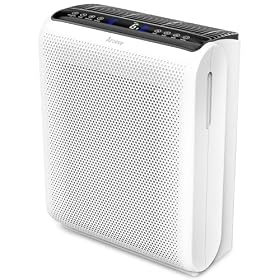
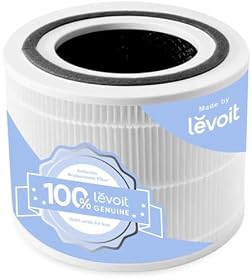
The best air purifier for wildfire smoke combines a high smoke CADR, true particle filtration, and enough activated carbon to reduce odors and gases. Here is how to choose the right size and filter setup for your room.
Wildfire smoke contains very fine particles that can enter homes through gaps, windows, doors, and ventilation systems. The best air purifier for wildfire smoke is usually a portable unit with a high smoke CADR, a mechanical particle filter such as HEPA, and a substantial activated-carbon stage if smoke odor and gases are concerns.
For the most effective results, choose a purifier rated for a larger room than the space you need to clean, run it continuously during smoky conditions, and keep doors and windows closed when outdoor air quality is poor.
What to look for in an air purifier for wildfire smoke
1. A high smoke CADR
CADR, or Clean Air Delivery Rate, indicates how quickly a purifier delivers filtered air. For wildfire smoke, pay particular attention to the smoke CADR, not just a general room-size claim.
A higher smoke CADR is useful because wildfire particles are small and can spread throughout a room quickly. Compare the listed smoke CADR with your room size, and consider choosing a unit rated for a larger room if:
You want faster cleanup after smoke enters the home
Room-size ratings are not always presented the same way by every manufacturer. When available, use the smoke CADR and the stated air changes per hour rather than relying only on a vague “covers up to” number.
2. A HEPA or high-efficiency particle filter
Wildfire smoke includes fine particulate matter, including PM2.5. A genuine HEPA filter or another clearly specified high-efficiency mechanical filter is designed to capture airborne particles as air passes through it.
Look for a purifier that:
Clearly identifies the particle filter type
Uses a sealed filter compartment or well-fitted replacement filter
Provides replacement-filter instructions
Has enough airflow to move air through the filter at a useful rate
A highly efficient filter is not enough by itself if the fan is too weak for the room. For smoke, the combination of filtration efficiency and airflow matters.
3. Activated carbon for odors and some gases
Particle filters remove smoke particles, but they do not address every odor or gaseous pollutant. Activated carbon can help reduce smoke odors and adsorb some gases, depending on the carbon material, amount, and contact time.
Carbon filters vary significantly. A thin carbon-coated pre-filter may provide limited odor reduction, while a filter containing a larger quantity of activated carbon can be more useful for persistent smoke odor. Manufacturers do not always publish the carbon weight, so avoid assuming that every purifier with a “carbon filter” will perform equally well.
If your main concern is protecting against fine particles, prioritize smoke CADR and particle filtration. If odor is also a major concern, look for a unit specifically designed with a substantial carbon stage and budget for more frequent carbon-filter replacement during prolonged smoke exposure.
How to size an air purifier for wildfire smoke
Use the room’s floor area as a starting point, then account for ceiling height and the amount of air exchange with other spaces.
A small purifier may be adequate for a bedroom with the door closed, but it may struggle in a large living room, open-concept area, or whole-floor space. In a larger home, two appropriately sized purifiers can work better than one small unit placed far from the people or rooms that need cleaner air.
For the best performance:
Measure the room’s length and width.
Check the purifier’s smoke CADR or independently verified room-size information.
Choose a unit with extra capacity rather than sizing it at the minimum limit.
Use multiple units if you need to clean separate rooms with closed doors.
Place the purifier where air can enter and leave freely.
Do not put the unit behind furniture, inside a corner, or directly against curtains. Keep the intake and outlet clear according to the manufacturer’s required clearance.
Product prices and availability are accurate as of the date/time indicated and are subject to change. Any price and availability information displayed on Amazon.com at the time of purchase will apply to the purchase of this product.
HEPA versus carbon: which matters more?
For wildfire smoke, both filter types can serve different purposes:
HEPA or high-efficiency particle filtration: targets airborne smoke particles and PM2.5.
Activated carbon: helps with smoke odor and some gaseous compounds.
Pre-filter: catches larger dust, hair, and lint before they reach the main filter.
If you can buy only one purifier, choose a model with strong smoke CADR and effective particle filtration first. Add carbon capacity to the priority list when odor, cooking smoke, or gaseous pollutants are especially important.
A purifier cannot remove smoke that is still entering constantly from outside. Sealing obvious drafts, keeping windows closed during poor outdoor air quality, and using the home’s HVAC filtration correctly can reduce the load on the portable unit.
Product prices and availability are accurate as of the date/time indicated and are subject to change. Any price and availability information displayed on Amazon.com at the time of purchase will apply to the purchase of this product.
Features that are useful during wildfire smoke events
Automatic mode and an air-quality sensor
An air-quality sensor can adjust fan speed when particle levels rise. This can be convenient, but sensor readings are not a substitute for running the purifier continuously during a smoke event. If the sensor is inaccurate, poorly positioned, or reacting to a limited range of particles, manual high or medium speed may be more dependable.
A quiet low setting
A quiet setting makes it easier to run the purifier in a bedroom. However, low speed moves less air, so use a higher setting when the room needs rapid cleanup and lower the speed later if noise is a concern.
A filter-life indicator
A filter indicator can remind you to inspect or replace the filter. It may estimate operating time rather than measure the filter’s actual loading, so check the filter when smoke exposure has been unusually heavy.
A washable or accessible pre-filter
A washable pre-filter can help capture hair and larger debris, reducing the burden on the main filter. Follow the manufacturer’s cleaning instructions carefully. Do not wash a filter unless it is specifically labeled washable, and reinstall it only when completely dry.
Product prices and availability are accurate as of the date/time indicated and are subject to change. Any price and availability information displayed on Amazon.com at the time of purchase will apply to the purchase of this product.
Avoid ozone-producing air-cleaning features
Avoid air purifiers that intentionally produce ozone, and be cautious with ionizers, plasma features, or other electrical air-cleaning modes unless the manufacturer clearly explains their emissions and safety certification.
Ozone can irritate the lungs and is particularly undesirable when people are already exposed to wildfire smoke. If a purifier includes an ionizer or similar feature, look for a way to turn it off and leave it disabled unless a qualified authority or the manufacturer provides a clear reason to use it.
Never use an ozone generator as a substitute for particle filtration in an occupied home.
Product prices and availability are accurate as of the date/time indicated and are subject to change. Any price and availability information displayed on Amazon.com at the time of purchase will apply to the purchase of this product.
How to use an air purifier during wildfire smoke
Close windows and exterior doors when outdoor smoke levels are high.
Run the purifier continuously in the room you occupy most.
Use the highest practical fan speed when first cleaning smoky air.
Keep the purifier away from walls, curtains, and obstructions.
Keep interior doors closed if you are cleaning one room as a cleaner-air space.
Avoid adding indoor pollution with candles, incense, smoking, or unnecessary frying.
Check the pre-filter and main filter more often during prolonged smoke exposure.
Replace filters according to the instructions or sooner if airflow drops, odor returns, or the filter is visibly loaded.
An air purifier improves indoor air but does not make it safe to remain indoors under every condition. Follow local emergency guidance, public-health recommendations, and evacuation orders.
When to replace the filter or the purifier
A replacement filter is usually the reasonable next step when the purifier still runs normally but airflow has fallen, smoke odor returns, or the filter is visibly dirty. Use the exact replacement type specified for the purifier; a filter that physically fits may not seal or perform correctly.
Consider replacing the purifier itself when the fan no longer produces normal airflow, the unit has electrical damage, the housing or filter seal is broken, replacement filters are unavailable, or the unit is clearly undersized for the room. Unplug the purifier before inspecting it, and do not open or repair electrical components unless the manufacturer specifically permits it or a qualified technician performs the work.
FAQ
Are HEPA air purifiers good for wildfire smoke?
Yes. A HEPA or comparable high-efficiency mechanical filter can capture fine airborne smoke particles. Choose a unit with enough airflow and a high smoke CADR for the room; filtration efficiency alone does not determine overall performance.
Does an air purifier remove the smell of wildfire smoke?
It can reduce smoke odor when it includes activated carbon, but carbon performance varies with the amount and design of the carbon filter. Particle filters mainly capture particles and do not remove every odor or gas.
Should I run my air purifier continuously during wildfire smoke?
Continuous operation is generally more effective than occasional use while smoke is entering or lingering indoors. Use a higher fan speed for faster cleanup, while observing the manufacturer’s operating and filter-replacement instructions.
What size air purifier do I need for wildfire smoke?
Choose based on the room’s smoke CADR or verified room-size rating, and select extra capacity for high ceilings, open layouts, or frequent door opening. Separate rooms may require separate purifiers.
Are ionizers safe to use during wildfire smoke?
Because some ionizing or electrical air-cleaning features can produce ozone, use caution. Prefer mechanical particle filtration, and disable ionizer or ozone-producing functions unless their emissions and safety information are clearly documented.