A cheap air purifier can be worth it, but only if it moves enough filtered air for your room and its replacement filters remain affordable. A low-cost unit may work well in a bedroom, office, or other small space, while an underpowered model can provide little noticeable benefit in a larger room. Before buying, check the CADR, filter type, replacement-filter availability, noise, and any claims about ozone or ionization.
Price & Buying · Mon Sep 07
Is a Cheap Air Purifier Worth It? What to Check Before Buying
A cheap air purifier is worth considering for a small room when its clean air delivery rate, filter design, noise level, and replacement costs make sense. The lowest purchase price alone is not enough.
When a cheap air purifier is worth it
A budget air purifier is more likely to be a good buy when:
- You need filtration for one small room rather than an entire home.
- The manufacturer provides a realistic room-size rating or clean air delivery rate (CADR).
- It uses a genuine particulate filter, usually a HEPA or HEPA-type filter, rather than relying mainly on ionization.
- Replacement filters are easy to find and do not cost nearly as much as the purifier.
- The unit can run at a tolerable noise level for several hours a day.
- The intake and outlet are positioned so air can circulate freely around the room.
For dust, pollen, and many airborne particles, the filter and the amount of air the purifier moves matter more than extra display features. A simple purifier with a properly sized filter can be a better value than a feature-heavy model that is too weak for the room.
Replacement particle filter for a budget purifier
 HPA300 HEPA Air Purifier Filter R for Honeywell Air Purifier HPA100/200/300Cabiclean
$29.99 as of
View on Amazon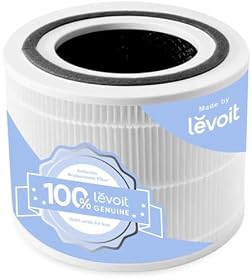 Levoit Core 300-P Air Purifier Replacement Filter, Genuine Air FiltersLevoit
$25.99 as of
View on Amazon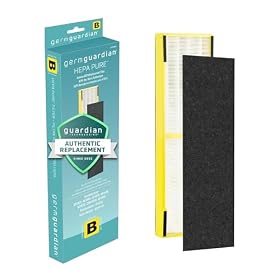 GermGuardian, Filter B HEPA Pure Genuine Air Purifier Filter, Removes 99.97% of Pollutants, Wildfire Smoke,…GermGuardian
$19.88 as of
View on Amazon
Product prices and availability are accurate as of the date/time indicated and are subject to change. Any price and availability information displayed on Amazon.com at the time of purchase will apply to the purchase of this product.
When the cheapest option is usually a poor value
The lowest-priced purifier may not save money if it has one or more of these problems:
- No published CADR or useful room-size information.
- Replacement filters that are difficult to identify or unavailable.
- A very small filter paired with an exaggerated room-size claim.
- Loud operation that discourages regular use.
- A strong focus on ionization, ozone, fragrance, or “air cleaning” features instead of mechanical filtration.
- Filters that cannot be inspected or replaced easily.
- High ongoing filter costs compared with the original purchase price.
A purifier only helps while it is running and filtering air. If the fan is too loud to use, the filter is clogged, or replacement parts cannot be obtained, a more expensive-looking model with better long-term usability may be the cheaper choice overall.
Replacement filter with odor reduction
 FLT4825 HEPA Filter B Replacement for Guardian Air Purifier AC4825E AC4820isinlive
$29.99 as of
View on Amazon- Levoit Core 300-P Air Purifier Replacement Filter, Genuine Air FiltersLevoit
$25.99 as of
View on Amazon - GermGuardian, Filter B HEPA Pure Genuine Air Purifier Filter, Removes 99.97% of Pollutants, Wildfire Smoke,…GermGuardian
$19.88 as of
View on Amazon
Product prices and availability are accurate as of the date/time indicated and are subject to change. Any price and availability information displayed on Amazon.com at the time of purchase will apply to the purchase of this product.
The specifications that matter most
CADR and room size
CADR, or clean air delivery rate, indicates how quickly a purifier delivers filtered air. Higher CADR is generally better for a larger room or for running the unit at a lower, quieter speed.
Treat room-size claims carefully. Manufacturers may calculate them using different assumptions, so CADR is often more useful when comparing models from different brands. If CADR is not listed, look for clear airflow information and be cautious about unusually large coverage claims from a very compact machine.
A budget purifier can be appropriate for a bedroom or home office, but a small unit may be inadequate for an open living area. For a large room, buying a second appropriately sized purifier can sometimes make more sense than relying on one inexpensive, underpowered unit.
Filter construction
For particles such as dust, pollen, and smoke particles, look for a substantial particulate filter. A washable mesh pre-filter can catch larger debris and help protect the main filter, but it usually does not replace a high-efficiency particle filter.
Activated carbon can help reduce some odors and gases, but the amount of carbon matters. A thin carbon-coated sheet generally has less odor-adsorbing capacity than a filter containing a larger quantity of carbon. Do not buy a cheap purifier solely because it advertises carbon if odor control is your main goal.
Replacement-filter cost and availability
Filter replacement is part of the purchase price. Before ordering, search for the exact replacement filter and check:
- Whether it is sold by the manufacturer or a reputable replacement-parts supplier.
- Whether the filter includes the correct particle and carbon layers.
- How often the manufacturer says it should be replaced.
- Whether the filter is currently available.
- Whether the purifier requires a proprietary cartridge.
Avoid assuming that a filter is reusable unless the instructions specifically say so. Washing a disposable HEPA or composite filter can damage it and may release trapped contaminants.
Noise and controls
Noise matters because a purifier needs to run consistently. Check whether the unit has multiple fan speeds, a sleep mode, and a way to turn off bright lights. A stated decibel figure can help, but it may apply only to the lowest speed, so it does not tell you how loud the purifier will be when operating at higher airflow.
Automatic air-quality sensors, app controls, and displays are optional conveniences. They do not compensate for inadequate airflow or an ineffective filter.
Ozone and ionization
Be cautious with purifiers that intentionally generate ozone. Ozone can irritate the lungs, and it is not a desirable tradeoff for ordinary home particle filtration. If you are considering an ionizer or a purifier with an ionizing function, check whether that feature can be disabled and follow applicable safety certifications and manufacturer guidance. Mechanical filtration is the simpler choice for many households.
How to judge the total cost
Compare the initial price with the expected cost of ownership:
- Find the current price of the correct replacement filter.
- Check the recommended replacement interval in the manual.
- Estimate how many filters you may need over the period you expect to own the purifier.
- Add the replacement-filter cost to the purchase price.
- Consider electricity use, especially if the purifier will run continuously.
A slightly more expensive purifier can be the better bargain if its filters are widely available, its airflow is stronger, and it can run quietly. Conversely, a budget model may still be the sensible choice if it covers a small room, uses an affordable standard replacement cartridge, and has no unnecessary features.
How to get better results from a budget purifier
Place the purifier where air can reach its intake and leave space around the machine as specified by the manufacturer. Keep doors and windows closed when you are trying to reduce indoor particle levels, unless ventilation is needed for another reason. Run the purifier at a higher speed during cooking, cleaning, or other particle-producing activities, then use a lower setting if that is more comfortable.
Clean the pre-filter or exterior intake according to the instructions. Replace the main filter when the indicator activates, airflow drops, the filter is visibly loaded, or the manufacturer’s schedule calls for replacement. A clogged filter can reduce airflow and make the purifier noisier.
Remember that an air purifier does not remove the source of every indoor-air problem. Fixing smoke intrusion, excessive dust, moisture, mold growth, or a ventilation issue may be more important than adding a small purifier.
A simple buying decision
A cheap air purifier is worth it when all of these are true:
- Its CADR or realistic coverage matches the room.
- It uses effective mechanical filtration for your main concern.
- Replacement filters are available at a reasonable ongoing cost.
- The noise level is acceptable for the way you plan to use it.
- It does not depend on ozone generation to make its cleaning claims.
If any of those points are unclear, do not choose based on price alone. A low-cost purifier with inadequate airflow or unavailable filters can become a wasted purchase. For a larger room, serious smoke exposure, or persistent allergy concerns, choose a unit with clearly documented airflow and filtration specifications, and follow medical or professional advice when appropriate.
FAQ
Can a cheap air purifier remove dust and pollen?
It can, provided it uses an effective particle filter and moves enough air for the room. A small purifier may work well in a bedroom or office but be inadequate for a large open area.
Are cheap air purifiers safe?
Many are safe when used according to their instructions, but be cautious with models that intentionally generate ozone. Mechanical filtration is generally the simpler choice, and any ionizing function should be disabled if the manufacturer allows it and you do not need it.
How much should replacement filters affect my decision?
They should be a major part of the decision. Check the price, availability, construction, and recommended replacement interval before buying because filter costs can exceed the original purchase price over time.
Is CADR more important than a large room-size claim?
Usually, CADR is the more useful comparison because it describes filtered airflow. Room-size claims can use different assumptions, so an unusually large coverage claim from a small machine deserves caution.