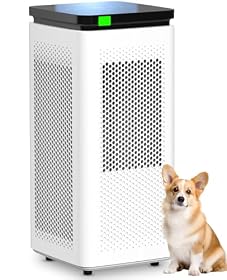
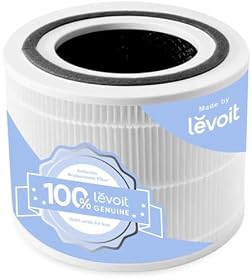
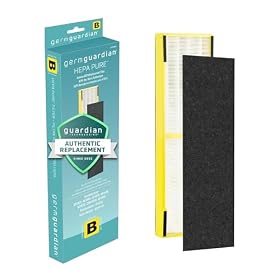
One large air purifier is usually more efficient for a single open room, while two smaller units can provide better coverage across separate rooms. Compare CADR, placement, noise, filter costs, and daily operating convenience before choosing.
A large air purifier is usually the better choice for one open room, while two smaller units make more sense when you need to clean air in separate rooms or on different floors. The right option depends less on the advertised room-size number and more on total CADR, room layout, noise, filter costs, and whether doors stay open.
Quick answer
Choose one large air purifier when:
You are treating one large, open room.
You want fewer filters and one control point.
You have a central placement with good airflow around the unit.
A higher fan speed is acceptable when pollution levels rise.
Choose two small air purifiers when:
You need coverage in two separate bedrooms, offices, or floors.
Doors are often closed.
You want quieter operation in each room.
You need one unit to keep running while another is moved, cleaned, or serviced.
Two small units do not automatically equal one large unit. Compare their combined CADR, not just their advertised square-foot coverage.
Compare total CADR first
CADR, or clean air delivery rate, indicates how quickly an air purifier delivers filtered air. It is normally listed separately for smoke, dust, and pollen when the unit has an AHAM rating. For fine particles such as smoke, dust, and many airborne allergens, the smoke CADR is often the most useful comparison.
To compare setups:
Find the relevant CADR for the large purifier.
Add the same CADR rating from both small purifiers.
Compare the result with the airflow your rooms require.
For example, two units rated at 150 cfm each provide 300 cfm of combined rated airflow in ideal conditions. That does not mean they will perform exactly like one 300-cfm unit, because placement, room boundaries, filter condition, and fan settings affect real-world circulation.
A common sizing reference from AHAM uses a smoke CADR of at least two-thirds of the room's floor area for an approximately 8-foot ceiling. Manufacturer coverage claims may use different assumptions, so check the rating method before comparing numbers directly.
Estimate the air changes you need
You can also estimate air changes per hour, or ACH, with this formula:
ACH = CADR × 60 ÷ room volume
Use the purifier's airflow in cubic feet per minute and the room volume in cubic feet. If using two purifiers in the same open space, add their CADR values before calculating. If the units are in separate rooms, calculate each room separately instead of combining the rooms.
Higher ACH is generally useful when dealing with smoke, strong allergies, or other persistent particle sources. Follow the purifier manufacturer's guidance for the intended application.
Product prices and availability are accurate as of the date/time indicated and are subject to change. Any price and availability information displayed on Amazon.com at the time of purchase will apply to the purchase of this product.
One large purifier: advantages and limitations
Advantages
Better for one large open area: A higher-CADR unit can move and clean more air from a central location.
Simpler maintenance: You have one filter set, one control panel, and one device to monitor.
Usually easier to manage: Scheduling, fan settings, and app controls are consolidated.
Potentially lower filter expense: One larger replacement filter may cost less than two separate small filters, although this varies by model and replacement schedule.
Limitations
Coverage drops across closed rooms: Air does not move freely through walls and closed doors.
One point of failure: If the unit stops working, the whole treated area loses filtration.
High-speed noise may be concentrated: A large purifier can be more noticeable when operating at its highest setting.
Placement matters more: A large unit may be harder to place near the center of a room without blocking walkways or furniture.
A large purifier is not a substitute for a purifier in a closed bedroom, nursery, or office. If the door is usually shut, that room receives little benefit from a unit operating elsewhere.
Product prices and availability are accurate as of the date/time indicated and are subject to change. Any price and availability information displayed on Amazon.com at the time of purchase will apply to the purchase of this product.
Two small purifiers: advantages and limitations
Advantages
Better room-by-room coverage: Put one unit in each occupied room rather than relying on airflow through doorways.
More flexible placement: Smaller units can fit on opposite sides of a large area or in separate rooms.
Lower individual noise: You may be able to run each unit at a lower setting, though the combined sound and airflow still matter.
Redundancy: One purifier can continue operating if the other needs a filter change or repair.
Targeted operation: You can run a purifier only where people are present or where pollution is greatest.
Limitations
More maintenance points: Both units need filter checks, cleaning, and eventual replacement.
Two filter expenses: Replacement costs can be higher if both filters need changing on similar schedules.
More controls and cords: Two units take more floor space and may be less convenient to manage.
Lower total CADR is possible: Two small units may have less combined airflow than one large model, especially if they are run on quiet settings.
Two smaller units are most useful when the air-cleaning problem is distributed across separate spaces. They are less compelling when both would sit close together in one room and their combined CADR is lower than that of a suitable large unit.
Product prices and availability are accurate as of the date/time indicated and are subject to change. Any price and availability information displayed on Amazon.com at the time of purchase will apply to the purchase of this product.
Noise and fan-speed trade-offs
The published noise range is more useful than a single maximum or minimum figure. Check the sound level at the fan speed you expect to use overnight or while working. A purifier that is quiet only on its lowest setting may not provide enough CADR for a high-pollution event.
Two small purifiers can be more comfortable if each runs at a low or medium setting. However, two low fan settings may deliver less clean air than one larger purifier running at a moderate setting. If possible, compare CADR at the intended operating speed, not only the maximum rating.
For bedrooms, also check for:
A true sleep mode or low-speed setting
Display-light controls
Automatic fan behavior that will not wake occupants
The location of the air outlet and intake
Filter and operating costs
Compare the full ownership cost rather than only the purchase price. Look at:
Replacement filter price and recommended replacement interval
Whether the unit has a washable or vacuum-cleanable pre-filter
Availability of genuine replacement filters
Electricity use at the fan speed you plan to use
Whether carbon filters require more frequent replacement for odors
A pre-filter can capture larger dust and hair before they reach the main filter, but it does not eliminate the need to replace the primary filter when the manufacturer says it is loaded or saturated. Vacuum or wash a pre-filter only as directed; some filter materials should not be wetted.
Carbon filter thickness and amount affect odor and gas removal more than the word “carbon” alone. A thin carbon layer may not perform like a larger carbon canister or a filter designed specifically for substantial odor control. For particle filtration, prioritize appropriate HEPA or high-efficiency particle filtration and sufficient CADR.
Placement can decide the result
Whether you choose one unit or two, leave the intake and outlet unobstructed. Avoid pushing a purifier tightly against a wall, curtain, sofa, or cabinet unless the manual permits that placement.
For one large purifier:
Place it where air can circulate through the main occupied area.
Avoid hiding it behind furniture.
Keep it away from direct sources of water or excessive grease.
Use a higher setting temporarily when you need faster particle removal.
For two small purifiers:
Put one in each room that needs independent coverage.
In a large room, separate them if that improves circulation rather than placing them side by side.
Keep bedroom units away from bedding, curtains, and other materials that could block the intake.
Do not expect a unit in a hallway to clean a closed room effectively.
A large room where a properly sized unit can run at a comfortable speed
Choose two small units if you have:
Two bedrooms or rooms with closed doors
A home with separate floors
Different air-quality needs in different rooms
A preference for lower-speed operation in occupied spaces
A need for backup coverage if one purifier is unavailable
Consider a mixed setup
A mixed setup can be practical: use a higher-CADR purifier in the main living area and a smaller unit in a bedroom or office. This often matches real household use better than trying to make one purifier serve every room through open doors.
Before buying, measure each room, identify which doors are normally closed, and compare CADR at tolerable noise levels. If a small unit's filter is difficult to find or its replacement cost is high, the apparent savings may disappear over time.
Bottom line
For one open room, one large air purifier with sufficient CADR is usually the simpler and more efficient choice. For separate rooms, two small air purifiers provide more reliable room-by-room coverage. Use total CADR, actual room boundaries, operating noise, placement, and replacement-filter cost to make the decision—not the advertised coverage area alone.
FAQ
Is one large air purifier better than two small ones?
One large purifier is generally better for a single open room when it provides enough CADR. Two small purifiers are usually better for separate rooms, closed doors, or multiple floors because each room receives direct filtration.
Do two small air purifiers provide the same cleaning as one large purifier?
They can provide similar total airflow if their combined CADR is comparable, but placement and room boundaries still matter. Two units in separate rooms cannot be compared simply with one unit in a single open room.
Should I compare air purifier coverage or CADR?
Compare CADR first, because coverage claims may use different assumptions. The smoke CADR is often the most useful figure for fine particles such as smoke, dust, and many airborne allergens.
Is it cheaper to run one large air purifier or two small ones?
It depends on the models, fan settings, filter prices, and how often each unit operates. Compare electricity use at your intended speed and the cost and replacement interval of all required filters.
Can one air purifier clean several rooms?
Only partially, and mainly when doors are open and air can circulate freely. A purifier in one room will not reliably clean a separate room with a closed door.