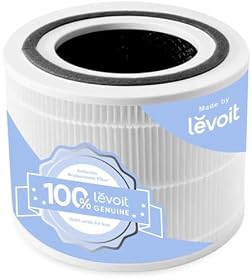
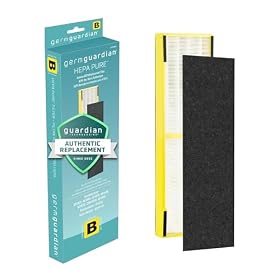
A low purchase price does not guarantee an affordable air purifier. Compare replacement filter cost, expected filter life, availability, energy use, and cleaning requirements to estimate the real cost of ownership.
When filter cost makes a cheap purifier expensive
A low-cost air purifier can become expensive when its replacement filters are costly, hard to find, or need frequent replacement. Before buying, compare the purifier’s purchase price with the cost of the filters you expect to use, how often they must be changed, energy consumption, and whether the unit is appropriate for your room.
Calculate the real cost of an air purifier
The purchase price is only the first part of the budget. A simple ownership estimate is:
Total cost = purifier price + replacement filters + electricity + optional pre-filters or accessories
For a useful comparison, estimate the cost over one, three, or five years. You do not need an exact electricity calculation to spot an obvious mismatch. A purifier with a very low upfront price but unusually expensive cartridges may cost more than a better-built unit with affordable filters.
Look for these details before buying:
Filter replacement price: Check the price of a genuine replacement filter, not just the purifier.
Replacement interval: A manufacturer may recommend replacement by time, usage hours, or filter-condition indicator.
Filter availability: Search for replacement filters before purchasing the machine. Limited availability is a long-term risk.
Filter configuration: Determine whether one cartridge contains the HEPA and carbon layers or whether they are separate parts.
Energy use: A purifier that runs continuously can add more to operating costs than one used occasionally.
Warranty requirements: Some manufacturers require specific filters or maintenance procedures to keep warranty coverage valid.
Replacement intervals are estimates, not guarantees. Smoke, heavy dust, pet hair, construction debris, and continuous high-speed operation can shorten filter life.
Product prices and availability are accurate as of the date/time indicated and are subject to change. Any price and availability information displayed on Amazon.com at the time of purchase will apply to the purchase of this product.
Why a small filter can cost more
A compact purifier does not necessarily use a cheap filter. Some smaller or less common units use proprietary cartridges produced in lower volumes. The filter may also combine several layers into a single sealed assembly, so you must replace the entire cartridge even when only one layer is heavily loaded.
A filter may include:
A washable or disposable pre-filter for larger particles
A pleated HEPA filter for fine particles
An activated carbon layer for some odors and gases
Additional treatment layers that may add cost without being essential for every household
A combined filter is convenient, but it can be less economical if the carbon section becomes saturated before the particle filter is full. Separate replaceable stages may provide more flexibility, although they can also make maintenance more complicated.
Product prices and availability are accurate as of the date/time indicated and are subject to change. Any price and availability information displayed on Amazon.com at the time of purchase will apply to the purchase of this product.
Compare filters by function, not just by label
HEPA filtration
A HEPA filter is the main particle-filtering stage in many residential air purifiers. It is intended to capture small airborne particles such as dust, pollen, and some fine particulate matter. The filter must be properly sealed in the purifier for the rated performance to be meaningful.
Do not assume that every replacement marketed as “HEPA-type” is equivalent to a true HEPA replacement. Check the manufacturer’s compatibility information and the filter specifications supplied for the purifier.
Carbon filtration
Activated carbon can help reduce some odors and certain gaseous pollutants. Its usefulness depends on the amount and quality of carbon, airflow, and the type and concentration of the odor. A thin carbon-coated sheet may not last as long as a deeper carbon bed.
If odor control is your main reason for buying a purifier, compare the carbon stage rather than focusing only on the particle-filtering label. Carbon is also a consumable material and may require replacement even when the HEPA portion still appears clean.
Pre-filters
A pre-filter catches larger debris before it reaches the finer filter. If it is washable, clean it only as directed by the manufacturer and let it dry completely before reinstalling it. If it is disposable, include its replacement cost in your ownership estimate.
A clean pre-filter can help maintain airflow and reduce the load on the main filter. It does not eliminate the need to replace the HEPA or carbon stages.
Product prices and availability are accurate as of the date/time indicated and are subject to change. Any price and availability information displayed on Amazon.com at the time of purchase will apply to the purchase of this product.
Check whether replacement filters are realistically available
Before buying an inexpensive purifier, search for its replacement filter using the exact model name or model number. Confirm all of the following:
The filter is currently available from a reliable seller.
The listing identifies the correct purifier models.
The filter dimensions and shape match the original, if those details are provided.
The manufacturer gives a replacement schedule.
The purifier does not require a filter chip or reset procedure that an incompatible filter may not support.
Avoid planning around a third-party replacement that has no clear compatibility information. A lower-priced filter is not necessarily a value if it fits poorly, restricts airflow, produces odors, or causes the purifier to report an error.
Include energy use in the comparison
Filters are usually the most visible ongoing expense, but electricity also matters when a purifier runs many hours per day. Compare the rated wattage or energy information for the operating speeds you expect to use.
A useful approach is to compare two realistic use patterns:
Continuous low or medium operation: common for bedrooms and living areas
Short high-speed cycles: common when clearing a temporary odor or particle increase
The highest fan speed may clean a room faster, but it may also use more electricity and produce more noise. A purifier that is quiet enough to run consistently can be more practical than one that is cheaper but usually left off.
Match the purifier to the room
An inexpensive purifier can be poor value if it is undersized. If the unit cannot move enough filtered air for the room, you may run it at maximum speed, receive less effective cleaning, or decide to buy another purifier.
Use the manufacturer’s room-size guidance and published clean air delivery information when available. Be cautious with room-size claims that do not explain the test conditions or air-change assumptions. Ceiling height, open doorways, cooking, smoking, pets, and outdoor air leakage can all affect the result.
For a large or open room, two appropriately sized units may be more useful than one small purifier. However, that also means two sets of filters and potentially higher energy use, so include those costs in the comparison.
A cheaper purifier may still be the better choice when
Low upfront cost is not automatically a problem. It may be reasonable when:
Replacement filters are easy to find and reasonably priced.
The filter lasts an appropriate amount of time for your air quality conditions.
The purifier is correctly sized for the room.
The pre-filter is easy to clean.
The unit has a useful warranty and clear maintenance instructions.
You plan to use it intermittently rather than continuously.
The key is not to avoid inexpensive purifiers altogether. It is to evaluate the complete operating cost before treating the purchase price as a bargain.
When a more expensive purifier can cost less overall
A higher initial price may make sense when the purifier offers readily available filters, a longer expected filter interval, separately replaceable filter stages, lower energy use, or a fan and housing designed for sustained operation. These benefits only matter if they are documented and relevant to your use.
Do not pay more solely for extra filtration terms or smart features. Prioritize the factors that affect your household: particle removal, odor control, noise, room size, filter availability, and maintenance cost.
A quick buying checklist
Before choosing a low-priced air purifier, answer these questions:
What is the exact replacement filter model?
How much does a genuine replacement cost?
How often does the manufacturer recommend changing it?
Is the replacement filter in stock from more than one reliable source?
Does the unit use a washable pre-filter?
Does the carbon layer meet your odor-control needs?
Is the purifier sized for the room where it will run?
What will it cost to operate at the speed you are likely to use?
Can you still obtain filters if the purifier is discontinued?
If the answers are unclear, the low purchase price is not enough information to establish good value. Choose a purifier with transparent maintenance requirements, or delay the purchase until replacement-filter availability is clear.
When replacing the purifier is more reasonable
If replacement filters are discontinued, repeatedly unavailable, damaged by poor storage, or nearly as expensive as a suitable replacement unit, replacing the purifier may be reasonable. Replace the unit sooner if the fan develops an electrical smell, the cord or plug becomes hot or damaged, the housing is cracked, or the purifier makes unusual mechanical noise.
Disconnect power before inspecting or cleaning the unit. Do not open the motor or electrical compartment unless the manufacturer specifically provides that procedure. For smoke, overheating, damaged wiring, or repeated electrical faults, stop using the purifier and contact the manufacturer or a qualified professional.
FAQ
How do I know whether an air purifier filter is too expensive?
Compare the filter price and expected replacement interval over several years, then add estimated electricity costs. A filter is poor value when its ongoing cost is high relative to the purifier’s useful performance, room coverage, and availability.
Can I wash a HEPA filter to save money?
Usually no. Washing can damage the filter media and reduce performance unless the manufacturer specifically identifies that filter as washable. Clean only the pre-filter as directed, and replace the HEPA filter according to the manufacturer’s guidance.
Are generic air purifier filters worth buying?
They can cost less, but compatibility and construction vary. Check dimensions, sealing surfaces, filter type, airflow, and any required reset or identification feature. Use the manufacturer’s filter when safety, warranty, or fit is uncertain.
Why does my air purifier need filters more often than expected?
Heavy dust, smoke, pet hair, pollen, construction particles, high fan speeds, and continuous operation can shorten filter life. Check and clean the pre-filter if permitted, inspect the filter for loading, and follow the manufacturer’s replacement guidance.