Pre-filters, HEPA filters, and carbon layers are not interchangeable. A pre-filter catches larger debris, a HEPA filter captures fine particles, and an activated carbon layer helps reduce certain odors and gases. Many air purifiers combine all three so each layer protects or supports the next.
Filters & Dust · Mon Sep 07
Pre-filter versus HEPA versus carbon layers
Pre-filters, HEPA filters, and carbon layers solve different air-quality problems. Here is what each layer captures, how they work together, and what to check before buying replacement filters.
What each filter layer does
Pre-filter: the first line of defense
The pre-filter sits where incoming air reaches the purifier first. It is designed to catch larger particles such as:
- Hair
- Pet fur
- Dust clumps
- Lint
- Larger dust particles
Some pre-filters are washable mesh screens. Others are disposable sheets attached to a multi-layer cartridge. A pre-filter does not replace a HEPA filter for fine-particle removal, but it can keep larger debris from loading the finer filter too quickly.
Check the manufacturer’s instructions before washing one. A washable pre-filter must be completely dry before it goes back into the purifier.
HEPA filter: fine-particle filtration
A HEPA filter is the main particle filter in many residential air purifiers. It is intended to capture fine airborne particles, including particles associated with dust, pollen, and smoke. It does not primarily remove odors or gaseous chemicals.
HEPA filters are usually pleated to provide a large filtering surface in a compact space. That surface gradually fills with trapped particles, which increases airflow resistance. A dirty HEPA filter can reduce the purifier’s airflow even if the motor is still running.
HEPA terminology can vary by manufacturer and market. Look for the exact filter description in the purifier’s documentation rather than assuming that every filter labeled “HEPA-type” has the same performance.
Activated carbon: odor and gas reduction
Activated carbon, also called activated charcoal, is used to adsorb some odors and gaseous compounds. It may help with smells from cooking, pets, smoke, and household products, but its effectiveness depends on the carbon’s amount, surface area, airflow, and the specific contaminant.
A thin carbon-coated sheet may provide less odor-control capacity than a thicker carbon-filled filter. Carbon also becomes less effective as its available adsorption sites are used. It should not be treated as a universal solution for strong chemical exposure or unsafe indoor air.
Replacement pre-filter
 4 Pack 211+ Replacement Washable Pre-Filters for Blueair Blue Pure 211+Cabiclean
$18.99 as of
View on Amazon 2 Pack KJ190L Filter Replacement For MOOKA KJ190 KJ190L KJ190H Air PurifieriSingo
$27.99 as of
View on Amazon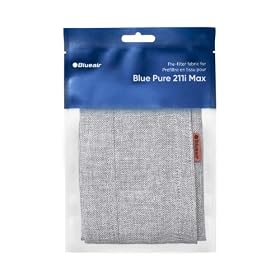 BLUEAIR Genuine Pre-Filter Blue Pure 211i Max Air Purifier, Washable Fabric, Fog GreyBLUEAIR
$12.99 as of
View on Amazon
Product prices and availability are accurate as of the date/time indicated and are subject to change. Any price and availability information displayed on Amazon.com at the time of purchase will apply to the purchase of this product.
How the layers work together
A common arrangement is:
- Pre-filter: catches larger debris.
- HEPA filter: captures fine airborne particles.
- Carbon layer: helps reduce certain odors and gases.
The physical order can vary by design, so follow the airflow arrows and the manufacturer’s instructions. In many units, the pre-filter protects the HEPA filter from larger debris. The HEPA filter then handles fine particles, while carbon addresses a different category of pollutants.
These layers do not make an air purifier equally effective at every task. A purifier with strong particle filtration may be good for dust or pollen but offer limited odor control if its carbon layer is very thin. Conversely, a large carbon filter is not a substitute for a properly sized particle filter.
Replacement HEPA filter
 HPA300 HEPA Air Purifier Filter R for Honeywell Air Purifier HPA100/200/300Cabiclean
$29.99 as of
View on Amazon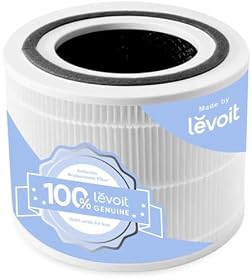 Levoit Core 300-P Air Purifier Replacement Filter, Genuine Air FiltersLevoit
$25.99 as of
View on Amazon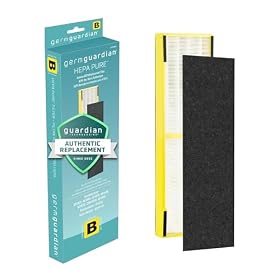 GermGuardian, Filter B HEPA Pure Genuine Air Purifier Filter, Removes 99.97% of Pollutants, Wildfire Smoke,…GermGuardian
$19.88 as of
View on Amazon
Product prices and availability are accurate as of the date/time indicated and are subject to change. Any price and availability information displayed on Amazon.com at the time of purchase will apply to the purchase of this product.
Which filter matters most for your problem?
Dust, pollen, and general airborne particles
Prioritize a purifier with a clearly identified fine-particle filter, such as a HEPA filter, and enough airflow for the room. The pre-filter is still useful because it captures larger debris and can extend the service life of the finer filter.
Pet hair and fur
The pre-filter matters most for visible hair and fur. HEPA filtration can help with smaller airborne particles, but no filter removes hair that has already settled on floors, furniture, or fabric. Regular cleaning of the pre-filter and the room is still necessary.
Smoke and cooking particles
A HEPA filter can address fine particles, while activated carbon may help with some odors and gases. For recurring smoke, also address the source and ventilate when safe and practical. An air purifier is not a substitute for fixing a combustion, ventilation, or fire-safety problem.
Pet, bathroom, or cooking odors
Look for a meaningful activated carbon component rather than assuming that any carbon label provides the same capacity. Odor control also depends on the source, room ventilation, and how quickly the filter becomes saturated.
Chemical smells
Activated carbon may help with some volatile compounds, but purifier performance varies widely. Remove or isolate the source when possible, follow product-safety guidance, and seek professional advice for persistent or concerning exposure. Do not rely on a consumer air purifier to make an unsafe space safe.
Replacement carbon filter
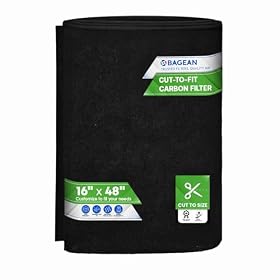 Bagean Cut to Fit Activated Carbon Filter Sheet 16” x 48” Carbon Air FilterBagean
$15.93 as of
View on Amazon Bagean Cut to Fit Activated Carbon Filter Sheet 16” x 48” Carbon Air FilterBagean
$20.98 as of
View on Amazon Core 300 Replacement Filter for LEVOIT Core 300-P Core 300S-P Air Purifierisinlive
$26.99 as of
View on Amazon
Product prices and availability are accurate as of the date/time indicated and are subject to change. Any price and availability information displayed on Amazon.com at the time of purchase will apply to the purchase of this product.
What to check before buying a replacement filter
Replacement filters should match the purifier model or the exact filter part specified by the manufacturer. Check:
- Model compatibility: Similar-looking cartridges may not seal correctly or fit the airflow path.
- Layer arrangement: Confirm whether the replacement includes a pre-filter, HEPA filter, carbon layer, or a combination.
- Carbon construction: A carbon-coated sheet and a thicker carbon-filled section are not equivalent.
- Washability: Never wash a disposable HEPA or carbon filter unless the manufacturer explicitly says it is washable.
- Seal and frame: Gaps around the cartridge can let unfiltered air bypass the filter.
- Replacement interval: Follow the manual, but consider replacing sooner in dusty, smoky, or pet-heavy conditions if airflow declines or the filter is visibly loaded.
A replacement cartridge that omits one of the original layers may change the purifier’s performance. For example, a HEPA-only replacement may continue to capture particles but provide less odor reduction than the original HEPA-and-carbon cartridge.
Combined filter cartridge
 Evalit Air Purifier Replacement Filter for ET066, Original Version, 2 PackEvalit
$33.99 as of
View on Amazon PUREBURG Smokestop Filter Compatible with Blueair 500 600 Air PurifierPUREBURG
$52.42 as of
View on Amazon Evalit Air Purifier Replacement Filter for ET066, Original Version, 1 PackEvalit
$26.99 as of
View on Amazon
Product prices and availability are accurate as of the date/time indicated and are subject to change. Any price and availability information displayed on Amazon.com at the time of purchase will apply to the purchase of this product.
Maintenance that helps all three layers
Turn the purifier off and unplug it before opening the housing. Then:
- Inspect the pre-filter for hair, lint, and dust.
- Clean a washable pre-filter only as directed, and let it dry fully.
- Do not brush, vacuum aggressively, or wash a disposable HEPA filter unless the manual permits it.
- Replace the HEPA or carbon cartridge when the indicator, manual, condition, or reduced airflow calls for replacement.
- Check that the filter is installed in the correct direction and that the cover closes fully.
- Wipe dust from the exterior air inlets and outlets without blocking them.
If the purifier has an electronic filter indicator, reset it only after installing the correct replacement. Resetting the indicator does not clean or extend a filter’s actual service life.
Common misconceptions
“A HEPA filter removes odors.”
Usually, HEPA filtration targets particles rather than odor molecules. Odor reduction generally requires activated carbon, and the result depends on the amount and condition of the carbon.
“A carbon filter removes dust.”
Carbon is not a replacement for a particle filter. It may be included in a combined cartridge, but fine-particle removal comes from the particle-filtering section.
“A washable filter is always better.”
Washable pre-filters can be convenient, but the fine-particle and carbon portions of many cartridges are disposable. Washing the wrong component can damage it or introduce moisture into the purifier.
“More filter layers always mean better performance.”
Additional layers can improve coverage of different pollutants, but they also add airflow resistance. The purifier must be designed to move air effectively through the complete cartridge. Room size, airflow, filter quality, and maintenance all affect results.
The practical takeaway
Choose a pre-filter for larger debris protection, a HEPA filter for fine airborne particles, and activated carbon for help with certain odors and gases. A combination cartridge is often the most versatile option, but inspect the actual construction and match the replacement to your purifier model. For room-size decisions, also consider the purifier’s published airflow or room-coverage guidance; filter labels alone do not tell you how quickly the unit can clean a room.
FAQ
Can I use a HEPA filter without a pre-filter?
Some purifiers are designed to operate without a separate pre-filter, but adding or removing layers can affect airflow and fit. Use only the filter configuration specified by the manufacturer.
Is activated carbon better than HEPA for smoke?
They address different parts of smoke. HEPA filtration targets fine particles, while activated carbon may help reduce some odors and gaseous compounds. A purifier intended for smoke may need both, along with adequate airflow.
How often should I replace a HEPA and carbon filter?
Follow the purifier’s manual and filter indicator. Dusty, smoky, or pet-heavy conditions can load filters sooner. Reduced airflow, visible loading, or persistent odors can also indicate that a replacement is needed.
Can I wash a HEPA or carbon filter?
Usually not. Wash a filter only if the manufacturer specifically identifies it as washable. Most disposable HEPA and carbon filters should be replaced rather than washed.