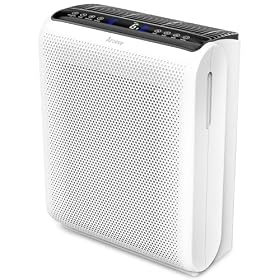
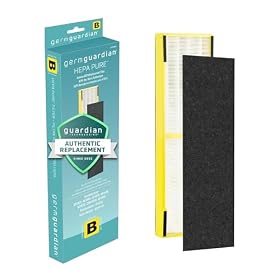
A low CADR may mean the purifier is undersized, but it can also result from a clogged filter, low fan speed, poor placement, or an apples-to-oranges coverage claim. Use the room-size calculation and troubleshooting checks below to find the cause.
If an air purifier’s CADR seems too low for your room, first compare its smoke CADR with the room’s size rather than relying only on the manufacturer’s advertised coverage area. Then check the filter, fan setting, airflow path, placement, and room layout. A purifier may be working normally but still feel ineffective if the room is open, has high ceilings, or needs more air changes per hour than the coverage claim assumes.
Check whether the CADR is actually undersized
CADR, or clean air delivery rate, measures how quickly a purifier delivers filtered air. It is usually listed in cubic feet per minute (CFM) for smoke, dust, and pollen.
For a quick estimate, use:
Required CADR ≈ room length × room width × ceiling height × desired air changes per hour ÷ 60
For example, a 12-by-15-foot room with an 8-foot ceiling has 1,440 cubic feet of air. At about 4.8 air changes per hour, it needs approximately 115 CFM of delivered clean air. A larger safety margin is useful for allergies, smoke, pets, or an open doorway.
The AHAM room-size method is commonly associated with roughly 4.8 air changes per hour and a smoke CADR near two-thirds of the room’s floor area. However, not every brand uses the same coverage assumption. Some advertised room sizes are based on fewer air changes per hour, a lower fan speed, or ideal conditions.
Use smoke CADR for the main comparison
When the goal is general particle removal, smoke CADR is often the most useful single number because it represents very small particles. Dust and pollen CADR can also be helpful, but compare the same rating across units when possible.
A purifier with a large advertised room size can still have a relatively modest CADR if its coverage claim assumes only one or two air changes per hour. If the room has high ceilings or connects to other spaces, calculate the entire air volume instead of using floor area alone.
Troubleshoot the purifier before replacing it
1. Inspect the filter and pre-filter
A loaded filter restricts airflow and reduces the amount of clean air the purifier can deliver. Check for:
- A visibly gray or dusty pre-filter
- A HEPA filter covered with dust or pet hair
- A carbon filter that smells saturated
- A filter wrapped in shipping plastic
- A filter installed backward or not fully seated
- A filter replacement warning that has been ignored
Unplug the purifier before opening it. Clean only washable components according to the manual. Do not wash a HEPA or carbon filter unless the manufacturer specifically says it is washable; moisture can damage the filter and encourage odor or microbial growth.
If the filter is clogged, replace it with the correct cartridge. A replacement filter can restore airflow when the motor is still operating normally, but it will not make an undersized purifier produce a higher CADR than its design allows.
2. Check for a blocked intake or outlet
Curtains, furniture, bedding, dust, and walls can restrict airflow. Leave clear space around both the air intake and clean-air outlet, following the clearance guidance in the manual.
Do not place the purifier behind a sofa, inside a shelf, directly against a wall, or beneath hanging fabric unless the manufacturer permits that setup. If the unit has a top outlet, keep the top clear. If it draws air from the sides or rear, those areas need room to breathe.
3. Confirm the fan speed and operating mode
CADR is generally measured at a specified fan speed, often the highest setting. Sleep, quiet, auto, and eco modes may run the fan much more slowly.
For a quick check, run the purifier on its highest manual setting for several hours with doors and windows closed. If air quality improves at high speed but not in auto mode, the purifier may be responding too conservatively or the sensor may not be detecting the pollutant you care about.
Auto mode is not a substitute for adequate CADR. A purifier cannot clean a large amount of air quickly if its control system keeps the fan at a low setting.
4. Look for leaks or incorrect assembly
A poorly seated filter, missing gasket, loose cover, or damaged seal can allow air to bypass the filter. Check that:
- The filter door closes completely
- The filter gasket is intact and positioned correctly
- No filter frame is cracked or warped
- The pre-filter and main filter are installed in the stated order
- No protective film remains on a replacement filter
A small amount of housing leakage can reduce effective filtration, even when the motor sounds normal. Do not modify the housing or seal openings with materials not approved by the manufacturer.
5. Consider the room layout and pollutant source
A purifier rated for one enclosed room may struggle in an open floor plan. Air from hallways, kitchens, stairwells, and adjacent rooms continually enters the space. Open windows, a running HVAC system, candles, cooking, fireplaces, smoking, sanding, and construction dust can also overwhelm the purifier’s clean-air output.
For source pollutants such as cooking particles or smoke, place the purifier near—but not dangerously close to—the source and keep the exhaust away from walls. Ventilation and source control are usually more effective than relying on a purifier alone. Never use an air purifier as a substitute for required ventilation, a range hood, or a carbon-monoxide alarm.
6. Check whether the sensor is measuring the right problem
A particle sensor can show a clean reading while odors remain. HEPA filtration targets airborne particles, not most gases and odors. Carbon can help with some gaseous pollutants, but its effectiveness depends on the amount and type of carbon, airflow, and pollutant concentration.
If the issue is an odor, chemical vapor, or persistent gas, a higher particle CADR may not solve it. Identify and remove the source, ventilate safely, and follow guidance from the relevant manufacturer or qualified professional.
7. Rule out a full drum, bag, or motor issue—where applicable
Most room air purifiers do not have a collection bag or drum, but combination air-cleaning systems and other appliances may. If your unit includes one, empty or replace it as directed.
If airflow remains weak with a new, correctly installed filter and all vents clear, listen for unusual grinding, buzzing, intermittent operation, or a motor that stops under load. Unplug the unit and contact the manufacturer rather than opening the motor housing. Electrical repairs should be handled by a qualified technician.
When the purifier is genuinely too small
Replace or supplement the unit when:
- Its smoke CADR is below the calculated requirement
- The room is open to adjacent spaces
- You must run it at an uncomfortably loud speed to notice improvement
- Air quality stays poor despite a clean filter and clear airflow path
- You need stronger control for smoke, allergies, pets, or frequent indoor particle sources
You can use two purifiers in different locations instead of one oversized unit. Add their CADRs only when their clean air is serving the same connected air volume; separate closed rooms need separate coverage. In an open layout, placement and air circulation still matter, so the simple addition is an estimate rather than a guarantee.
When choosing a replacement, prioritize independently reported CADR, the fan speed associated with that rating, replacement-filter availability, noise at the speed you expect to use, and the purifier’s actual operating cost. A very high maximum CADR is less useful if the unit is too loud to run at an effective setting.
A quick decision checklist
- Measure the room and ceiling height.
- Calculate the approximate CADR requirement.
- Compare that requirement with the purifier’s smoke CADR, not just its advertised room size.
- Remove shipping plastic and verify filter orientation.
- Clean or replace the pre-filter and main filter as directed.
- Clear the intake and outlet.
- Run the unit on high to distinguish a control-setting issue from a capacity issue.
- Close doors and windows during the comparison, unless ventilation is required for safety.
- If the unit still cannot keep up, move it to a smaller room, add another purifier, or replace it with a higher-CADR model.
If the purifier smells electrical, overheats, trips a circuit, or makes abnormal noises, stop using it and unplug it. Follow the manufacturer’s service instructions or seek qualified electrical help.