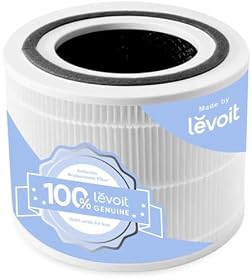
An air purifier with activated carbon can reduce smoke odors and some gaseous pollutants, while a HEPA filter captures smoke particles. Here is what to look for when choosing one for a room affected by cigarette, wildfire, or cooking smoke.
Air purifier with a carbon filter for smoke
An air purifier with a carbon filter can help reduce smoke odors and certain gases, but carbon works best alongside a true HEPA filter. Activated carbon adsorbs many odor-causing compounds, while HEPA filtration captures the fine particles in smoke. For wildfire or indoor fire smoke, choose a purifier with enough airflow for the room, use it continuously with doors and windows closed when appropriate, and address the smoke source first.
What a carbon filter does for smoke
Smoke contains both particles and gases. These require different types of filtration:
Activated carbon: Helps adsorb odors and some volatile organic compounds and gaseous pollutants.
HEPA filtration: Captures fine airborne particles, including much of the particulate matter associated with smoke.
Pre-filter: Collects larger dust, hair, and lint before they reach the main filters.
Carbon is not a substitute for particle filtration. A purifier with a large carbon stage but no effective particle filter may reduce odor while doing less to remove fine smoke particles. For general smoke cleanup, look for both activated carbon and true HEPA filtration.
What to look for when buying
A suitable smoke CADR
Clean Air Delivery Rate, or CADR, indicates how quickly a purifier can deliver filtered air. A higher CADR generally cleans a room faster than a lower one. Compare the purifier's published room-size guidance with the room where it will operate, but remember that these ratings may use different assumptions.
For smoke, avoid choosing a unit based only on its maximum advertised room size. A purifier operated at a lower speed may be quieter, but it also moves less air. If smoke removal is the priority, choose a unit with enough airflow to run at a useful setting without being left on an ineffective low mode.
A meaningful amount of activated carbon
Carbon quality depends on more than the words “carbon filter” on the package. Thin carbon-coated filter fabric may help with light odors, but it generally contains less adsorbent material than a deeper carbon bed or a filter with a clearly stated carbon quantity.
Manufacturers do not always publish the weight or thickness of the carbon layer. When they do, that information can help distinguish a smoke-focused filter from a basic odor filter. If the product gives no carbon quantity, consider its carbon stage a helpful feature rather than proof that it will remove heavy or persistent smoke odors.
True HEPA or equivalent particle filtration
A smoke-focused purifier should also identify the type of particle filter it uses. A true HEPA filter is designed to capture very small airborne particles. Some products use other high-efficiency filter descriptions instead, so check the manufacturer's stated performance and replacement-filter information rather than relying only on vague terms such as “smoke filter.”
A replaceable filter system
Smoke loads filters faster than ordinary household dust. Choose a purifier with replacement filters that are available for the specific unit. Check the expected replacement interval in the manual, but replace the filter sooner if it becomes visibly loaded, smells smoky after operation, or the purifier's airflow drops.
A carbon filter may stop controlling odor before the HEPA portion looks dirty. A filter that still moves air can therefore need replacement because its carbon has become saturated.
Low-ozone operation
Avoid creating another air-quality problem while trying to remove smoke. For occupied spaces, prefer mechanical filtration and check whether the purifier is certified or documented for low ozone emissions. Be cautious with products that emphasize ionizers, ozone generation, or ozone-based odor treatment. Do not use an ozone generator in an occupied room, and do not rely on ozone as a substitute for source control and filtration.
Product prices and availability are accurate as of the date/time indicated and are subject to change. Any price and availability information displayed on Amazon.com at the time of purchase will apply to the purchase of this product.
Which type of smoke are you trying to remove?
Cigarette or cigar smoke
Carbon can help with lingering tobacco odor, while HEPA filtration addresses airborne particles. Because smoke residue settles on walls, upholstery, clothing, carpets, and other surfaces, an air purifier cannot remove all odor from a room by itself. Ventilation, cleaning, laundering, and eliminating indoor smoking are also important.
Run the purifier near the affected area without blocking its intake or exhaust. Keep doors closed when practical so the unit is not continually trying to clean air from a larger area.
Wildfire smoke
For wildfire smoke, particle removal is usually the first priority. Select a purifier with a suitable smoke CADR and HEPA or equivalent high-efficiency particle filtration. Carbon can provide additional help with odor and some gases, but it does not make a purifier capable of removing every pollutant in wildfire smoke.
When outdoor air quality is poor, keep windows and doors closed as recommended by local health authorities. Run the purifier continuously or at a high setting that is practical for the room. A properly sized unit in a bedroom or other closed room may be more useful than a small unit placed in a large open living area.
Cooking smoke and odors
Use the range hood or exhaust fan first, especially when it vents outdoors. An air purifier can reduce remaining particles and odors, but it should not replace ventilation or safe cooking practices. Carbon is particularly useful for residual odors, while HEPA filtration helps with airborne cooking particles.
Fireplace or indoor fire smoke
If smoke from a fireplace, wood stove, or indoor fire is entering the room, stop the source and correct the ventilation or equipment problem before relying on an air purifier. A purifier is not a solution for a flue, chimney, combustion, or carbon monoxide problem. If smoke is coming from an active fire or you suspect carbon monoxide, leave the area and follow emergency guidance.
Product prices and availability are accurate as of the date/time indicated and are subject to change. Any price and availability information displayed on Amazon.com at the time of purchase will apply to the purchase of this product.
How to use the purifier effectively
Remove or control the smoke source. An air purifier cannot keep up indefinitely with active smoke entering the room.
Place it where air can circulate. Keep the intake and exhaust clear of walls, curtains, furniture, and clutter, following the manual's clearance guidance.
Use a higher fan speed during smoke events. Lower speeds are quieter but clean less air per hour.
Keep the room reasonably closed when outdoor smoke is heavy. Otherwise, polluted air may continuously replace the air being cleaned.
Run the purifier long enough. Odor reduction can take longer than particle reduction, particularly when smoke has settled into soft surfaces.
Check the filter regularly. Follow the manufacturer's instructions and do not wash a filter unless it is specifically labeled washable.
Product prices and availability are accurate as of the date/time indicated and are subject to change. Any price and availability information displayed on Amazon.com at the time of purchase will apply to the purchase of this product.
Common buying mistakes
Choosing by room size alone
A stated room-size rating does not tell you how much carbon the filter contains or how well it handles smoke odors. Check CADR, filter construction, and replacement-filter availability together.
Buying a small desktop unit for a large room
A compact purifier may be suitable for a small bedroom, office, or personal area. It may be inadequate for a large living room, open floor plan, or room with an active smoke source. Match the purifier to the space where people spend time and keep doors closed when possible.
Expecting carbon to remove all smoke pollution
Carbon is mainly relevant to gases and odors. It does not replace HEPA filtration for smoke particles, and a small carbon layer can become saturated quickly under heavy smoke conditions.
Ignoring replacement-filter cost and availability
The purchase decision includes the ongoing cost and availability of filters. Before buying, verify that the correct HEPA, carbon, or combined replacement cartridge is available and that the purifier provides a filter-change indicator or clear maintenance instructions.
When an air purifier is not enough
Seek professional help for persistent smoke caused by a combustion appliance, chimney, HVAC problem, or building defect. Use working smoke alarms and carbon monoxide alarms where appropriate. For wildfire smoke, follow local public-health guidance, especially if anyone in the household has asthma, heart disease, lung disease, is pregnant, or is otherwise sensitive to poor air quality.
If a purifier develops a burning or electrical smell, makes unusual noises, overheats, or shows damaged wiring, turn it off and unplug it if safe to do so. Follow the manufacturer's service instructions rather than opening the electrical components yourself.
When the unit has reduced airflow, a persistent smoky odor after a new filter, or filters that are difficult to obtain, replacing the filter is the reasonable first step. Replace the purifier when it cannot move enough air for the room, compatible filters are no longer available, or the motor and electrical components are failing.
FAQ
Is a carbon filter or a HEPA filter better for smoke?
They address different parts of smoke. Activated carbon helps with odors and some gases, while HEPA filtration captures fine smoke particles. For most smoke problems, choose a purifier that uses both.
Does an air purifier remove cigarette smoke odor?
It can reduce airborne odor and particles, especially when it has a substantial activated-carbon stage and is sized for the room. It cannot remove all odor from smoke residue absorbed into furniture, carpets, walls, clothing, and other surfaces.
How much activated carbon should an air purifier have for smoke?
More carbon generally provides more adsorption capacity, but manufacturers do not always publish the carbon weight. A deeper carbon bed or clearly stated carbon quantity is generally more informative than a thin carbon-coated sheet. For heavy smoke, treat carbon capacity and replacement-filter availability as important purchase factors.
Can a HEPA purifier remove wildfire smoke?
A properly sized purifier with HEPA or equivalent high-efficiency particle filtration can reduce airborne wildfire-smoke particles. Activated carbon may help with odors and some gases, but no household purifier removes every pollutant. Keep windows and doors closed when appropriate and follow local health guidance.
How often should a carbon smoke filter be replaced?
Follow the manufacturer's schedule, but heavy smoke can exhaust carbon sooner than normal household use. Replace the filter if the smoky odor returns, airflow decreases, the filter is visibly loaded, or the purifier indicates that replacement is due.