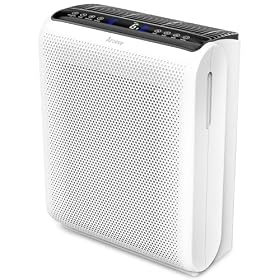
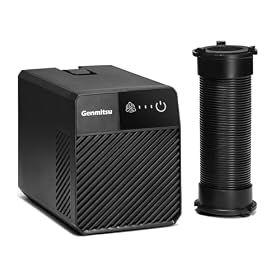
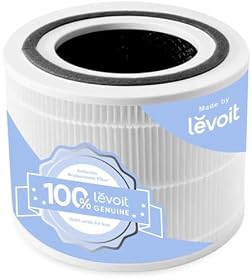
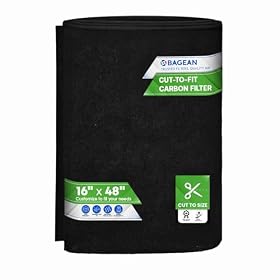
A basement workshop office needs more than a small desktop purifier. Look for a true HEPA filter, enough airflow for the room, a useful pre-filter, manageable noise, and a design that complements—not replaces—dust collection and ventilation.
What do you need help with?
Open an answer, or tell us what we should cover next.
Answered in this guide
Choose an air purifier for a basement workshop office
Look for true HEPA or high-efficiency particle filtration, a substantial pre-filter, and optional activated carbon. These features address fine workshop dust, larger particles, and odors while complementing—not replacing—dust collection and ventilation.
Estimate the target CADR from the room’s volume and desired air changes per hour, then compare that figure with the purifier’s rated airflow instead of relying only on its advertised room-size coverage.
Compare noise, controls, filters, and ozone safety
Prioritize adjustable fan speeds, clear noise information, affordable available replacement filters, and no intentional ozone production. A purifier that works quietly during office use and harder after dusty tasks is more practical.
Position the purifier where it can circulate air through the occupied part of the room, while keeping airflow paths clear. Avoid placing it tightly against walls or under benches unless the manual permits it.
Know when to replace the purifier instead of its filter
Replace the filter when it is loaded, airflow declines, or its service interval arrives. Replace the purifier when compatible filters are unavailable or the housing is damaged, rather than continuing with an unsuitable unit.
Request a topic and help us choose what to build next.
Set up dust collection for workshop activities
Diagnose and fix basement moisture or mold problems
Calculate the purifier’s ongoing operating cost
Requests help us prioritize the next guide. No email required.
One anonymous request per topic.
A good air purifier for a basement workshop office should capture fine airborne particles without making the office too noisy to use. Prioritize a true HEPA or high-efficiency particle filter, adequate clean air delivery rate (CADR), an easy-to-clean pre-filter, and replacement filters that are realistically available. If the room also has odors or fumes, activated carbon can help, but it is not a substitute for source control or ventilation.
What this type of room needs
A combined workshop and office has several different air-quality problems:
Wood dust and sanding dust: Fine particles can remain airborne after visible dust settles.
Metal or plastic particles: Cutting, grinding, and drilling can produce irritating dust and debris.
Office dust and allergens: A purifier can reduce ordinary airborne dust, pollen, and similar particles.
Adhesive, paint, and solvent odors: These are gases or vapors, so particle filtration alone will not remove them effectively.
Basement dampness or musty odors: A purifier may reduce some airborne particles, but it will not correct leaks, condensation, high humidity, or mold growth.
The safest arrangement is to capture dust at the tool with a dust collector or shop vacuum, ventilate fumes outdoors when appropriate, and use the air purifier for residual airborne particles.
Choose the right filtration
True HEPA or high-efficiency particle filtration
A true HEPA filter is the main feature to look for when the goal is reducing fine airborne particles. The filter must be installed in a well-sealed purifier so air does not bypass it around the filter frame.
Some products use terms such as “HEPA-type” or “HEPA-like.” Those labels do not necessarily describe the same filtration performance as a true HEPA filter. Check the manufacturer’s specifications rather than relying on the word “HEPA” alone.
A substantial pre-filter
A pre-filter catches larger dust and helps protect the main filter. This matters in a workshop, where coarse dust can load a fine-particle filter quickly.
A washable or cleanable pre-filter can reduce operating cost, but follow the cleaning instructions carefully. Do not reinstall a damp filter. If the purifier has only a thin pre-filter and you regularly sand, cut, or grind, expect to inspect the main filter more often.
Activated carbon for odors
Carbon can reduce some odors and volatile compounds, but performance depends heavily on the amount and type of carbon. A thin carbon-coated filter may help with light household odors but have limited capacity for strong workshop fumes.
Do not use an air purifier as the only control for solvent, paint, combustion, or other hazardous vapors. Use the product’s safety instructions, appropriate ventilation, and suitable respiratory protection where required.
Product prices and availability are accurate as of the date/time indicated and are subject to change. Any price and availability information displayed on Amazon.com at the time of purchase will apply to the purchase of this product.
Size it by CADR, not just the advertised room size
The purifier needs to move enough filtered air for the room. A convenient way to estimate the target is:
Required CADR ≈ room volume × desired air changes per hour ÷ 60
Measure the room’s length, width, and ceiling height to calculate volume. For example, a basement room with a high ceiling needs more airflow than a room with the same floor area and a standard ceiling.
The appropriate air-change target depends on the activity. A quiet office may need less airflow than a room where sanding or other dusty work occurs. Treat the calculation as a planning estimate, then compare it with the manufacturer’s published CADR or airflow data.
If the workshop and office are separated by a door or partition, size and place the purifier for the area where people spend time. A single unit may not clean both spaces effectively when airflow between them is restricted.
Product prices and availability are accurate as of the date/time indicated and are subject to change. Any price and availability information displayed on Amazon.com at the time of purchase will apply to the purchase of this product.
Features that matter in a workshop office
Adjustable fan speeds
Multiple speeds let you run the purifier quietly during office work and increase airflow after dusty activity. A purifier that only performs well at its loudest setting may be less practical than one with adequate capacity at a moderate setting.
Noise information
Check the manufacturer’s noise specification at the fan speeds you are likely to use. A low-noise setting may be quiet but move too little air for workshop cleanup. If possible, place the purifier away from the desk while keeping its air intake and outlet unobstructed.
Filter availability and cost
Before buying, confirm that replacement particle filters and pre-filters are available for the exact model. Filter life varies with dust loading, runtime, indoor air quality, and fan speed. A filter indicator is useful, but it should not replace visual inspection in a dusty workshop.
No intentional ozone production
Avoid air-cleaning equipment that intentionally produces ozone, especially in an occupied basement office. Ozone is an irritant and is not a preferred solution for routine particle or odor control. Be cautious with ionizing or plasma features and review the manufacturer’s safety information before enabling them.
Stable placement and protected controls
A workshop purifier should stand securely where it cannot be knocked over, splashed, or buried under materials. Keep the intake and exhaust clear. Avoid placing it directly beside a tool where chips and large debris can be pulled into the housing.
Product prices and availability are accurate as of the date/time indicated and are subject to change. Any price and availability information displayed on Amazon.com at the time of purchase will apply to the purchase of this product.
Placement and operating routine
Place the purifier where it can circulate air through the occupied part of the room. Do not push it tightly against a wall or under a bench unless the manual specifically allows that placement.
A practical routine is:
Turn on dust collection before starting a dusty tool.
Use the purifier during the work and for a cleanup period afterward.
Keep the workshop door closed when that helps prevent dust from spreading into the rest of the home.
Vacuum settled dust with suitable equipment instead of sweeping it into the air.
Inspect the pre-filter regularly and clean or replace it as directed.
Replace the main filter when the indicator activates, airflow drops, the filter is visibly loaded, or the manufacturer’s instructions call for replacement.
Do not operate the purifier in a way that redistributes dust toward a person’s breathing zone. For particularly dusty work, use local exhaust at the tool and appropriate eye and respiratory protection.
Product prices and availability are accurate as of the date/time indicated and are subject to change. Any price and availability information displayed on Amazon.com at the time of purchase will apply to the purchase of this product.
Basement-specific concerns
An air purifier cannot solve a wet basement. Use a hygrometer to monitor humidity, look for plumbing or foundation leaks, and address condensation or water intrusion. A dehumidifier may be the more important appliance if humidity is high.
If there is visible mold, extensive musty growth, sewage contamination, or persistent water damage, address the source and consider professional help. Avoid disturbing moldy materials merely to make the purifier work harder.
If the basement contains fuel-burning equipment, confirm that carbon monoxide alarms are installed as required and never rely on an air purifier to protect against carbon monoxide.
When one purifier is not enough
Consider a second unit when:
The office and workshop are in separate rooms.
Doors or partitions prevent air from circulating.
The room is unusually large or has high ceilings.
The purifier must run at an uncomfortably loud setting to move enough air.
Dust is generated frequently and the office must remain clean while work continues.
A larger purifier is not automatically better if its replacement filters are unavailable, its intake is easily clogged, or its operating noise keeps it switched off. The best choice is a unit with enough airflow, suitable filtration, and a maintenance routine you will actually follow.
When to replace the purifier instead of the filter
Replace the filter when airflow has declined, the filter is loaded, or the replacement interval has arrived. Replace the purifier when the correct filters are no longer available, the housing is damaged, the fan develops an electrical or mechanical fault, or the unit cannot provide useful airflow without excessive noise.
Unplug the purifier before inspecting or cleaning it. Do not open the motor or electrical compartment unless the manufacturer specifically permits that work. Stop using the unit if it smells overheated, repeatedly trips a circuit, sparks, or shows damaged wiring, and have a qualified professional assess it when appropriate.
FAQ
Is a HEPA air purifier enough for a basement workshop?
It can reduce airborne fine particles, but it should supplement tool-level dust collection, cleanup, and ventilation. It will not safely control every fume, vapor, or large burst of dust.
What type of air purifier is best for a workshop and office combination?
Look for a true HEPA or comparable high-efficiency particle filter, a substantial pre-filter, adequate CADR for the room volume, adjustable fan speeds, and readily available replacement filters. Activated carbon is useful for some odors but has limits with strong or hazardous vapors.
Can an air purifier remove basement mold?
It may capture some airborne mold particles, but it cannot remove established growth or fix moisture. Correct leaks, condensation, and humidity problems, and seek professional help for extensive contamination.
Should a workshop air purifier run while sanding?
It can run as supplemental filtration, but use dust collection at the tool first. Keep the purifier positioned safely and follow the tool, purifier, and respiratory-protection instructions.