Replacement HEPA Filter Compatibility: How to Choose the Right Filter
A replacement HEPA filter is compatible only when it fits the purifier’s model, housing, airflow path, and sealing surfaces. Use the model number first, then confirm dimensions, filter construction, and any required pre-filter or carbon layer.
A replacement HEPA filter is compatible when it fits your air purifier’s exact model and seals correctly inside the filter compartment. Start with the purifier’s model number—not just its brand or room-size rating—then compare the replacement filter’s dimensions, shape, filter stages, and installation orientation. A filter that appears to fit but leaves gaps can allow unfiltered air to bypass the media.
Check the purifier model first
Look for the model number on:
The rating label on the back, bottom, or side of the purifier
The filter door or filter compartment
The owner’s manual
The original filter packaging or purchase record
The manufacturer’s replacement-filter page
Model names can be similar, and one product family may use several filters with different shapes or dimensions. A listing that says “fits most” or “universal” is not enough by itself. Confirm that your exact model number is included in the compatibility list.
If the label is missing, record the purifier’s brand, product name, dimensions, and photos of the old filter and filter compartment. These details can help narrow the options, but manufacturer model confirmation is safer when available.
Compare the filter’s physical dimensions
Measure the old filter only after removing it from the purifier. Check:
Height
Width
Thickness
Rounded or squared corners
Tabs, handles, frames, or pull straps
Airflow direction, if marked
The location of any gasket or sealing edge
A small dimensional difference can matter. The filter must sit fully in its guides and allow the filter door to close without excessive force. It should not rattle, bow, or leave visible gaps around the perimeter.
Do not assume that two filters with the same height and width are interchangeable. Different thicknesses, frames, tabs, or gasket locations can prevent proper seating.
Product prices and availability are accurate as of the date/time indicated and are subject to change. Any price and availability information displayed on Amazon.com at the time of purchase will apply to the purchase of this product.
Confirm the filter construction
“HEPA filter” describes the particle-filtration media, but replacement filters may include additional layers. Compare the original filter and the replacement listing for the following components.
HEPA or high-efficiency particle layer
The replacement should match the purifier’s required filter type. Some products use a true HEPA filter, while others specify a different high-efficiency or HEPA-type construction. Do not assume that a similar-sounding label has the same performance or airflow characteristics.
Use the purifier’s manual or manufacturer documentation as the reference for the required filter type. Avoid upgrading to a denser filter solely because the description sounds more advanced; excessive resistance can reduce airflow if the purifier was not designed for it.
Activated carbon layer
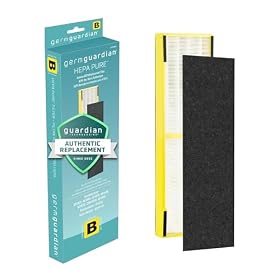
Many purifier filters combine particle filtration with an activated carbon layer for odors and some gaseous pollutants. A replacement with little or no carbon may fit physically but provide different odor-control performance.
If odor reduction is important, check whether the original filter has a visibly separate carbon layer or a black carbon-coated section. Compare the replacement’s construction and the manufacturer’s description rather than relying only on the word “HEPA.”
Washable or removable pre-filter
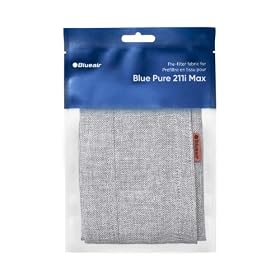
Some purifiers have a washable mesh pre-filter outside the main cartridge. Others include the pre-filter as part of the replaceable filter assembly. Make sure you know which components are replaced and which are cleaned and reused.
A replacement HEPA cartridge may be compatible with the purifier while still requiring the original outer pre-filter. Leaving out a required pre-filter can allow hair and coarse dust to load the HEPA media prematurely.
Product prices and availability are accurate as of the date/time indicated and are subject to change. Any price and availability information displayed on Amazon.com at the time of purchase will apply to the purchase of this product.
Check the seal and airflow direction
The filter should seal against the purifier’s frame on all intended sides. Look for a foam gasket, rubber edge, rigid frame, or close-fitting filter door. If the replacement does not seal, air can travel around the filter instead of through it.
Before installation:
Turn off and unplug the purifier.
Open the filter compartment according to the manual.
Remove loose dust from the compartment with a dry, soft cloth or the method permitted by the manufacturer.
Compare the old and new filters side by side.
Match the airflow arrows or “front” and “back” markings.
Confirm that the filter sits flat and that the cover closes normally.
Do not force the filter door closed. A forced cover may damage the frame, latch, or filter seal.
Product prices and availability are accurate as of the date/time indicated and are subject to change. Any price and availability information displayed on Amazon.com at the time of purchase will apply to the purchase of this product.
OEM versus compatible replacement filters
An original-equipment filter is made or authorized for the purifier manufacturer and is usually the simplest compatibility choice. A third-party compatible filter may cost less or offer different media, but compatibility depends on more than outside dimensions.
When evaluating a compatible filter, look for:
Your exact purifier model in the compatibility list
Matching dimensions and frame shape
A comparable gasket or sealing edge
The required HEPA or high-efficiency filter type
The correct carbon and pre-filter arrangement
Clear installation instructions
A return policy in case the filter does not seat correctly
Be cautious with listings that use only a brand name, a room-size number, or a broad product-family description. Those details do not prove that the filter matches your purifier.
Do not rely only on the filter-change light
A filter indicator may be based on elapsed time, estimated airflow, or a sensor. It does not identify which replacement filter you need. Resetting the indicator also does not confirm that a new filter is compatible.
After installing the correct filter, reset the indicator using the instructions for your specific purifier. If the light will not reset, verify the button sequence and make sure the filter door is completely closed. Do not bypass a safety interlock or operate the purifier with the filter compartment open.
What to do if the replacement does not fit
Stop and compare the old and new filters rather than trimming, folding, compressing, or modifying the replacement. Altering the filter can create bypass gaps or release fibers into the airflow.
Check these points:
The model number may be similar but not identical.
The filter may be installed backward.
A reusable pre-filter may still need to be transferred.
Packaging film or protective material may still be attached.
The replacement may have a different frame or gasket position.
The purifier may require a complete cartridge rather than a loose HEPA sheet.
If the model is correct but the replacement still does not seat, contact the seller or manufacturer before running the purifier. A wrong or defective filter should generally be returned rather than forced into place.
When to replace the purifier instead of the filter
Replacing the purifier may be more practical when the correct filter is discontinued, repeatedly unavailable, or costs close to a new compatible unit. It may also make sense if the purifier has a damaged filter door, warped housing, failing controls, unusual noise, or a motor that cannot maintain airflow.
For a functioning purifier with readily available filters, replacing the cartridge at the manufacturer’s recommended interval is usually the more direct solution. Follow the manual for replacement timing, especially if the purifier operates around smoke, pets, renovation dust, or other heavy particle loads.
FAQ
How do I know which HEPA filter fits my air purifier?
Find the purifier’s exact model number and match it to the replacement filter’s compatibility list. Then compare dimensions, frame shape, gasket location, airflow direction, and any included carbon or pre-filter layers.
Can I use a universal HEPA filter in my air purifier?
Only if it physically fits, seals correctly, and is approved or identified as compatible with the purifier. A universal filter that leaves gaps or restricts airflow may reduce filtration and purifier performance.
Can I use a thicker HEPA filter if it fits the compartment?
Not necessarily. A thicker or denser filter can restrict airflow, prevent the door from closing, or fail to seal properly. Use the filter size and construction specified for your purifier model.
Does a replacement HEPA filter also include activated carbon?
Some replacement cartridges include activated carbon, while others contain only particle-filtering media. Check the product description and compare it with the original cartridge if odor control matters.
Should I wash a replacement HEPA filter?
Usually no. Most HEPA cartridges are replaceable rather than washable. Wash or clean a filter only when the purifier manufacturer specifically says that the component is washable.