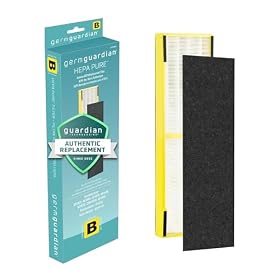
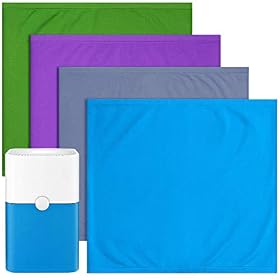
The best air purifier for a dusty workshop office should combine a true HEPA filter, a washable or replaceable pre-filter, enough airflow for the room, and a design that can tolerate frequent dust loading. Use it to control airborne particles after improving source collection—not as a substitute for a shop vacuum or proper dust extraction.
A true HEPA air purifier with a substantial pre-filter and enough clean-air delivery for the room is usually the best choice for a dusty workshop office. Look for easy filter access, a washable or vacuumable pre-filter, multiple fan speeds, and a published CADR or room-size rating. If the office shares air with sanding, cutting, or grinding work, control dust at the tool first with dust collection and ventilation; an air purifier is a secondary control, not a replacement for safe workshop practices.
What to look for
True HEPA filtration
A HEPA filter is useful for fine airborne particles that can remain suspended after woodworking, drywall work, sanding, or other dusty tasks. Check the product documentation for the actual filter type rather than relying on vague terms such as “HEPA-style” or “high efficiency.”
The filter should be installed so air cannot easily bypass it around the frame. A well-sealed filter and housing matter because unfiltered air can reduce the benefit of the filter itself.
A real pre-filter
Workshop dust can load a fine-particle filter quickly. A pre-filter catches larger debris before it reaches the HEPA stage, helping maintain airflow and extending filter life.
Useful pre-filter features include:
A removable screen or mesh that can be vacuumed or washed according to the instructions
Easy access without dismantling the purifier
A replacement option if the pre-filter becomes damaged
A filter indicator or another way to monitor restriction
Do not wash a filter unless the manufacturer specifically says it is washable. A wet or damaged filter can restrict airflow or allow material to pass through.
Enough airflow for the room
Filter efficiency alone does not tell you how quickly a purifier cleans the air. Airflow matters just as much. Compare the unit’s CADR, if published, or its stated room coverage under a defined air-change assumption.
For a workshop office, avoid sizing a purifier only for the office’s floor area if the door stays open to a larger dusty space. Consider the volume of the connected area and choose a unit that can run at a useful speed without being irritatingly loud.
A larger purifier operated at a quieter setting can be more practical than a small unit that must run at maximum speed continuously. Manufacturer room ratings are not always based on the same assumptions, so CADR is generally more useful for comparing airflow between products.
A replaceable filter supply
Dusty environments consume filters faster than ordinary bedrooms or offices. Before buying, confirm that replacement HEPA, carbon, and pre-filter components are available for the specific purifier.
Also check the expected replacement schedule in the manual. The actual interval may be shorter when the purifier operates near sawdust, sanding dust, renovation debris, or other heavy particle sources.
Low noise at useful speeds
If the purifier will run while you work at a desk, noise matters. A unit with several fan speeds gives you more control than one with only low and high settings. Auto mode may be convenient, but it is not always ideal in a workshop because a particle sensor can react slowly, become coated with dust, or fail to represent dust near a particular tool.
HEPA versus carbon for workshop dust
For airborne workshop particles, HEPA filtration is the primary feature. Carbon filters are mainly for odors and some gaseous pollutants. A thin carbon sheet may help with mild odors, but it should not be treated as a solution for solvent vapors, paint fumes, fuel vapors, or other hazardous gases.
If odor or chemical exposure is the concern, follow the product’s stated limitations and use appropriate ventilation and respiratory protection. Do not assume that an ordinary household air purifier makes a hazardous workshop safe.
Product prices and availability are accurate as of the date/time indicated and are subject to change. Any price and availability information displayed on Amazon.com at the time of purchase will apply to the purchase of this product.
Safe placement in a workshop office
Place the purifier where it can draw and discharge air freely, with clearance around the intake and outlet. Keep it away from piles of dust, open containers, wet areas, sparks, and locations where chips could be pulled directly into the fan.
A practical arrangement is to position the purifier in the office or clean-air zone, while keeping the dusty work area controlled at the source. If the purifier is placed directly beside a saw or sander, it may load its pre-filter rapidly without capturing all dust before it spreads.
Avoid pointing the exhaust directly at a pile of loose dust. Keep cords away from walkways, and follow the manufacturer’s instructions for grounding, moisture exposure, and extension-cord use.
Product prices and availability are accurate as of the date/time indicated and are subject to change. Any price and availability information displayed on Amazon.com at the time of purchase will apply to the purchase of this product.
How to use an air purifier with workshop dust
Capture dust at the tool. Use the tool’s dust port, a suitable dust collector, or a shop vacuum with the correct hose and filtration.
Clean surfaces safely. Vacuum settled dust rather than using compressed air, which can re-suspend fine particles.
Run the purifier before and after dusty work. Continued operation can help remove particles that remain airborne.
Use a higher fan speed during or immediately after dusty work. Return to a quieter speed when the air has cleared.
Inspect the pre-filter often. Heavy visible loading is a sign that it needs cleaning or replacement.
Check the HEPA filter and seals. Replace damaged, collapsed, or excessively dirty filters.
Wear respiratory protection appropriate to the material and task. Wood dust, sanding dust, masonry dust, and coatings can present different hazards. Follow product safety instructions and applicable workplace guidance.
Product prices and availability are accurate as of the date/time indicated and are subject to change. Any price and availability information displayed on Amazon.com at the time of purchase will apply to the purchase of this product.
When an air purifier is not enough
An air purifier is not a substitute for dust extraction, local exhaust ventilation, housekeeping, or suitable respiratory protection. It is especially inadequate as the only control for:
Dust produced continuously by an uncontained saw, sander, or grinder
Combustible dust hazards
Asbestos, lead, mold, or other regulated contaminants
Solvent vapors, paint fumes, or fuel vapors
Heavy debris that can clog a household purifier quickly
For hazardous materials or significant airborne exposure, stop and use the appropriate control method. A qualified safety professional can help determine the right equipment and work practices.
Troubleshooting a purifier that seems ineffective
The pre-filter is clogged
Turn the unit off and unplug it before inspection. Clean or replace the pre-filter only as directed. A clogged pre-filter can reduce airflow enough that even a good HEPA filter removes little air from the room.
The HEPA filter is loaded or installed incorrectly
Check the airflow direction, filter orientation, packaging removal, and seating of the filter. Replace it if it is visibly damaged or remains heavily restricted after the pre-filter is cleaned.
Dust is bypassing the filter
Inspect the filter frame, cover, and housing for gaps or broken seals. Do not modify the purifier with tape, improvised filters, or materials that could obstruct airflow or create a fire risk. Use manufacturer-approved replacement parts.
The purifier is undersized or placed poorly
Try a higher fan speed and move the unit away from walls, furniture, and dust piles. If the space is open to a much larger workshop, use the connected room volume—not just the office dimensions—when evaluating capacity.
The dust source is overwhelming the purifier
Improve tool-level collection and clean settled dust. If the pre-filter becomes clogged after every work session, a dedicated dust collector or properly filtered shop vacuum is likely the more important purchase.
The motor makes unusual noises or overheats
Turn the purifier off and unplug it. Check for blocked intakes, foreign material, a damaged fan, or a filter installed incorrectly. Stop using the unit if it smells burnt, trips a breaker, shows damaged wiring, or continues to overheat. Electrical repairs should be handled by the manufacturer or a qualified technician.
Bottom line
For a dusty workshop office, prioritize a true HEPA filter, strong measured airflow, a serviceable pre-filter, available replacement filters, and tolerable operating noise. Choose a larger-capacity unit if the office exchanges air with the workshop, but keep source capture and safe cleanup ahead of air purification. The best purifier is the one you can run consistently without quickly clogging, bypassing the filter, or creating a new safety problem.
FAQ
Is a HEPA air purifier good for workshop dust?
Yes, a properly sealed HEPA purifier can remove airborne fine particles, but it should supplement tool-level dust collection and safe cleanup. It is not designed to replace a dust collector, shop vacuum, ventilation, or respiratory protection.
Should I use a carbon filter for sawdust?
Carbon is not the main filter needed for sawdust. A HEPA filter and effective pre-filter are more important for airborne particles. Carbon may help with some odors, but it is not a general solution for solvent vapors or hazardous fumes.
How often should I replace an air purifier filter in a workshop office?
Follow the manufacturer’s schedule, but inspect filters more often than you would in a normal room. Heavy dust can clog the pre-filter and shorten HEPA filter life. Replace filters sooner if airflow drops, the filter is damaged, or cleaning the approved pre-filter does not restore performance.
Can an air purifier remove dust while I am sanding?
It may reduce airborne dust after it is released, but it will not capture all dust at the tool. Use the sander’s dust port with suitable extraction, clean settled dust safely, and run the purifier as supplemental control.