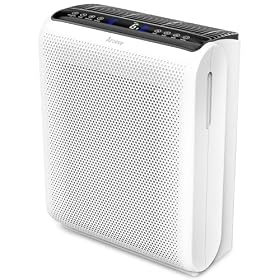
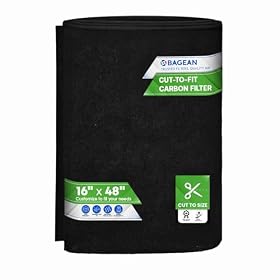
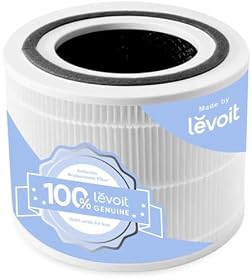
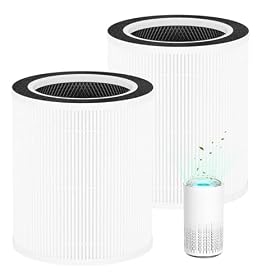
Air purifier for a kitchen that sees a lot of frying
Frying creates fine particles, smoke, and lingering odors. The right air purifier can reduce airborne pollution after cooking, but it should complement—not replace—a range hood or other ventilation.
Frying can send fine oil particles, smoke, and cooking odors into the air, so the best air purifier for this situation needs strong particle filtration and a meaningful activated-carbon stage. Choose a unit with a suitable smoke CADR for the kitchen or nearby open area, place it away from grease and splatter, and run it during cooking and afterward. An air purifier helps, but it does not replace a vented range hood or safe kitchen ventilation.
What frying puts into the air
High-heat frying can produce several different types of airborne pollution:
Fine particles and smoke: These are the main job for a true HEPA filter or another manufacturer-rated high-efficiency particle filter.
Cooking odors and gases: Activated carbon can reduce some odors and volatile compounds, but performance depends heavily on the amount and quality of carbon in the filter.
Grease aerosol: Oil mist can coat the purifier's intake and pre-filter, especially when the unit is placed too close to the stovetop. This can shorten filter life and reduce airflow.
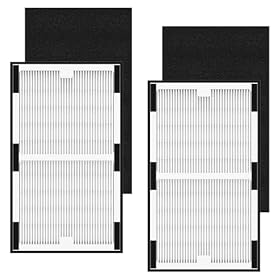
Because no single filter handles all of these equally well, look for a purifier that combines a washable or cleanable pre-filter, particle filtration, and activated carbon.
Features that matter most
Smoke CADR and room coverage
For frying, prioritize the purifier's smoke CADR rather than relying only on a broad room-size claim. CADR describes how quickly a purifier can deliver filtered air; a higher number generally means faster cleanup.
Measure the kitchen and any connected dining or living area where cooking pollution travels. If the space is open-plan, size the purifier for the larger connected area, not just the kitchen footprint. A purifier that is too small may eventually reduce particles but take much longer to clear them.
If a manufacturer provides only a maximum room-size figure, treat it as a starting point and compare the underlying CADR when available. Coverage claims can be based on different assumptions, so they are not always directly comparable.
HEPA or high-efficiency particle filtration
A genuine HEPA filter is useful for airborne particles produced by frying. Check the product documentation to confirm what filter is included and whether replacement filters are available.
Particle filtration will not, by itself, remove most cooking odors. That is why a particle filter should be paired with activated carbon rather than used as the only selection criterion.
Activated carbon for odors
Activated carbon is the key filter material for lingering fried-food smells. However, the label "carbon filter" does not tell you how much carbon the purifier contains or how long it will remain effective.
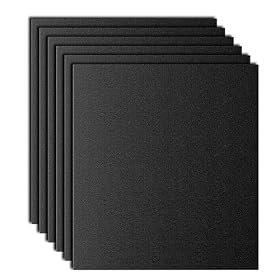
When comparing models, look for clear information about the carbon stage and replacement cartridge. A thin carbon-coated filter may help with light odors, while a filter with more carbon media may be better suited to frequent frying. Manufacturers do not always provide enough detail to make exact comparisons, so avoid treating carbon as an all-or-nothing feature.
A washable or accessible pre-filter
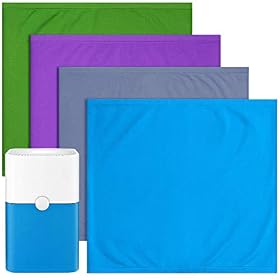
A pre-filter catches hair, dust, and larger grease-containing particles before they reach the main filter. In a kitchen, easy access matters because the pre-filter may need attention more often than it would in a bedroom or office.
Follow the manual's cleaning instructions. Some pre-filters can be vacuumed or washed; others should not be exposed to water. Do not wash a filter unless the manufacturer specifically says it is washable.
Manageable noise and controls
A purifier may need to run at a higher speed while cooking and for some time afterward. Compare the noise level at the operating speeds you are likely to use, not only the quietest setting.
Useful controls can include:
A timer or scheduled operation
An air-quality sensor and automatic mode
A filter-life indicator
A child lock if the purifier will be near a busy cooking area
A manual high-speed setting for smoke or heavy frying
Automatic mode can be convenient, but a sensor may not respond equally to every odor or cooking gas. Manual controls remain useful when frying produces noticeable smoke before the sensor increases the fan speed.
Product prices and availability are accurate as of the date/time indicated and are subject to change. Any price and availability information displayed on Amazon.com at the time of purchase will apply to the purchase of this product.
Where to place the purifier
Place the purifier where it can capture polluted air without being exposed directly to hot grease, steam, or splashes.
Good placement usually means:
Keep it several feet from the stovetop rather than directly beside a burner.
Leave the manufacturer's required clearance around the air intake and outlet.
Avoid placing it under cabinets where airflow is restricted.
Position it between the cooking area and the rest of the home if the kitchen opens into another room.
Keep it on a stable, dry surface and away from sinks or areas where it could be splashed.
Do not place an air purifier on the stovetop, next to an open flame, or where its intake can pull in a concentrated stream of grease. Never block the range hood or other required ventilation openings.
Product prices and availability are accurate as of the date/time indicated and are subject to change. Any price and availability information displayed on Amazon.com at the time of purchase will apply to the purchase of this product.
How to use it when frying
Use the range hood or exhaust fan first if you have one, preferably before heating oil. Turn on the purifier before cooking or as soon as frying begins, then keep it running afterward to capture particles that remain suspended in the air.
For heavy frying:
Use the highest practical purifier speed while cooking.
Keep doors to bedrooms and other sensitive areas closed when appropriate.
Use a lid or splatter screen when safe and suitable for the recipe.
Ventilate outdoors when conditions and the kitchen setup allow it.
Let the purifier complete its cleanup cycle before switching it off.
An air purifier is not a substitute for ventilation when the kitchen is smoky. If oil catches fire, turn off the heat if it is safe to do so, cover the pan with an appropriate lid, and follow local fire-safety guidance. Do not use a household air purifier to manage an active fire or heavy emergency smoke.
Product prices and availability are accurate as of the date/time indicated and are subject to change. Any price and availability information displayed on Amazon.com at the time of purchase will apply to the purchase of this product.
Maintenance in a frying-heavy kitchen
Grease can load the pre-filter and restrict airflow faster than ordinary household dust. Inspect the pre-filter regularly, especially if you notice weaker airflow, more noise, or a return of odors.
Replace the HEPA and carbon filter according to the manufacturer's instructions or sooner if the purifier indicates replacement or performance noticeably declines. A saturated carbon filter may continue to pass air while doing little for odors.
Do not spray degreaser, fragrance, or cleaning chemicals into the purifier. Unplug the unit before cleaning its exterior, and keep all filters completely dry unless the manual allows washing. If grease has reached the motor or internal electrical parts, stop using the unit and contact the manufacturer or a qualified appliance-service professional.
Product prices and availability are accurate as of the date/time indicated and are subject to change. Any price and availability information displayed on Amazon.com at the time of purchase will apply to the purchase of this product.
When an air purifier is not enough
Consider improving the ventilation setup if frying routinely leaves visible haze, strong odors, or oily residue on nearby surfaces. A range hood that vents outdoors is generally more effective at removing cooking pollutants at the source than a portable purifier operating after the fact.
You may also need a larger purifier or a second unit when:
The kitchen opens into a large living area.
Smoke reaches bedrooms before the purifier clears it.
The unit must run at maximum speed for an uncomfortable length of time.
Airflow falls quickly because the pre-filter becomes greasy.
If the appliance has persistent burning smells, unusual electrical noises, overheating, or a damaged cord, unplug it and stop using it. Replacement is usually more sensible than continued operation when the motor, power supply, or internal wiring is involved and the unit is outside its warranty or cannot be safely serviced.
Bottom line
For a kitchen that sees frequent frying, choose an air purifier with a strong smoke CADR for the full connected space, high-efficiency particle filtration, and a clearly described activated-carbon stage. A cleanable pre-filter and accessible replacement filters are especially valuable. Place the unit away from direct grease and heat, run it alongside proper ventilation, and expect to maintain its filters more often than you would in a low-pollution room.
FAQ
Can an air purifier remove frying smells?
It can reduce some frying odors when it uses activated carbon, but results depend on the amount and condition of the carbon media. Ventilation and source control, such as using a vented range hood, are usually more effective for strong or persistent odors.
Should an air purifier be placed next to the stove?
No. Keep it away from direct grease, steam, heat, flames, and splashes while following the clearance requirements in the manual. Place it where it can draw air from the kitchen without pulling in concentrated oil aerosol.
Is a HEPA filter enough for a frying-heavy kitchen?
HEPA filtration is useful for particles and smoke, but it does not address cooking odors as well as activated carbon. For frequent frying, look for both high-efficiency particle filtration and a carbon stage.
How often should I clean an air purifier pre-filter in a kitchen?
Check it regularly and clean it whenever grease or dust visibly builds up, airflow falls, or the purifier becomes noisier. The correct cleaning method and interval depend on the model, so follow the manufacturer's instructions.
Can an air purifier replace a range hood?
No. A range hood or other outdoor ventilation removes cooking pollutants at the source. An air purifier can reduce particles and some odors that remain in the room, but it should be considered a supplement.