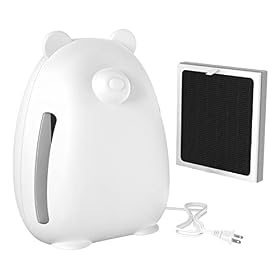
The best air purifier for a nursery is appropriately sized for the room, uses mechanical filtration such as HEPA, runs quietly, and has child-safe controls and placement options.
An air purifier for a nursery should remove airborne particles without creating a safety or sleep problem. Look for a properly sized unit with a true mechanical filter, low noise at the needed airflow, child-safe placement and controls, and no intentional ozone generation. A purifier can reduce airborne particles, but it does not replace ventilation, cleaning, moisture control, or medical care.
What to look for in a nursery air purifier
Match the purifier to the room
Check the purifier’s recommended room area and clean air delivery rate (CADR), then compare those figures with the nursery’s size. Measure the room’s length and width and multiply them to estimate square footage. If the nursery has high ceilings, an open doorway, or connects to another room, choose based on the larger air volume rather than treating it as a sealed small room.
A unit that is too small may need to run continuously at its highest setting and still provide limited air circulation. An oversized unit can work well if it has a quiet low setting, but a large purifier is not automatically better if it cannot be placed safely or makes too much noise.
Choose particle filtration first
A HEPA or high-efficiency mechanical filter is the main feature to prioritize for common nursery concerns such as dust, pollen, pet dander, and other airborne particles. Check the manufacturer’s description carefully: terms such as “HEPA-type” or “HEPA-style” do not necessarily describe the same filtration performance as a specified HEPA filter.
A washable or removable pre-filter can help capture larger dust and hair before they reach the main filter. This may extend the useful life of the primary filter, but it still needs regular cleaning according to the manufacturer’s instructions.
Add carbon filtration when odors matter
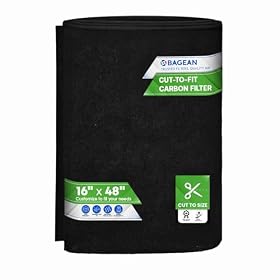
An activated-carbon filter can help reduce some household odors and certain gases. Its effectiveness depends on the amount and quality of carbon, so a thin carbon-coated filter may provide less odor control than a filter with a larger carbon layer. Carbon filtration is not a substitute for removing the source of an odor, improving ventilation, or addressing smoke or a gas leak.
Avoid intentional ozone generation
Do not choose an air purifier that intentionally produces ozone for use around a baby. Be cautious with ionizers, ozone generators, and “air cleaning” features that use electrical discharge unless the manufacturer clearly explains the technology and its emissions. For a nursery, straightforward mechanical filtration is generally the simpler choice.
Nursery-specific features that matter
Low noise at useful settings
Noise can affect naps and nighttime sleep, so check the purifier’s noise information at more than its lowest setting. The quietest advertised setting may move very little air. A better choice is one that can clean the room effectively while operating quietly enough for sleep.
A dimmable display, display-off mode, or lack of bright indicator lights can also be useful in a dark nursery. Avoid relying only on a “sleep mode” label; compare what that mode does to fan speed and filtration.
Stable, child-safe placement
Place the purifier on a stable, level surface where the baby cannot pull it down, reach the cord, or access the controls. Keep it away from the crib, bedding, curtains, and other items that could block the intake or exhaust. Do not place it where spilled liquids can reach it.
Follow the manufacturer’s clearance instructions around the air inlets and outlet. If the unit could be knocked over, use a safer location or a model designed for stable floor placement. Keep cords secured and out of reach, and do not run cords under rugs where they can be damaged or create a trip hazard.
Controls and operating convenience
A child lock can prevent accidental changes, but it does not make an unsafe location safe. An automatic mode may adjust fan speed based on the purifier’s sensor readings, while a timer can limit operation during particular periods. These features are conveniences rather than replacements for choosing the right size and filter.
Avoid assuming that a built-in air-quality display measures every pollutant. Many sensors estimate particles of a particular size range and may not detect allergens, carbon monoxide, or all gases. Never use an air purifier as a substitute for a working smoke alarm or carbon-monoxide alarm.
Product prices and availability are accurate as of the date/time indicated and are subject to change. Any price and availability information displayed on Amazon.com at the time of purchase will apply to the purchase of this product.
How to use an air purifier in a nursery
Install the filter correctly and remove any plastic shipping wrap before operating the unit.
Put the purifier where air can circulate freely, following the required clearances.
Start with a higher setting when the room is occupied by dust, during cleaning, or after introducing a known particle source, then use a quieter setting if appropriate for sleep.
Keep doors and windows managed according to the situation. Outdoor ventilation may help in some conditions but can also introduce smoke, pollen, or outdoor pollution.
Check the pre-filter and filter indicator regularly rather than waiting for airflow to become weak.
Clean the exterior and accessible surfaces only as directed. Do not allow water into the electrical parts.
If the nursery is near a kitchen, fireplace, garage, or smoking area, address the source first. Air purifiers have limited ability to correct ongoing smoke, combustion pollutants, mold growth, or chemical emissions.
Product prices and availability are accurate as of the date/time indicated and are subject to change. Any price and availability information displayed on Amazon.com at the time of purchase will apply to the purchase of this product.
Filter replacement and operating cost
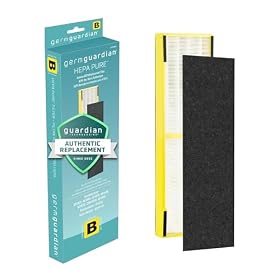
Replacement filters are an important part of the purchase decision. Check whether the main filter, pre-filter, and carbon layer are separate or combined, and confirm that replacements are available for the exact model. A low-cost purifier can become inconvenient or expensive to maintain if its replacement cartridges are difficult to find.
Filter life varies with use, indoor dust, pets, smoke, and the purifier’s fan speed. A filter indicator is useful but may be based on operating time rather than a direct measurement of filter condition. Inspect the filter when practical and follow the manufacturer’s replacement guidance.
Do not wash a disposable HEPA or carbon filter unless the instructions specifically say it is washable. Washing the wrong filter can damage the media and reduce performance. If airflow remains weak after cleaning the pre-filter and replacing the main filter, the unit may have an internal blockage or mechanical problem.
Product prices and availability are accurate as of the date/time indicated and are subject to change. Any price and availability information displayed on Amazon.com at the time of purchase will apply to the purchase of this product.
When an air purifier may not be the right solution
An air purifier cannot remove settled dust from floors and bedding, repair water damage, eliminate active mold growth, or replace a ventilation system. It also does not provide humidification unless it is a separate combination appliance, and adding humidity without monitoring can worsen moisture problems.
For persistent coughing, wheezing, breathing difficulty, suspected carbon-monoxide exposure, or other health concerns, leave the area when appropriate and seek qualified medical or emergency guidance. For smoke, combustion problems, or suspected mold, address the household source with the appropriate professional.
Bottom line
For most nurseries, prioritize a properly sized purifier with effective mechanical particle filtration, quiet operation at a useful setting, safe placement, accessible replacement filters, and no intentional ozone generation. HEPA filtration is most relevant for dust and airborne particles; carbon can help with some odors. Choose the model that can run consistently and safely in the nursery rather than one with the largest advertised coverage area.
FAQ
Should an air purifier run all night in a nursery?
It can run overnight if the manufacturer allows continuous operation and the unit is placed safely. Use a quiet setting that still provides useful airflow, keep cords and the purifier out of reach, and follow the manual’s clearance and maintenance instructions.
Is a HEPA air purifier safe for a baby?
A properly maintained mechanical-filter purifier can be appropriate for a nursery when used according to the manufacturer’s instructions. Choose a unit without intentional ozone generation, place it securely away from the crib, and do not treat it as a substitute for ventilation, smoke alarms, or medical care.
Where should an air purifier be placed in a nursery?
Place it on a stable surface with the required clearance around the intake and exhaust. Keep it away from the crib, curtains, bedding, liquids, and areas where a child could pull it down or reach the cord and controls.
How often should a nursery air purifier filter be changed?
Follow the exact model’s filter guidance, because replacement intervals vary with operating hours, fan speed, pets, smoke, and indoor dust. Clean a reusable pre-filter as directed and replace disposable HEPA or carbon filters rather than washing them unless the instructions specifically permit washing.