The right air purifier can reduce airborne smoke particles and some odors, but it cannot make indoor smoking safe. Look for a properly sized HEPA purifier with substantial activated carbon, use it near the smoke source, and maintain it regularly.
An air purifier can reduce airborne smoke particles and some smoke odors in a home where someone smokes, but it cannot make indoor smoking safe or remove every chemical from the air. For this use, choose a purifier with a true HEPA filter, a meaningful amount of activated carbon, and enough clean air delivery rate (CADR) for the room. Source control—smoking outdoors and keeping smoke away from shared spaces—remains the most effective step.
What to look for in an air purifier for smoke
True HEPA filtration
Cigarette, cigar, and pipe smoke contain fine particles that can remain suspended in indoor air. A true HEPA filter is designed to capture very small airborne particles, making it the primary filter type to look for when the main concern is smoke particulate.
HEPA filtration does not remove all smoke gases or odors. It also does not clean smoke residue that has settled on walls, furniture, clothing, carpets, or other surfaces.
Activated carbon for odor and gases
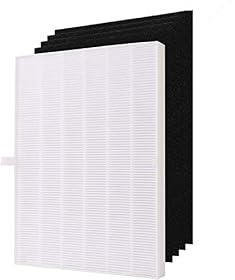
Smoke also contains gases and volatile compounds that a particle filter alone cannot effectively capture. An activated carbon filter can adsorb some of these compounds and reduce odors.
The amount of carbon matters. A thin carbon-coated sheet may help with light odors, but a purifier with a thicker carbon bed generally has more adsorption material available. Manufacturers do not always publish the carbon weight, so compare the filter design and replacement-filter description rather than assuming every “carbon filter” provides the same performance.
Carbon becomes less effective as it fills with contaminants. In a smoking household, replacement filters may need to be changed sooner than the general interval listed for a low-pollution environment.
A suitable CADR for the room
CADR indicates how quickly a purifier can deliver filtered air. For smoke, use the purifier’s smoke CADR when that figure is available, and size the unit for the actual room where smoking occurs—not just the entire home’s square footage.
A practical approach is to choose a unit rated for the room’s size with some capacity to spare. Running a larger purifier at a lower or medium setting is often more useful than relying on a small unit at its maximum setting, especially when smoke is produced repeatedly.
Be cautious with coverage claims based only on room area. Different manufacturers may use different assumptions about ceiling height and air changes. CADR, fan speed, and the manufacturer’s stated room-sizing method provide a better basis for comparison.
Placement matters as much as the filter
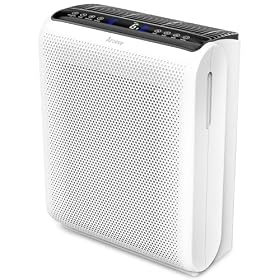
Place the purifier in the room where smoke is produced, with clear space around the air intake and outlet. Do not hide it behind furniture, curtains, or in a corner where airflow is restricted.
If the purifier has an air-quality sensor, keep the sensor unobstructed. Positioning the unit near the smoker may help capture smoke sooner, but it should not be placed where ash, liquid, or other debris can enter the intake.
Keep doors and windows configured consistently with the cleaning goal. If the purifier is intended to clean one closed room, closing the door can limit smoke migration. If outdoor ventilation is safe and practical, exhausting smoke outdoors is generally preferable to recirculating it indoors.
Avoid placing an air purifier directly beside a gas stove, fireplace, candle, or other source of heat unless the manufacturer specifically permits it.
Product prices and availability are accurate as of the date/time indicated and are subject to change. Any price and availability information displayed on Amazon.com at the time of purchase will apply to the purchase of this product.
Use the purifier before, during, and after smoking
For the best chance of reducing airborne smoke:
Turn the purifier on before smoking begins.
Use a higher fan speed while smoke is being produced, if the noise level is acceptable.
Continue running it afterward to remove particles that remain suspended.
Keep the room ventilated when possible, while avoiding airflow that carries smoke into other parts of the home.
Clean nearby hard surfaces and launder fabrics regularly, since an air purifier cannot remove settled residue.
An air purifier should not be treated as a substitute for smoke alarms, ventilation, or a smoke-free indoor environment.
Product prices and availability are accurate as of the date/time indicated and are subject to change. Any price and availability information displayed on Amazon.com at the time of purchase will apply to the purchase of this product.
Avoid ozone-producing features
Do not choose an ozone generator as a way to control household smoke. Ozone can irritate the lungs and is not an appropriate solution for making indoor smoking safe.
Some air purifiers use ionizers, electrostatic features, or other electronic technologies. If considering one of these units, check whether it produces ozone and whether the manufacturer provides clear emissions information. A straightforward HEPA-and-carbon design is usually easier to evaluate for a smoking household. If anyone in the home has asthma, chronic lung disease, or strong sensitivity to respiratory irritants, avoid unnecessary ozone-producing features and consult a qualified health professional about indoor-air precautions.
Product prices and availability are accurate as of the date/time indicated and are subject to change. Any price and availability information displayed on Amazon.com at the time of purchase will apply to the purchase of this product.
Maintenance for a smoking household
Smoke can load filters faster than ordinary household dust. Check the pre-filter regularly and clean it only as directed by the manufacturer. A clogged pre-filter can reduce airflow and make the purifier less effective.
Replace the HEPA and carbon filter when the indicator says to do so, when airflow drops, when odors return, or according to the manufacturer’s instructions. Do not wash a disposable HEPA or carbon cartridge unless it is specifically labeled washable. Moisture can damage filter media and encourage microbial growth.
If the purifier continues to smell strongly after a filter change, wipe its exterior and accessible surfaces according to the instructions. Do not spray cleaners into the intake or motor housing.
When one purifier is not enough
One unit may help in the smoking room but provide limited protection elsewhere. If smoke regularly travels through the home, consider the layout, door gaps, ventilation paths, and the location of the source before simply adding more purifiers.
A separate purifier may be reasonable for a bedroom or another occupied room, but each unit should be sized for its own space. A portable purifier cannot reliably clean an entire multi-room home unless air can circulate freely and the unit has sufficient capacity.
Bottom line
For a smoker in the household, prioritize a true HEPA purifier with substantial activated carbon and a smoke CADR appropriate for the room. Use it near the source, run it before and after smoking, maintain the filters frequently, and avoid ozone-producing devices. These steps can reduce airborne particles and some odors, but smoking outdoors remains the most effective way to protect indoor air quality.
FAQ
What type of air purifier is best for cigarette smoke?
Look for a purifier with true HEPA filtration for fine smoke particles and a substantial activated carbon filter for odors and some gases. Size it using the smoke CADR or another clearly stated airflow rating rather than room coverage alone.
Can an air purifier remove cigarette smell completely?
Usually not. A purifier can reduce airborne odor, especially when it has enough activated carbon, but smoke residue absorbed into furniture, carpets, walls, clothing, and other surfaces can continue to produce odor.
Should I use an air purifier while someone is smoking?
Yes, running it before and during smoking can help capture airborne particles sooner, and continuing afterward can remove particles that remain suspended. It does not make indoor smoking safe or eliminate smoke exposure.
How often should I replace an air purifier filter in a smoking home?
Follow the manufacturer’s schedule, but inspect the filters more often than you would in a low-pollution home. Heavy smoke can cause the pre-filter to clog and the carbon filter to become saturated sooner. Reduced airflow, returning odors, or a filter warning are signs that service may be needed.
Are ionizers or ozone generators good for cigarette smoke?
Ozone generators are not an appropriate indoor-smoke solution because ozone can irritate the lungs. If a purifier includes an ionizer or electronic feature, check its ozone-emissions information and consider a HEPA-and-carbon model without unnecessary ozone-producing functions.