If an air purifier is not helping allergies, the problem is often a clogged or incorrect filter, insufficient airflow for the room, poor placement, or an allergen source that remains elsewhere in the home. Use this practical checklist to find the likely cause.
What do you need help with?
Open an answer, or tell us what we should cover next.
Answered in this guide
Fix an air purifier that is not helping allergies
Start by checking whether the filter is dirty, installed incorrectly, or overdue for replacement. A blocked or unsuitable filter can prevent the purifier from making a noticeable difference to airborne pollen, pet dander, and dust.
Compare the purifier’s recommended room size or clean air delivery information with the room where allergy relief is needed. A unit that moves too little air may work properly but still have little noticeable effect.
Put the purifier in the room where you spend the most time, such as a bedroom or home office. Keep airflow clear and avoid corners, curtains, and other obstructions that reduce circulation.
Replacement may be appropriate when the filter compartment is damaged, the fan has failed, rattling persists, there is a burning smell or electrical damage, or replacement filters are no longer available.
Request a topic and help us choose what to build next.
Remove settled allergens from bedding, carpets, and furniture
Choose a replacement purifier for allergy relief
Measure whether indoor particle levels are improving
Requests help us prioritize the next guide. No email required.
One anonymous request per topic.
An air purifier may not be helping allergies because its filter is overloaded, the purifier is too small for the room, air is bypassing the filter, or the main allergen source is not airborne. Check the filter and airflow first, then confirm the purifier uses a genuine HEPA or high-efficiency particle filter, is sized appropriately, and is positioned where it can circulate room air.
Check the filter first
A dirty or incorrectly installed filter is one of the most common reasons an air purifier stops making a noticeable difference.
Turn the purifier off and unplug it.
Remove the filter according to the manufacturer’s instructions.
Check whether the filter is visibly gray, dusty, damp, damaged, or collapsed.
Confirm that all packaging has been removed from a new filter.
Make sure the filter is facing the correct direction and seated tightly.
Close the filter cover completely so air cannot bypass the filter.
Do not wash a disposable HEPA or combination filter unless the manufacturer specifically says it is washable. Washing can damage the filter media. A washable pre-filter may be cleaned separately, but it does not replace the main particle filter.
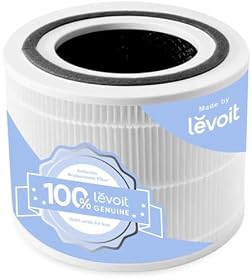
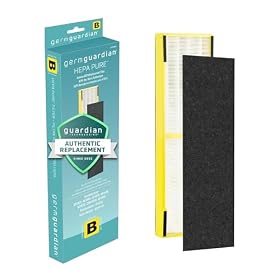
If the filter is overdue for replacement, replacement may restore airflow and particle removal. Use the filter type and part number specified for the purifier rather than assuming a similar-looking cartridge will perform the same way.
Make sure the purifier is large enough
An air purifier can remove particles effectively but still seem useless if it does not move enough air for the room. Compare the purifier’s recommended room size or clean air delivery information with the actual room, especially if the ceiling is high, the space is open-plan, or doors are usually open.
A purifier rated for a small bedroom may not adequately clean a large living area. In an open floor plan, the stated room-size estimate may not apply to the entire connected space. You may need a larger unit, more than one unit, or a purifier positioned in the room where allergy symptoms are worst.
Run the purifier at a higher speed when pollen or dust levels are high, after cleaning, and before sleeping. Lower settings are quieter but generally move less air.
Product prices and availability are accurate as of the date/time indicated and are subject to change. Any price and availability information displayed on Amazon.com at the time of purchase will apply to the purchase of this product.
Check for blocked airflow or a clog
Restricted airflow reduces how much contaminated air reaches the filter. Inspect the intake and outlet for:
Dust buildup on grilles
Curtains, bedding, furniture, or walls blocking the intake
A purifier pushed tightly against a wall
Toys, pet hair, or debris in the grille
A filter packed with dust
Leave the clearances recommended in the owner’s manual. Do not cover the intake or outlet to reduce noise. If the purifier has a washable pre-filter, clean it only as directed and let it dry fully before reinstalling it.
A purifier that suddenly becomes quieter may not be working better. It may be moving less air because the filter is clogged, the fan is obstructed, or a fan setting has changed.
Product prices and availability are accurate as of the date/time indicated and are subject to change. Any price and availability information displayed on Amazon.com at the time of purchase will apply to the purchase of this product.
Look for air leaks around the filter
Air can avoid the filter if the filter frame, cover, gasket, or housing is damaged. With the purifier running, check for obvious gaps around the filter compartment. Do not put your fingers or tools into the fan area.
A loose cover, warped filter frame, missing seal, or damaged housing can allow unfiltered air to circulate. Replace the damaged filter or seal if the manufacturer offers the part. If the housing or fan assembly is damaged, repair or replacement of the purifier may be more sensible than continuing to operate it with a bypass leak.
Product prices and availability are accurate as of the date/time indicated and are subject to change. Any price and availability information displayed on Amazon.com at the time of purchase will apply to the purchase of this product.
Confirm the purifier is set up for allergy particles
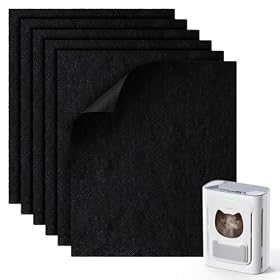
For airborne pollen, pet dander, and fine dust, the key component is a particle filter such as a HEPA filter or another high-efficiency filter identified by the manufacturer. An activated-carbon filter is useful mainly for some odors and gases; carbon alone is not a substitute for a particle filter.
Check that the purifier is not set to a mode that greatly reduces fan speed. Sleep, quiet, eco, and auto modes can be useful, but they may run the fan slowly when the sensor does not detect enough particles to increase speed. Try a manual medium or high setting for a period and see whether symptoms or visible dust improve.
Do not rely on an air-quality sensor as proof that the air is free of allergens. Some household allergens are too large, settle quickly, or are not measured by the purifier’s sensor.
Improve placement
Place the purifier in the room where you spend the most time, such as a bedroom or home office. Keep it away from corners, curtains, and large furniture that restrict airflow. The intake and clean-air outlet should have open space around them.
For overnight allergies, run the unit in the bedroom before and during sleep. Keep doors and windows closed when outdoor pollen counts are high, unless ventilation is needed for safety or comfort. If a purifier is moved from room to room, it cannot clean all rooms at once.
Avoid placing it directly beside a litter box, dusty work area, or open window. That may expose the filter to a concentrated load of particles and shorten filter life. Source control—such as cleaning, ventilation, and keeping pollen out—still matters.
Consider allergens an air purifier cannot solve by itself
Air purifiers work best on airborne particles. They do not remove allergens that have settled into carpets, bedding, upholstered furniture, clothing, or hard-to-reach surfaces.
Common sources include:
Dust mites in bedding, mattresses, rugs, and upholstery
Pet dander on furniture and clothing
Pollen tracked indoors on shoes and pets
Mold growing around leaks or persistent moisture
Dust disturbed during cleaning or home improvement
Use regular cleaning methods appropriate for the surface, wash bedding as recommended by allergy specialists or product labels, and address moisture leaks promptly. If mold is extensive, recurring, or in an HVAC system, seek qualified remediation guidance rather than relying on a portable purifier.
If symptoms are strongest in one room, inspect that room for dampness, visible mold, pets, dusty textiles, or poor ventilation. An air purifier cannot correct an ongoing source of contamination.
Check the room’s ventilation and HVAC system
A portable purifier only treats the air that passes through it. Outdoor pollen can keep entering through open windows, doors, gaps, or a forced-air system. HVAC filters may also be overdue for replacement or poorly fitted.
Check the HVAC filter size, installation direction, and replacement schedule. Do not install a filter that the system is not designed to handle; excessive resistance can reduce airflow or stress the equipment. For persistent indoor-air problems, an HVAC professional can evaluate duct leaks, ventilation, moisture, and filtration compatibility.
Know when the purifier may need replacement
Replacement is reasonable when the purifier has a damaged filter compartment, a failed fan, persistent rattling, a burning smell, electrical damage, or an unavailable replacement filter. Stop using a unit that smells overheated, shows cord damage, trips a breaker, or has liquid inside it, and follow the manufacturer’s safety instructions.
If the unit runs normally but does not help after a fresh, correctly installed filter, unobstructed airflow, suitable room sizing, and improved source control, it may simply be undersized or poorly matched to the problem. A purifier with stronger documented particle-cleaning performance and readily available replacement filters may be a better fit.
Seek medical advice if allergy symptoms are severe, persistent, affect breathing, or do not improve with reasonable environmental changes. An air purifier is not a treatment for asthma, infection, or other medical conditions.
FAQ
Why is my air purifier not helping with allergies?
The most likely causes are a clogged or incorrectly installed filter, an undersized purifier, blocked airflow, poor placement, or an allergen source that has settled on surfaces. Check the filter, fan setting, room size, and nearby sources such as bedding, carpets, pets, pollen, and moisture.
What type of air purifier is best for allergies?
Choose a purifier with a manufacturer-specified HEPA or high-efficiency particle filter and enough airflow for the room. Activated carbon can help with some odors, but it does not replace a particle filter for pollen, dust, or pet dander.
How long does it take an air purifier to help allergies?
Some airborne particles may be reduced after the purifier has circulated the room air, but symptom improvement varies. Settled allergens remain on surfaces, and ongoing pollen, pet, dust-mite, or mold sources can continue causing symptoms.
Should I leave my air purifier on all night?
If the manufacturer permits continuous operation, running the purifier overnight can help maintain cleaner bedroom air. Use a suitable fan setting, keep the intake and outlet clear, and replace the filter according to the manufacturer’s guidance.