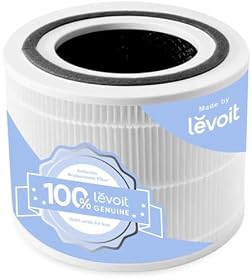
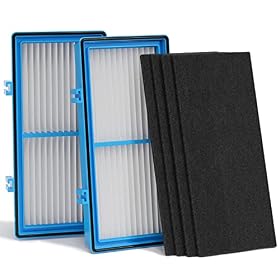
A genuine HEPA filter can capture very small airborne particles, but filter quality is only part of the buying decision. Compare CADR, room coverage, sealing, carbon filtration, noise, and replacement-filter availability before choosing an air purifier.
A genuine HEPA filter is one of the most important features to look for when buying an air purifier for dust, pollen, pet dander, mold spores, and other airborne particles. However, the filter alone does not determine performance. Choose a purifier with an appropriately sized CADR, a well-sealed filter compartment, practical operating speeds, and replacement filters you can readily obtain.
What “genuine HEPA” means
HEPA stands for high-efficiency particulate air. A properly made HEPA filter uses a dense fiber mat to capture very small airborne particles through interception, impaction, and diffusion.
The term True HEPA is commonly used in consumer product listings, but it is not always a complete description of the filter’s performance. Some products use phrases such as “HEPA-type,” “HEPA-like,” or “HEPA-style,” which may refer to lower-efficiency filtration. If particle filtration is your priority, look for clear manufacturer documentation identifying the filter as HEPA and describing the applicable efficiency standard or test method.
A filter can also be effective while the overall purifier performs poorly if air leaks around the filter or the fan moves too little air. The complete unit matters more than the label alone.
The specifications that matter most
CADR and room size
Clean Air Delivery Rate (CADR) indicates how quickly a purifier delivers filtered air. It is generally more useful than a large room-coverage claim because coverage figures may assume a particular number of air changes per hour or a low operating speed.
When comparing models, check:
The CADR ratings for dust, smoke, and pollen, if provided
Whether the stated room size is based on a recognized testing method
The ceiling height assumed by the coverage claim
Whether the purifier must run at its highest, loudest speed to reach that coverage
For a bedroom, you may prefer a quieter unit that can run continuously. For smoke, heavy dust, or a larger open room, a higher-CADR purifier gives you more cleaning capacity and may clear particles faster.
Filter construction and sealing
Look for a filter cartridge that includes a substantial gasket or foam seal around its edges. The filter should fit firmly in the housing, with no obvious bypass path around the media.
A sealed filter compartment is especially important if you are trying to reduce fine particles, smoke, or allergens. A purifier with excellent filter media but poor internal sealing can allow some air to pass around the filter instead of through it.
Pre-filter
A washable or replaceable pre-filter catches larger particles such as hair, lint, and larger dust before they reach the HEPA layer. This can help protect the main filter and maintain airflow.
Check whether the pre-filter is:
Permanently attached to the main cartridge
Removable for vacuuming or washing
Intended to be replaced rather than cleaned
Easy to access without damaging the HEPA media
If the manufacturer says the pre-filter is washable, allow it to dry completely before reinstalling it. Do not wash a HEPA cartridge unless the instructions specifically permit it.
Activated carbon filtration
HEPA filtration targets particles, not most odors or gases. If you want help with cooking smells, smoke odor, or some household VOCs, choose a purifier with an activated-carbon stage.
The amount and design of carbon matter. A thin carbon-coated sheet may provide less odor control than a cartridge containing a larger quantity of carbon, but manufacturers do not always publish the carbon weight. Treat broad claims about odor or chemical removal cautiously and replace the carbon filter according to the maintenance instructions.
Noise and operating controls
A purifier may have a high maximum CADR but be too loud to run at that speed in a bedroom or office. Check whether the product provides:
Multiple fan speeds
A sleep mode
A published noise range
Automatic mode based on a particle sensor
A display that can be dimmed or turned off
A timer or scheduling option
Automatic mode can be convenient, but it does not replace adequate airflow. If the purifier is intended for continuous use, confirm that it can operate safely for extended periods and that its lowest speed still provides useful circulation.
Product prices and availability are accurate as of the date/time indicated and are subject to change. Any price and availability information displayed on Amazon.com at the time of purchase will apply to the purchase of this product.
Match the purifier to the problem
Dust, pollen, and pet dander
Prioritize a genuine HEPA filter, sufficient CADR for the room, and an accessible pre-filter. Run the purifier consistently rather than only after visible dust appears. An air purifier does not replace cleaning, vacuuming, or controlling the source of dust.
Smoke and fine particles
Choose a higher-CADR unit with HEPA filtration and consider activated carbon for odor. Keep doors and windows closed when appropriate during an outdoor smoke event, and follow local health guidance. Air purifiers are not a substitute for ventilation or evacuation instructions when conditions are unsafe.
Odors and household gases
Look for a meaningful activated-carbon stage as well as HEPA filtration. HEPA alone will not remove most odors. Identify and eliminate the source when possible because purifier filters have limited capacity and may become saturated.
Mold concerns
A HEPA purifier can capture airborne mold spores, but it does not remove established mold growth or solve moisture problems. Address leaks, condensation, and excessive humidity, and consult qualified remediation professionals when the affected area is substantial or recurring.
Product prices and availability are accurate as of the date/time indicated and are subject to change. Any price and availability information displayed on Amazon.com at the time of purchase will apply to the purchase of this product.
Check replacement-filter availability before buying
Replacement filters are a recurring cost and a practical ownership issue. Before choosing a purifier, verify that the correct cartridge is available from the manufacturer or a reputable seller.
Check:
The stated replacement interval
Whether the HEPA and carbon layers are replaced together
Whether a separate pre-filter is available
The filter’s part number or exact compatibility information
Whether the manufacturer provides installation and reset instructions
Whether the replacement cartridge is easy to access without tools
A purifier with inexpensive replacement filters is not automatically the better choice if its airflow is inadequate. Compare the expected filter cost with CADR, noise, and coverage rather than considering the cartridge price alone.
Product prices and availability are accurate as of the date/time indicated and are subject to change. Any price and availability information displayed on Amazon.com at the time of purchase will apply to the purchase of this product.
How to confirm a listing is credible
Product listings can use HEPA terminology inconsistently. Before buying, look for a specification page or manual that clearly identifies the filter type and explains the filtration system. Be cautious when a listing only says “high-efficiency filter” without identifying the filter class, or when it makes particle-removal claims without describing the test conditions.
Also verify that the advertised room size is realistic for your room. For an open-plan space, calculate the area of the connected space rather than sizing the unit only for the room where it will sit.
Product prices and availability are accurate as of the date/time indicated and are subject to change. Any price and availability information displayed on Amazon.com at the time of purchase will apply to the purchase of this product.
Setup tips for better results
Place the purifier where air can circulate freely around the intake and outlet. Avoid pushing it tightly against a wall, covering the intake with furniture, or placing it where curtains block airflow.
Remove all shipping plastic from the filter before operating the unit. Confirm that the filter is installed in the correct direction and that the access panel closes fully. If the purifier has an air-quality sensor, keep the sensor opening clear of dust and avoid placing the unit directly beside a strong, temporary source unless you want it to respond to that source.
Run the purifier continuously or on an automatic setting when practical. Closing doors can help the unit clean a specific room, while an undersized purifier may struggle in a large open area.
When a different purifier is the better choice
Choose a higher-CADR model if the purifier will serve a large room, a high-ceilinged space, or a room with substantial particle sources. Choose a model with more carbon if odor control is central to your needs, while recognizing that carbon capacity and replacement schedules limit performance.
If a product has unclear filter specifications, unavailable replacement cartridges, or a room-size claim with no supporting details, another model is usually a safer purchase. The best choice is a complete system with documented filtration, adequate airflow, dependable sealing, manageable noise, and replacement parts that will remain available.
FAQ
Is a True HEPA filter the same as a genuine HEPA filter?
“True HEPA” is a common consumer label, while “genuine HEPA” is a general description rather than one universal certification. Look for manufacturer documentation identifying the filter and its applicable efficiency standard or test method instead of relying on the wording alone.
Does a HEPA air purifier remove odors?
HEPA filters capture particles but do not remove most odors or gases. For odor control, choose a purifier that also has an activated-carbon stage, and address the odor source whenever possible.
How often should an air purifier HEPA filter be replaced?
Follow the manufacturer’s schedule because replacement intervals vary with operating time, fan speed, air quality, and pre-filter maintenance. Replace the filter sooner if airflow drops, odors persist, or the filter becomes heavily loaded.
Can an air purifier remove mold from a home?
A HEPA purifier can capture some airborne mold spores, but it cannot remove mold growing on surfaces or correct moisture problems. Fix the moisture source and seek professional remediation when the growth is extensive or recurring.