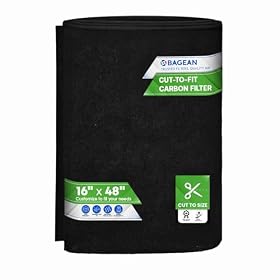
A carbon filter can reduce odors, smoke compounds, and some VOCs, but performance depends heavily on the amount and type of carbon. Learn what to look for and how to pair it with HEPA filtration.
A carbon filter is the air purifier component designed to adsorb many gases, odors, and volatile organic compounds (VOCs). It can help with cigarette smoke odor, cooking smells, paint fumes, and some household chemical vapors. For smoke particles, however, you also need a properly rated particle filter—usually HEPA—because carbon and HEPA solve different parts of the problem.
What a carbon filter does
Activated carbon has a porous surface that can capture some gaseous pollutants as air passes through it. Depending on the carbon material and the pollutant, it may reduce:
Smoke odors and some smoke-related gases
Cooking and pet odors
Paint, solvent, and cleaning-product odors
Some VOCs released by furniture, flooring, adhesives, and other household materials
Carbon does not capture every gas equally well. Its effectiveness depends on the chemical, airflow speed, humidity, temperature, and the amount and condition of carbon in the filter.
A carbon filter also does not remove dust, pollen, or fine smoke particles as a substitute for HEPA filtration. If your concern is wildfire smoke or tobacco smoke, look for an air purifier with both substantial particle filtration and a carbon stage.
How much carbon is enough?
The amount of carbon is one of the most important specifications. A thin carbon-coated sheet may help with light odors, but it generally has much less adsorption capacity than a filter containing a deeper bed of loose or pelletized activated carbon.
When comparing replacement filters or air purifiers, check for:
Carbon type: Activated carbon is the common choice, but the form and treatment affect which gases it can adsorb.
Carbon quantity: More carbon usually provides more capacity, although it does not guarantee removal of every VOC.
Carbon bed depth: A thicker bed gives air more contact with the adsorbent than a very thin impregnated layer.
Airflow through the carbon: Air that moves too quickly may have less contact time, while excessive restriction can reduce the purifier's overall airflow.
Filter construction: The carbon should be distributed so air cannot easily bypass it around the edges.
Manufacturers do not always report carbon weight or bed depth. If those specifications are missing, treat broad claims about VOC or odor removal cautiously. A filter marketed mainly as a deodorizing pre-filter may be appropriate for mild odors but may not be the best choice for persistent fumes.
Product prices and availability are accurate as of the date/time indicated and are subject to change. Any price and availability information displayed on Amazon.com at the time of purchase will apply to the purchase of this product.
Carbon filter versus HEPA filter
HEPA filtration targets airborne particles. Carbon adsorption targets many gases and odors. Smoke often contains both, so using the two stages together is usually more useful than relying on either one alone.
A HEPA or similarly effective particle filter for fine particles
An activated carbon stage for odors and gaseous pollutants
A sealed filter compartment that limits air bypass
Enough clean-air delivery for the room where the problem occurs
For wildfire smoke, prioritize particle-cleaning performance and use carbon as a supplemental stage. For odors or VOCs from a source such as paint or cleaning products, carbon capacity becomes more important, but source control and ventilation remain essential.
Product prices and availability are accurate as of the date/time indicated and are subject to change. Any price and availability information displayed on Amazon.com at the time of purchase will apply to the purchase of this product.
Compatibility checks before buying a replacement
A carbon filter is only useful if it fits the purifier and seals correctly. Before ordering, check:
Exact purifier model: Filter shapes and dimensions can differ even within the same product line.
Filter stage: Confirm whether you need a carbon pre-filter, a combined carbon-and-HEPA cartridge, or a separate carbon filter.
Dimensions and orientation: Compare the replacement filter's length, width, thickness, and airflow direction with the original.
Attachment method: Some filters slide into a frame, while others use tabs, a fabric sleeve, or a separate pre-filter.
Replacement guidance: Follow the purifier manufacturer's compatibility list when available. Do not force an oversized filter into the housing.
A filter that leaves gaps around the frame can allow untreated air to bypass the carbon and particle media. If the replacement does not sit flat or the cover will not close normally, stop and verify the part rather than operating the purifier with a loose filter.
Product prices and availability are accurate as of the date/time indicated and are subject to change. Any price and availability information displayed on Amazon.com at the time of purchase will apply to the purchase of this product.
When to replace a carbon filter
Carbon eventually becomes saturated. Once its adsorption sites are largely occupied, odor and VOC reduction can decline even if the filter still looks clean. Visual inspection alone cannot reliably show how much capacity remains.
Replace the filter according to the purifier manufacturer's schedule, and replace it sooner if:
Odors return while the purifier is running
Smoke or chemical smells remain noticeably stronger near the unit
The filter has been exposed to a major smoke or vapor event
The carbon media is damaged, damp, crumbling, or heavily contaminated
The purifier's filter indicator signals replacement
Do not wash an activated-carbon cartridge unless its instructions specifically say it is washable. Water can damage the media or reduce its performance. A washable mesh pre-filter is a different component and should only be cleaned as directed.
Troubleshooting weak odor or VOC reduction
1. Check the filter installation
Turn the purifier off and unplug it before opening the housing. Confirm that the carbon side is facing the correct direction and that the filter is fully seated. Check for gaps, torn seals, or protective packaging that was left on the cartridge.
2. Inspect and clean the pre-filter
A clogged pre-filter can reduce airflow through the carbon stage. Clean the pre-filter only as the manufacturer directs, and let any washable part dry completely before reinstalling it.
3. Check for airflow blockage
Make sure the intake and outlet are not against a wall, covered by furniture, or blocked by curtains. Low airflow can make odor reduction appear ineffective.
4. Consider carbon capacity and saturation
If the filter is thin, old, or exposed to strong smoke or solvents, it may have reached its useful capacity. Replacing the cartridge with the correct higher-capacity option, if the purifier supports one, may be more practical than continuing to run a saturated filter.
5. Control the pollution source
An air purifier cannot reliably compensate for an active, concentrated source. Stop indoor smoking, close containers of solvents and cleaners, repair leaks, and ventilate when safe and appropriate. For unknown or potentially hazardous fumes, leave the area and follow local safety guidance rather than relying on an air purifier.
6. Check the purifier itself
If airflow is weak with a new, correctly installed filter and a clean pre-filter, the fan or motor may need service. Unusual heat, burning smells, sparking, or a damaged power cord are reasons to unplug the unit and seek manufacturer or qualified electrical service. Do not open or repair electrical components unless you are qualified and the instructions permit it.
Is a carbon filter the right purchase?
A carbon filter is a sensible add-on or replacement when odors and gaseous pollutants are the main concern. For smoke, choose a purifier or cartridge that combines meaningful carbon media with HEPA filtration. For ongoing VOC exposure, identify and remove the source first; filtration should be treated as supplemental control, not a guarantee of safe air.
If the replacement filter is unavailable, repeatedly saturates quickly, or no longer fits securely, replacing the purifier may be more reasonable than modifying the housing. Use a compatible filter designed for the unit rather than cutting or layering media in a way that could restrict airflow or create bypass gaps.
FAQ
Do carbon filters remove smoke?
Carbon filters can reduce many smoke odors and some gaseous compounds, but they do not replace particle filtration. For cigarette or wildfire smoke, use a purifier with both activated carbon and a HEPA or comparable particle filter.
Are carbon filters effective for VOCs?
They can adsorb some VOCs, but effectiveness varies by chemical, carbon quantity, airflow, humidity, and filter condition. A thicker carbon bed generally has more capacity than a thin carbon-coated sheet. Source control and ventilation are still important.
How often should an activated carbon filter be replaced?
Follow the purifier manufacturer's schedule, replacing it sooner after heavy smoke or chemical exposure or when odors begin returning. Carbon saturation is not always visible, so appearance alone is not a reliable replacement test.
Can I wash an activated carbon filter?
Usually not. Wash only a component specifically labeled washable and follow its instructions. Washing a carbon cartridge can damage or reduce the effectiveness of the adsorbent media.
Is more carbon always better?
More carbon generally provides greater adsorption capacity, but the purifier also needs suitable airflow, a good seal, and appropriate contact time. Carbon quantity, filter design, and the target pollutant all matter.