Replacement HEPA filters can cost anywhere from a modest recurring expense to a significant part of an air purifier’s ownership cost. The most accurate way to estimate the yearly cost is to divide the filter’s purchase price by its rated service life, then account for pre-filters, carbon layers, shipping, and unusually dusty or smoky conditions.
Filters & Dust · Mon Sep 07
How much do replacement HEPA filters cost per year
Annual HEPA filter cost depends on the purifier model, filter price, replacement interval, room conditions, and whether the filter includes carbon. Use a simple annualized-cost formula to compare options accurately.
How to calculate annual HEPA filter cost
Use this formula:
Annual filter cost = filter price × filters needed per year
To calculate how many filters you need:
Filters needed per year = 12 ÷ replacement interval in months
For example, if a manufacturer recommends replacing a filter every six months, you would budget for two filters per year. If the recommendation is every 12 months, you would budget for one. When the replacement interval is expressed in hours, convert the purifier’s expected daily use into annual operating hours before estimating.
Use the manufacturer’s replacement interval as the starting point, not a generic estimate. Some purifiers use a combined cartridge containing a pre-filter, HEPA filter, and activated carbon layer. In that case, the price of the complete cartridge is the relevant annual cost.
Replacement HEPA filter cartridges
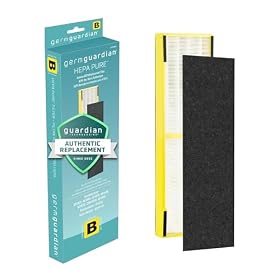 GermGuardian, Filter B HEPA Pure Genuine Air Purifier Filter, Removes 99.97% of Pollutants, Wildfire Smoke,…GermGuardian
$19.88 as of
View on Amazon Evalit Air Purifier Replacement Filter for ET066, Original Version, 2 PackEvalit
$33.99 as of
View on Amazon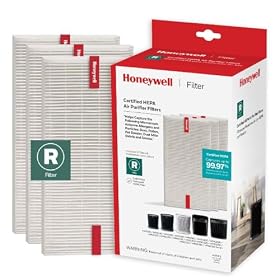 Honeywell HEPA Air Purifier Filter R, 3-Pack Air Filter ReplacementsHoneywell
$58.99 as of
View on Amazon
Product prices and availability are accurate as of the date/time indicated and are subject to change. Any price and availability information displayed on Amazon.com at the time of purchase will apply to the purchase of this product.
What changes the yearly total?
Filter price and purifier design
Replacement costs vary because filters differ in size, construction, and filtration stages. A small bedroom purifier may use a compact cartridge, while a larger-room unit needs a much larger filter. A purifier with a separate HEPA filter and carbon filter may also require two replacement purchases instead of one combined cartridge.
Check whether the listed replacement part includes:
- The HEPA filter
- A washable or replaceable pre-filter
- An activated carbon layer
- A frame, gasket, or complete filter cartridge
A lower-priced filter is not necessarily a lower annual cost if it must be replaced more often or does not include all of the stages in the original cartridge.
Recommended replacement interval
Manufacturers may recommend replacement based on calendar time, operating hours, or an indicator light. The stated interval usually assumes normal household conditions. Continuous operation, high fan speeds, or heavy particle loads can shorten the practical service life.
Do not reset a filter indicator without checking the filter. A reset only clears the timer or sensor notification; it does not restore filtration performance.
Dust, pets, smoke, and construction debris
Homes with shedding pets, frequent cooking, wildfire smoke, candles, fireplaces, renovations, or high outdoor pollution can load a filter faster. A visibly gray or clogged pre-filter may also reduce airflow before the HEPA media itself reaches the end of its rated life.
In these conditions, the annual cost may be higher because filters need to be replaced more frequently. If the purifier supports a washable pre-filter, cleaning that layer according to the manual can help protect the HEPA filter. Do not wash a HEPA filter unless the manufacturer specifically says it is washable.
Carbon filter replacement
Activated carbon is used for odors and some gaseous pollutants, while HEPA media targets airborne particles. Carbon may lose odor-control effectiveness before the filter looks dirty. If odor removal matters, check whether the purifier has a replaceable carbon layer and whether it is included in the same cartridge as the HEPA filter.
A purifier may therefore have two different maintenance schedules: one for the particle filter and another for the carbon component. Follow the instructions for the specific model.
Replacement carbon filters
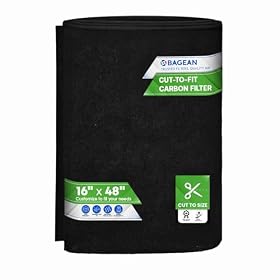 Bagean Cut to Fit Activated Carbon Filter Sheet 16” x 48” Carbon Air FilterBagean
$15.93 as of
View on Amazon Bagean Cut to Fit Activated Carbon Filter Sheet 16” x 48” Carbon Air FilterBagean
$20.98 as of
View on Amazon Core 300 Replacement Filter for LEVOIT Core 300-P Core 300S-P Air Purifierisinlive
$26.99 as of
View on Amazon
Product prices and availability are accurate as of the date/time indicated and are subject to change. Any price and availability information displayed on Amazon.com at the time of purchase will apply to the purchase of this product.
How to compare two purifiers by filter cost
Compare annualized ownership cost rather than the price of one replacement filter.
- Find the exact replacement cartridge for each purifier.
- Confirm whether it includes HEPA, carbon, and pre-filter components.
- Check the manufacturer’s replacement interval.
- Calculate the number of cartridges needed per year.
- Add separate pre-filter or carbon-filter costs if applicable.
- Include shipping or subscription costs when they apply.
- Compare the result with the purifier’s expected airflow and room coverage.
A purifier with cheaper filters is not automatically the better value. If it moves less air in the room, requires more frequent replacement, or provides weaker odor control, the lower filter price may not represent lower overall value.
Replacement pre-filters
 Honeywell Air Purifier Carbon Pre-Filter, HRF-A100 4 Count (Pack of 1)Honeywell
$11.93 as of
View on Amazon Honeywell Premium Odor-Reducing Air Purifier Replacement Pre-Filter, HRF-APP1 / Filter (A+)Honeywell
$18.57 as of
View on Amazon 2-Pack Washable Pre Filter Replacement Compatible with Blue Pure 511i Max Air Purifier, Reusable Fabric…Xelbreelark
$19.99 as of
View on Amazon
Product prices and availability are accurate as of the date/time indicated and are subject to change. Any price and availability information displayed on Amazon.com at the time of purchase will apply to the purchase of this product.
Ways to reduce replacement-filter costs safely
Keep the pre-filter clean
A pre-filter catches larger particles before they reach the HEPA layer. If it is washable, clean and dry it exactly as directed. If it is disposable, replace it on the recommended schedule. Never reinstall a washable filter while it is damp.
Use the purifier appropriately
Running the purifier at a reasonable continuous speed can provide better air cleaning than using maximum speed only occasionally. Keep the intake and outlet clear, and avoid placing the unit where curtains or furniture block airflow.
Buy the correct replacement
Use the model number and the manufacturer’s compatibility information. A filter that physically fits may not seal correctly or may have the wrong filtration layers. Poor sealing can allow unfiltered air to bypass the filter.
Consider compatible filters carefully
Third-party filters may cost less, but compare the construction, gasket fit, pleat area, carbon quantity, and stated compatibility. Avoid treating an unverified fit as equivalent to the original filter. If the purifier is used for smoke, allergies, or other important air-quality needs, the correct sealed replacement is especially important.
When should you replace the purifier instead?
Replacing the whole purifier may make sense when replacement cartridges are difficult to find, cost nearly as much as a new unit over a short period, or have been discontinued. It may also be reasonable if the purifier no longer moves air properly after a clean filter is installed, the fan has become unusually noisy, or the housing cannot maintain a reliable seal.
Before replacing the unit, confirm that the problem is not a clogged intake, blocked outlet, incorrectly installed filter, damaged gasket, or filter-door sensor. Disconnect power before inspecting internal areas, and follow the manufacturer’s service instructions. Electrical repairs should be handled by a qualified professional or the manufacturer.
Quick annual-cost checklist
To estimate your likely yearly cost, write down:
- Price of the exact replacement HEPA cartridge
- Recommended replacement interval
- Number of cartridges required per year
- Separate carbon-filter cost, if any
- Separate pre-filter cost, if any
- Shipping, subscription, or multipack savings
- Any adjustment needed for pets, smoke, dust, or continuous operation
This gives you a more realistic ownership figure than looking only at the purifier’s purchase price or the cost of one filter.
FAQ
How often do HEPA filters usually need to be replaced?
The interval depends on the purifier and household conditions. Many manufacturers specify a calendar period or operating-hour limit, but pets, smoke, dust, and continuous high-speed operation can shorten the useful life. Follow the specific purifier manual and inspect the filter when the indicator appears.
Can I wash a HEPA filter to avoid buying a replacement?
Usually no. Washing can damage the filter media and reduce its performance. Only wash a HEPA filter if the manufacturer explicitly identifies it as washable. A washable pre-filter is different from the HEPA layer and should be cleaned only as directed.
Are generic replacement HEPA filters worth buying?
They can reduce upfront cost, but verify exact model compatibility, sealing, filter construction, and included layers. A poorly fitting cartridge may allow air to bypass the filter, so the cheapest option is not always the best annual value.
Does a carbon filter need to be replaced at the same time as a HEPA filter?
Not always. Some purifiers combine HEPA and carbon in one cartridge, while others use separate filters. Carbon can lose odor-control effectiveness before it looks dirty, so follow the manufacturer’s schedule for each component.