The best air purifier for a nursery is quiet, properly sized for the room, and equipped with mechanical particle filtration. Look for a verified CADR, a sealed design, low-light controls, and no intentional ozone-producing features.
A good nursery air purifier should clean the room without disturbing sleep or creating a safety concern. Prioritize a properly sized unit with a true HEPA or equivalent high-efficiency particle filter, a published CADR, low noise at the intended setting, and controls that can be dimmed or disabled. Avoid devices that intentionally produce ozone, and keep any purifier well out of a child’s reach.
What matters most in a nursery air purifier
Room size and CADR
Choose an air purifier rated for at least the nursery’s actual floor area. A purifier’s room-size claim may be based on a particular air-change target, so ratings are not always directly comparable between brands.
CADR, or Clean Air Delivery Rate, is more useful when comparing models. It indicates how quickly a purifier delivers filtered air for particles such as smoke, dust, and pollen. A higher CADR generally means faster cleaning, but the purifier may need to run at a higher and louder setting to achieve it.
Measure the room, then compare that area with the manufacturer’s stated coverage and CADR. If the nursery has an open doorway to a larger room, size the purifier for the connected space only if you expect it to clean that entire area. Otherwise, air from the adjoining room can reduce its effectiveness.
Mechanical particle filtration
Most nursery air-quality concerns involve airborne particles, including dust, pollen, pet dander, and some smoke particles. A true HEPA filter is designed to capture very small airborne particles, while a washable or removable pre-filter catches larger hair and dust before they reach the main filter.
A pre-filter can extend the life of the primary filter, but it does not replace a HEPA filter. Check whether the pre-filter can be vacuumed or washed and whether the manufacturer requires it to be completely dry before reinstalling it.
Carbon filtration for odors
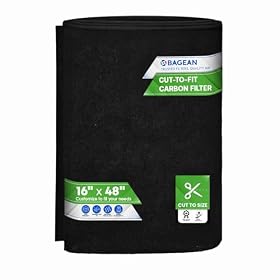
An activated-carbon filter can help reduce some household odors and gaseous pollutants. Its usefulness depends on the amount and quality of carbon in the filter, not merely on the presence of a thin carbon-coated sheet.
For a nursery, carbon filtration may be helpful for general household odors, but it should not be treated as protection from strong chemical fumes. Remove the source and ventilate the room instead. Never rely on an air purifier to make paint, cleaning chemicals, smoke, or combustion exhaust safe.
Noise at bedtime
Noise is one of the most important practical specifications. A purifier that is technically powerful but too loud to run may not improve the room consistently.
Look for a sleep mode, multiple fan speeds, and a published decibel rating if available. Remember that the lowest advertised noise figure usually applies to the lowest fan speed, not the purifier’s maximum cleaning rate. A larger unit operated at a lower speed can sometimes be a better nursery fit than a small unit running at full power.
If possible, place the purifier in the room before the baby sleeps and listen to it at the setting you expect to use. Do not place it directly beside the crib or where its airflow blows continuously onto the child.
Nursery-specific safety features
Avoid intentional ozone production
Do not choose a purifier that intentionally produces ozone as a cleaning method. Be cautious with products marketed around ionization, electrostatic precipitation, plasma, or similar features unless the manufacturer clearly explains how ozone emissions are controlled and the product meets applicable safety requirements. A mechanical filter and fan provide a simpler choice for a nursery.
If a purifier has an ionizer or other optional air-treatment feature, leave it turned off unless you have a specific, well-supported reason to use it.
Use child-safe placement
Place the purifier on a stable, level surface where a child cannot pull it down, reach the controls, or access the filter compartment. Keep the cord away from the crib and walking paths. Follow the clearance requirements in the manual, especially around the air intake and exhaust.
Do not cover the purifier, place clothing or blankets over it, or operate it in a damp location unless the manufacturer specifically permits that use. Unplug the unit before cleaning it or changing its filter.
Limit light and interruptions
A display-off function, dimmable controls, and a sleep timer can prevent unnecessary light in the nursery. A filter-change indicator is useful, but it should not be the only maintenance reminder because filter life varies with dust, smoke, pets, and operating hours.
Product prices and availability are accurate as of the date/time indicated and are subject to change. Any price and availability information displayed on Amazon.com at the time of purchase will apply to the purchase of this product.
Features that are useful but not essential
Automatic mode: Convenient when paired with a reliable particle sensor, but it does not measure every pollutant and may not respond to odors or gases.
Air-quality display: Helpful for observing changes, but treat the reading as an estimate rather than a complete assessment of indoor air quality.
Remote or app control: Convenient for changing settings without entering the room, though it adds complexity and should not replace physical safety precautions.
Washable pre-filter: Useful for capturing hair and larger dust, provided it can be cleaned according to the instructions.
Filter availability: Confirm that replacement filters are easy to find and that the manufacturer provides clear replacement guidance before buying the purifier.
Product prices and availability are accurate as of the date/time indicated and are subject to change. Any price and availability information displayed on Amazon.com at the time of purchase will apply to the purchase of this product.
How to use an air purifier in a nursery
Address the source first. Keep the room free of smoke, strong fragrances, dusty materials, and unnecessary chemical products. Repair moisture problems rather than trying to filter mold-related odors.
Install the filter correctly. Remove any shipping plastic from a replacement filter and fit it in the direction shown in the manual.
Leave airflow clear. Maintain the manufacturer’s recommended space around the intake and outlet.
Run it consistently. Continuous operation at a quiet, moderate setting is often more practical than occasional operation at maximum speed.
Clean the pre-filter as directed. A loaded pre-filter restricts airflow and can make the purifier noisier.
Replace the main filter when required. Use the manufacturer’s interval as a starting point and replace it sooner if it is visibly loaded, smells unusual, or airflow remains weak after cleaning the pre-filter.
An air purifier does not replace ventilation, appropriate humidity control, or medical care. If the nursery has persistent dampness, visible mold, gas appliances, smoke intrusion, or a child with breathing symptoms, correct the underlying issue and consult an appropriate professional or health care provider.
Product prices and availability are accurate as of the date/time indicated and are subject to change. Any price and availability information displayed on Amazon.com at the time of purchase will apply to the purchase of this product.
What to check before buying
Use this short checklist when comparing models:
Is the stated coverage large enough for the nursery?
Does the manufacturer publish CADR or another meaningful airflow/cleaning specification?
Is there a true HEPA or clearly described high-efficiency particle filter?
Is there a pre-filter that can be cleaned?
Does it include activated carbon if odor reduction is important?
Can the display and indicator lights be turned off?
Is the low-speed noise suitable for sleep?
Can the purifier be placed securely away from the crib and cords?
Are replacement filters available, and are their dimensions and installation instructions clear?
Can ionization or other optional treatment features be disabled?
For most nurseries, the best choice is not the purifier with the longest feature list. It is a quiet, appropriately sized mechanical-filter unit that can run safely and consistently, with replacement filters you can reasonably maintain.
FAQ
Should I use an air purifier in a baby’s room?
An air purifier can reduce airborne particles such as dust, pollen, pet dander, and some smoke particles, but it is not a substitute for ventilation, source control, moisture repairs, or medical care. Use a properly sized unit with mechanical filtration and keep it safely out of reach.
What type of filter is best for a nursery?
A true HEPA or comparable high-efficiency particle filter is the main feature to prioritize. A removable pre-filter helps capture larger dust and hair, while activated carbon can help with some odors. Avoid relying on ozone-producing features.
How close should an air purifier be to a crib?
Do not place it directly beside the crib or where the airflow blows continuously onto the child. Follow the manufacturer’s clearance instructions and place the unit on a stable surface where the child cannot reach it or pull it down.
Is it safe to leave a nursery air purifier running overnight?
Many household air purifiers are designed for continuous operation, but follow the specific product manual. Use a stable placement, keep the cord inaccessible, leave the intake and exhaust clear, and disable optional ionizing features when possible.
How often should a nursery air purifier filter be changed?
Follow the manufacturer’s schedule, then adjust for the room’s conditions. Heavy dust, pets, smoke, or continuous operation can shorten filter life. Clean the pre-filter as directed and replace the main filter if airflow stays weak or the filter is visibly loaded.