The best air purifier for allergies combines a true HEPA filter with enough airflow for the room. Use CADR, filter design, noise, and operating cost—not marketing claims alone—to choose the right model.
If allergies are triggered by airborne pollen, dust, pet dander, or mold spores, the best air purifier is usually one with a true HEPA filter, a suitable clean air delivery rate (CADR), and a sealed enough design to move room air through the filter repeatedly. Choose the purifier based on the room where symptoms are worst, and run it consistently rather than relying on occasional high-speed operation.
An air purifier can reduce airborne particles, but it cannot remove allergens that have already settled into bedding, carpets, furniture, or clothing. Regular cleaning and source control still matter.
What to look for in an air purifier for allergies
True HEPA filtration
A true HEPA filter is the most important feature for common airborne allergy particles. It is designed to capture very small particles, including many particles associated with pollen, dust, and pet dander.
Be cautious with vague terms such as “HEPA-type,” “HEPA-like,” or “allergy filter.” These descriptions do not necessarily indicate the same filtration performance as a true HEPA filter. Check the manufacturer’s specifications for the exact filter type and replacement schedule.
A washable mesh filter is usually a pre-filter, not a substitute for the main HEPA filter. It catches larger hair and dust before they reach the primary filter and should be cleaned as directed.
A CADR appropriate for the room
CADR measures how quickly an air purifier delivers filtered air. A higher CADR generally means faster cleaning, but the useful comparison depends on the room size and the specific CADR rating provided by the manufacturer.
When comparing models, look for:
A stated room-size recommendation based on a defined operating speed
CADR figures, preferably broken out for dust, smoke, and pollen when available
A purifier designed for the actual room size, not just a small corner of it
Enough airflow to clean the room without requiring constant maximum speed
If a purifier is rated only for a much smaller space, it may struggle to keep up in a bedroom, living room, or open-plan area. For an unusually large or connected space, one larger unit or multiple units may be more practical than relying on a single small purifier.
A carbon filter for odors
Activated carbon can help reduce some odors and gaseous pollutants, including odors from pets, cooking, and smoke. Carbon is not a replacement for HEPA filtration, and a thin carbon-coated filter may have limited odor-removal capacity compared with a filter containing a larger amount of carbon.
For allergies, prioritize HEPA performance and airflow first. Consider carbon as an additional feature if odors are also a concern.
Low noise at a useful speed
Noise affects whether you will actually run the purifier, especially in a bedroom. Check the manufacturer’s noise information at more than one fan setting if available. The quietest setting may be comfortable but may move considerably less air.
The most useful purifier is one that can operate continuously at a tolerable noise level while still providing meaningful airflow.
No intentional ozone generation
For allergy use, avoid devices that intentionally generate ozone. Be cautious with ionizers, ozone generators, and products that emphasize electrostatic or ionizing operation without clearly explaining emissions and safety information. If a purifier includes an ionizer, check whether it can be disabled and follow the manufacturer’s safety guidance.
Match the purifier to the allergy problem
Pollen
Place the purifier in the bedroom or another room where you spend substantial time. Keep windows and doors closed during periods of high outdoor pollen when practical, and remove outer clothing before entering sleeping areas. A HEPA purifier can help reduce airborne pollen, but it will not prevent pollen from being tracked indoors.
Dust and dust mites
Dust mites are commonly found in bedding, mattresses, upholstered furniture, and carpets. An air purifier may capture airborne dust, but cleaning and humidity control are also important. Wash bedding according to care instructions, use suitable mattress and pillow encasements, and keep indoor humidity at a moderate level.
Pet dander
A purifier can help capture airborne dander, but dander also settles on floors, furniture, and fabrics. Put the unit in the room where the pet and affected household members spend the most time. A washable pre-filter is useful for catching pet hair, but it does not replace the main HEPA filter.
Mold spores
An air purifier may reduce some airborne mold particles, but it does not fix a moisture problem or remove established mold. Address leaks, condensation, flooding, and excessive humidity at the source. Significant or persistent mold contamination may require professional assessment and remediation.
Air purifiers with true HEPA filtration for allergy particles
Product prices and availability are accurate as of the date/time indicated and are subject to change. Any price and availability information displayed on Amazon.com at the time of purchase will apply to the purchase of this product.
Room placement and operation
Place the purifier where air can enter and exit freely. Avoid pushing it directly against a wall, behind curtains, under furniture, or into a tight corner unless the instructions specifically allow it. Keep the air outlet clear.
For allergy control:
Install the filters in the correct order and remove any shipping plastic before operation.
Run the purifier continuously or use its automatic mode when appropriate.
Use a higher setting after cleaning, during high-pollen periods, or when the room has a noticeable particle source.
Keep doors and windows closed when outdoor air is carrying the allergen you are trying to avoid.
Clean or replace filters according to the manufacturer’s instructions.
Do not assume that a sensor’s “good” air reading means all allergens have been removed. Many consumer sensors measure only selected particle sizes and may not detect every allergen or odor.
Air purifiers with higher airflow for bedrooms and living rooms
Product prices and availability are accurate as of the date/time indicated and are subject to change. Any price and availability information displayed on Amazon.com at the time of purchase will apply to the purchase of this product.
Filter maintenance and replacement
A clogged filter reduces airflow and can make the purifier less effective and noisier. Check the pre-filter regularly, especially in homes with pets, heavy dust, or construction nearby. Replace the HEPA and carbon cartridges at the interval specified for your conditions, or sooner if the filter is visibly damaged, saturated with odor, or causing a noticeable airflow decline.
Do not wash a disposable HEPA or carbon filter unless the manufacturer specifically says it is washable. Water can damage the filter media and reduce performance. Replacement filters should match the purifier’s required size and filter configuration; a filter that physically fits is not necessarily an appropriate substitute.
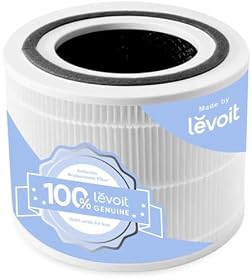
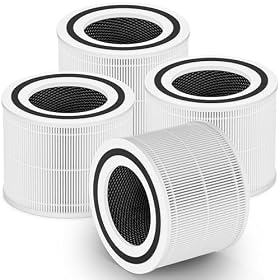
Replacement filters for allergy-focused air purifiers
Product prices and availability are accurate as of the date/time indicated and are subject to change. Any price and availability information displayed on Amazon.com at the time of purchase will apply to the purchase of this product.
Common buying mistakes
Choosing by advertised room size alone
Room-size claims can be based on different assumptions about air changes and fan speed. CADR and the operating speed behind the room recommendation provide a more useful comparison.
Buying the smallest unit for a large room
A compact purifier may be convenient, but its airflow may be too low for a large bedroom or living area. Check whether the rating applies to the full room rather than a small personal area.
Treating an ionizer as a HEPA substitute
Ionization does not provide the same straightforward filtration approach as a properly specified HEPA filter. It may also raise questions about ozone emissions. For allergy-focused use, start with mechanical filtration and adequate airflow.
Ignoring replacement-filter availability
Before buying, confirm that replacement filters are available and that their cost and replacement interval fit your budget. A low-cost purifier can become inconvenient if replacement cartridges are difficult to find.
Expecting an air purifier to solve every allergy symptom
Air purifiers help with airborne particles, but they do not remove allergens from surfaces or treat the underlying cause of symptoms. If symptoms are severe, persistent, or accompanied by breathing difficulty, consult a healthcare professional.
Air purifiers with HEPA and activated carbon filtration
Product prices and availability are accurate as of the date/time indicated and are subject to change. Any price and availability information displayed on Amazon.com at the time of purchase will apply to the purchase of this product.
Bottom line
For most allergy-prone households, prioritize a purifier with a true HEPA filter, room-appropriate CADR, manageable operating noise, and readily available replacement filters. Add activated carbon if odor control matters, avoid intentional ozone generation, and place the unit in the room where it can run consistently. Pair air cleaning with vacuuming, bedding care, humidity control, and source reduction for better overall allergy management.
FAQ
Are air purifiers good for allergies?
They can help reduce airborne particles such as pollen, dust, and pet dander. They are less effective against allergens that have settled on surfaces, so cleaning, bedding care, and source control remain important.
Is a true HEPA filter best for allergies?
A true HEPA filter is generally the key filtration feature to prioritize for airborne allergy particles. Confirm the exact filter specification rather than relying on terms such as “HEPA-type” or “HEPA-like.”
Should an air purifier run all night?
It can run overnight if the manufacturer permits continuous operation and the noise level is comfortable. A lower setting may be quieter, while a higher setting generally moves more air through the filter.
Where should I place an air purifier for allergies?
Place it in the bedroom or the room where symptoms are most affected, with unobstructed intake and outlet areas. Avoid corners, curtains, and furniture that block airflow.
Can an air purifier remove pet dander?
A HEPA-equipped purifier can capture airborne pet dander, but dander also settles on furniture, floors, and fabrics. Regular cleaning and keeping the purifier near the main living area can improve overall control.
How often should an air purifier filter be replaced?
Follow the manufacturer’s replacement schedule and inspect the filter more frequently in dusty homes or homes with pets. Replace it sooner if airflow drops, the filter is damaged, or persistent odors remain.