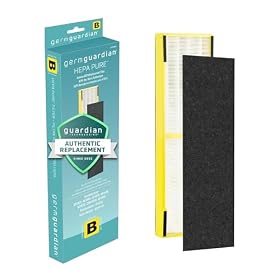
A replacement air purifier filter must match the purifier model or fit dimensions exactly. Learn how to choose between HEPA, carbon, pre-filter, and combination cartridges without sacrificing airflow or filtration.
The safest way to buy a replacement filter for a room air purifier is to match the purifier’s exact model number first, then confirm the filter’s dimensions, filtration stages, and installation direction. A filter that looks similar may not seal correctly, fit the housing, or work with the purifier’s filter-life sensor.
Find the correct replacement filter
Check the purifier model number
Look for the model number on:
The rating label on the back, bottom, or side of the purifier
The original box or owner’s manual
The purifier’s control panel or companion app
The existing filter frame or cartridge label
Search using the complete model number rather than a broad phrase such as “room air purifier filter.” Some purifier families use different filters for different generations or room-size versions.
If the model number is missing, measure the old filter and compare its shape, thickness, tabs, handle, and frame design with the replacement listing. Dimensions alone are not a guarantee of compatibility.
Confirm the filter dimensions and shape
Check all three dimensions: length, width, and thickness. Also compare:
Whether the filter is rectangular, cylindrical, or another shape
The position of pull tabs and handles
The direction of airflow arrows
Frame edges or sealing gaskets
Any notches, clips, or locking features
A filter that is slightly too small can allow unfiltered air to bypass the media. One that is too thick may prevent the cover from closing or restrict airflow.
Verify the complete filter assembly
Some purifiers use a single combination cartridge containing multiple layers. Others use separate filters that must be replaced individually. Confirm whether the product includes:
A particle filter, often described as HEPA or high-efficiency filtration
An activated carbon filter for some odors and gases
A washable or removable pre-filter
A filter frame or housing
One complete cartridge or multiple replacement pieces
Do not assume that a replacement advertised as a “HEPA filter” includes the carbon layer or pre-filter. Read the contents and compatibility details carefully.
Choose the right filter type
HEPA or particle filtration
A HEPA or high-efficiency particle filter is intended to capture airborne particles such as dust, pollen, and other fine particulate matter. It is generally the most important replacement component for particle filtration.
Look for the filtration wording specified by the purifier manufacturer. Terms such as “HEPA-type,” “true HEPA,” and “high-efficiency filter” are not always interchangeable, and a generic filter may not provide the same performance as the original cartridge.
Activated carbon filtration
Activated carbon can help reduce some household odors and certain gaseous pollutants. Its effectiveness depends on the amount and design of carbon in the filter, as well as the type and concentration of the odor or gas.
If odor control matters, do not select a particle-only replacement unless the purifier is designed to use a separate carbon filter. A thin carbon-coated layer may offer less odor capacity than a thicker carbon section, but the product description may not provide enough information to make a direct comparison.
Pre-filters
A pre-filter catches larger debris before air reaches the finer filter media. It may be washable, vacuumable, or built into the replaceable cartridge.
Follow the manufacturer’s cleaning instructions. Do not wash a filter unless it is specifically labeled washable. Water can damage particle-filter media, increase resistance to airflow, or create a moisture problem inside the purifier.
Product prices and availability are accurate as of the date/time indicated and are subject to change. Any price and availability information displayed on Amazon.com at the time of purchase will apply to the purchase of this product.
Before ordering, check these specifications
Replacement interval
Filter life varies with operating hours, fan speed, indoor pollution, pets, smoke, and dust. Use the purifier’s manual or filter indicator as the primary guide.
A filter may need replacement sooner if it is visibly loaded, airflow has weakened, odors return, or the purifier’s indicator remains on after the filter has been cleaned or reset according to the instructions. A filter-life indicator is usually a time or usage estimate; it does not necessarily measure the filter’s actual particle load.
Airflow direction
Many cartridges have an airflow arrow. Install the filter in that direction. Reversing a filter can reduce performance, interfere with the pre-filter arrangement, or prevent the cover from fitting correctly.
Filter reset procedure
Some purifiers require a button press or app command after installing a new filter. Resetting the indicator does not clean or improve the filter; it only starts a new replacement reminder cycle. Use the reset procedure in the owner’s manual.
Original-equipment versus compatible filters
An original replacement is usually the simplest choice when the purifier has a proprietary shape, electronic filter recognition, or a tight sealing system. A compatible filter can be reasonable when it clearly identifies the supported model and matches the original cartridge’s size and construction.
Be cautious with listings that only say “fits most” or show a similar-looking purifier. Confirm the supported model numbers, filter dimensions, included layers, and return policy before purchasing.
Product prices and availability are accurate as of the date/time indicated and are subject to change. Any price and availability information displayed on Amazon.com at the time of purchase will apply to the purchase of this product.
How to replace an air purifier filter
Turn off the purifier and unplug it.
Open the filter cover according to the manual.
Note the existing filter’s orientation before removing it.
Remove loose dust carefully; avoid spreading it through the room.
Check the housing, gasket, and cover for debris or damage.
Install the new filter with the airflow arrow facing the correct direction.
Close the cover fully so the filter seals against the housing.
Plug in the purifier and perform the required filter reset.
Run the purifier at the manufacturer-recommended setting.
Do not operate the purifier without its required filter or with the cover partially closed. If the filter will not seat properly, stop rather than forcing the cover.
Product prices and availability are accurate as of the date/time indicated and are subject to change. Any price and availability information displayed on Amazon.com at the time of purchase will apply to the purchase of this product.
When a replacement filter is not the answer
A new cartridge may not solve the problem if the purifier has a damaged fan, blocked air inlet, broken cover latch, failed sensor, or worn gasket. Check that vents are clear and that the purifier is on a stable surface with the required clearance around its air openings.
If the purifier produces a burning smell, unusual electrical noise, sparks, repeated power interruptions, or excessive heat, unplug it and follow the manufacturer’s service guidance. Do not open the electrical housing unless the manufacturer specifically permits it and you are qualified to do so.
If compatible filters are no longer available, the unit repeatedly reports a filter error, or replacement filters cost close to a suitable new purifier, replacing the purifier may be more practical. Select a new unit based on room size, clean-air delivery information, noise, filter availability, and the ongoing cost of replacement cartridges.
FAQ
How do I know which replacement filter fits my room air purifier?
Match the purifier’s complete model number with the replacement listing. Then verify the filter shape, length, width, thickness, airflow direction, frame details, and included filtration layers.
Can I use a generic HEPA filter in my air purifier?
Only if the generic filter explicitly lists your purifier model and matches the original filter’s dimensions and design. A filter that fits loosely or lacks the original sealing features may allow air to bypass the filtration media.
How often should I replace a room air purifier filter?
Follow the purifier manufacturer’s replacement schedule and filter indicator. Actual life depends on operating hours, fan speed, dust, smoke, pets, and other indoor pollutants.
Does every replacement HEPA filter include activated carbon?
No. Some cartridges combine particle filtration and activated carbon, while others use a particle filter alone or separate filter stages. Check the product contents and filter-layer description before ordering.
Why does my air purifier still show a filter warning after replacement?
The filter indicator may need to be reset manually or through the purifier’s app. Check the manual for the reset procedure. If the warning remains after a correct reset, verify the filter model and seating, then contact the manufacturer if needed.