Air purifier prices vary widely based on room coverage, CADR, filtration, noise control, and long-term filter costs. Here is how to compare the real cost before buying.
What do you need help with?
Open an answer, or tell us what we should cover next.
Answered in this guide
Choose an air purifier that fits your room and budget
Measure the room, match its size and cleaning needs to the purifier’s coverage and CADR, then compare filtration, noise, controls, filter costs, and electricity use before buying.
Basic, mid-range, large-room, and premium purifiers differ in price because of coverage, CADR, filter size and type, carbon filtration, noise control, sensors, and automatic controls.
Calculate the ongoing cost of owning an air purifier
Estimate ownership cost by including replacement filters, electricity, maintenance, and accessories. Filter costs often matter most and vary with usage, pollution, pets, smoke, and cleaning.
Decide whether an expensive air purifier is worth it
A higher-priced purifier may be worthwhile for higher CADR, quieter operation, better odor filtration, larger filters, or lower running costs, but not for cosmetic design or unnecessary app features.
Request a topic and help us choose what to build next.
Compare specific air purifier models at current prices
Replace or clean filters on a specific purifier
Place an air purifier for the best room airflow
Requests help us prioritize the next guide. No email required.
One anonymous request per topic.
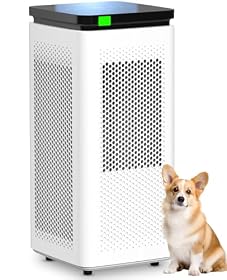
The cost of an air purifier depends mainly on the room it must serve, its clean air delivery rate (CADR), filtration system, noise level, and replacement filter expense. Basic models for small rooms generally cost less, while larger or quieter units with stronger airflow, better controls, and more advanced filtration cost more.
The purchase price is only part of the expense. Replacement filters and electricity can make a noticeable difference over the life of the unit, so compare total ownership cost—not just the price on the box.
Typical air purifier price tiers
Exact prices change by brand, retailer, sales, and specifications, but air purifiers generally fall into these groups:
Basic small-room models
These are intended for bedrooms, offices, nurseries, and other smaller spaces. They commonly use a particle filter such as HEPA or a HEPA-type filter, a washable or replaceable pre-filter, and a few fan speeds.
A basic model can be a sensible choice when you need help with dust, pollen, or everyday airborne particles in one small room. Check the published room rating and CADR rather than choosing by appearance alone.
Mid-range room models
Mid-range units typically move more air and are designed for larger bedrooms, living rooms, or open areas. They may offer automatic fan control, an air-quality sensor, a better enclosure, quieter operation, or a larger filter.
This tier often provides the best balance for a main living space, but only if the stated coverage is appropriate for the room. A low-cost unit with insufficient airflow may perform worse than a properly sized mid-range model.
Large-room and premium models
Larger models cost more because they need stronger fans, larger filters, and more substantial construction. Premium units may add app controls, more detailed sensors, multiple fan settings, improved sound control, or specialized odor filtration.
These features can be useful, but they do not automatically mean better particle removal. For dust, pollen, and smoke particles, airflow through an effective particle filter remains one of the most important specifications.
Product prices and availability are accurate as of the date/time indicated and are subject to change. Any price and availability information displayed on Amazon.com at the time of purchase will apply to the purchase of this product.
What determines the price?
Room coverage and CADR
An air purifier needs enough airflow to clean the intended room repeatedly. CADR, usually listed for smoke, dust, and pollen, helps compare how quickly a unit delivers filtered air.
Be cautious with very large room claims that do not provide useful CADR information. Coverage numbers may be based on different assumptions about ceiling height, air changes, or operating speed. If you want quieter operation, choose a unit with more capacity than the bare minimum so it can clean effectively at a lower fan setting.
Filter type and size
A true HEPA filter is designed to capture very small airborne particles at a defined efficiency under applicable testing standards. Some products use terms such as “HEPA-type,” “HEPA-like,” or proprietary particle filters, which may not mean the same thing.
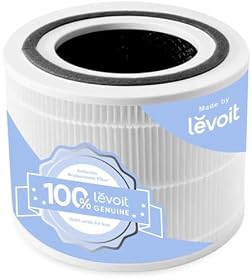
Larger filters often cost more to replace, but they may last longer or allow more airflow at a given fan speed. Look for the replacement filter part number, availability, and manufacturer guidance before buying the purifier.
Carbon filtration
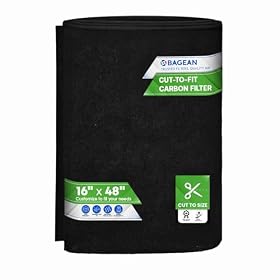
Activated carbon can help reduce some odors and gaseous pollutants. The amount of carbon matters: a thin carbon-coated layer may have limited odor capacity, while a heavier carbon filter generally adds to the unit's cost and weight.
If odors are your main concern, compare the design and amount of carbon rather than assuming every purifier with a “carbon filter” will perform equally.
Noise control
Quiet operation usually requires fan design, airflow control, insulation, or larger filtration surfaces. A purifier that is quiet on its lowest setting may be much louder at the speed needed for meaningful cleaning.
Check whether the manufacturer lists sound levels for multiple fan speeds. A sleep mode is useful, but it may reduce airflow and therefore the cleaning rate.
Sensors and automatic controls
Air-quality sensors, automatic modes, displays, and app controls can increase the purchase price. They may improve convenience, but they are not substitutes for adequate CADR and proper filter maintenance.
Sensor readings can also vary based on particle type, placement, humidity, and calibration. Treat them as control aids rather than a complete measurement of indoor air quality.
Product prices and availability are accurate as of the date/time indicated and are subject to change. Any price and availability information displayed on Amazon.com at the time of purchase will apply to the purchase of this product.
The ongoing cost of owning an air purifier
Replacement filters
Replacement filters are usually the largest recurring expense. The interval depends on the purifier, operating hours, fan speed, indoor pollution, pets, smoke, and whether the pre-filter is cleaned as directed.
Before buying, check:
The price and availability of the correct replacement filter
Whether the filter is sold as a complete cartridge or separate layers
The manufacturer's expected replacement interval
Whether the pre-filter can be vacuumed or washed
Whether a filter-change indicator is based on time, airflow, or an actual sensor
Do not assume a washable filter replaces the main particle filter. Many purifiers have a washable pre-filter but still require a disposable HEPA or particle filter.
Electricity use
A purifier's energy cost depends on its wattage, operating speed, and hours of use. A simple estimate is:
Energy cost = watts ÷ 1,000 × hours used × electricity rate
For example, use the unit's listed power consumption and your utility's per-kilowatt-hour rate to estimate daily, monthly, or annual use. Actual consumption may vary between fan speeds and operating modes.
A more powerful unit can sometimes be economical if it cleans the room at a low setting, while a small unit running continuously at maximum speed may not be the best value.
Maintenance and accessories
Routine maintenance is usually limited to cleaning the pre-filter, keeping the air intake and outlet clear, and replacing the main filter when required. Avoid operating the purifier with a missing, damaged, or incorrectly installed filter.
Some models also require replacement cartridges, specialty odor filters, or proprietary parts. These costs should be included when comparing otherwise similar units.
Product prices and availability are accurate as of the date/time indicated and are subject to change. Any price and availability information displayed on Amazon.com at the time of purchase will apply to the purchase of this product.
How to choose a cost-effective air purifier
Measure the room. Include the ceiling height and consider whether doors are usually open.
Identify the main problem. Dust and pollen call for effective particle filtration; persistent odors may require substantial activated carbon.
Compare CADR and usable coverage. Do not rely only on a marketing label such as “large room.”
Check noise at useful fan speeds. A purifier that is too loud may be left switched off.
Price replacement filters. Confirm that the correct cartridge is currently available.
Consider operating hours. Continuous use makes energy consumption and filter life more important.
Avoid paying for unnecessary features. App control and decorative displays may not improve filtration.
Product prices and availability are accurate as of the date/time indicated and are subject to change. Any price and availability information displayed on Amazon.com at the time of purchase will apply to the purchase of this product.
Is an expensive air purifier worth it?
A more expensive purifier can be worthwhile when it provides significantly higher CADR, quieter operation, a larger filter, better odor filtration, or lower ongoing cost. It may not be worthwhile if the extra price mainly pays for app features or cosmetic design.
For most buyers, the best value is a properly sized unit with clearly stated airflow, an effective particle filter, manageable noise, and replacement filters that are easy to obtain. If the purifier is intended for smoke, severe allergies, or a large open-plan area, prioritize airflow and filter capacity over the lowest purchase price.
When a cheaper model is enough
A lower-cost purifier may be adequate when:
The room is small and enclosed
The main concern is ordinary dust or pollen
You can tolerate higher fan noise
Replacement filters are readily available
You do not need app controls or detailed sensors
Even a basic unit must be maintained correctly and sized for the space. An inexpensive purifier that is rarely operated or has a clogged filter will not provide good value.
Bottom line
Air purifier cost includes the initial purchase, replacement filters, electricity, and the features that affect whether you will run the unit consistently. Compare CADR, room size, filter construction, noise, and filter availability before comparing price tags. For most rooms, a correctly sized purifier with affordable replacement filters is a better investment than the cheapest or most feature-heavy option.
FAQ
What is the cheapest type of air purifier?
Basic small-room air purifiers with a particle filter and limited controls are generally the least expensive. Confirm the room rating, airflow information, and replacement filter cost before buying.
How much do air purifier replacement filters cost?
Replacement filter costs vary by purifier size, filter construction, brand, and whether the cartridge combines HEPA, carbon, and pre-filter layers. Check the exact replacement part before purchasing the purifier.
Are expensive air purifiers better?
Not necessarily. Higher-priced models may offer more airflow, quieter operation, larger filters, better carbon filtration, or extra controls. Compare those specifications rather than assuming price alone indicates better filtration.
Is it expensive to run an air purifier all day?
The cost depends on the unit's wattage, fan setting, operating hours, and local electricity rate. Use the formula watts divided by 1,000, multiplied by hours and your electricity rate, to estimate the expense.
How do I avoid buying an air purifier that is too expensive to maintain?
Check the replacement filter price and availability, expected replacement interval, pre-filter maintenance requirements, and power consumption before buying. Proprietary or unusually large filter cartridges may increase long-term cost.