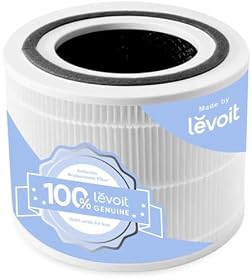
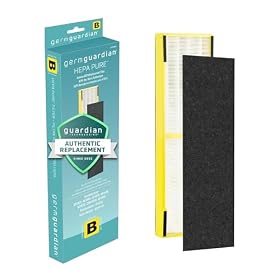
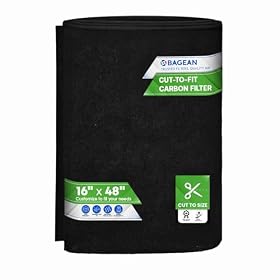
Tower air purifiers save floor space and often fit neatly beside furniture, while box-style models can prioritize airflow, filter area, and serviceability. The better shape depends on your room, placement, air-quality problem, and preferred maintenance routine.
What do you need help with?
Open an answer, or tell us what we should cover next.
Answered in this guide
Choose an air purifier that fits your room and budget
Choose a tower purifier when its narrow footprint solves a placement problem and its CADR suits the room. Choose a box purifier when you have more floor space and want greater airflow, filter area, or serviceability.
Tower purifiers are narrower and easier to place beside furniture, while box models are wider and may provide more airflow, filter area, and capacity. The better shape depends on your available space and cleaning needs.
A tower often suits bedrooms, home offices, and small rooms where floor space is limited. A box model may work better in larger living areas when you have room for a wider unit and greater airflow capacity.
Look beyond the purchase price by comparing filter design, replacement needs, energy use, and operating costs. A purifier that costs more initially may be easier or cheaper to maintain over time.
Requests help us prioritize the next guide. No email required.
One anonymous request per topic.
Tower versus box air purifier: the short answer
Choose a tower air purifier when floor space, appearance, and a narrow footprint matter most. Choose a box-style air purifier when you want strong air movement, a larger filter area, easy access to replacement filters, or flexible placement in a larger room. Neither shape is automatically better: the most important specifications are CADR, recommended room area, filter design, noise, and operating cost.
A well-sized purifier of either shape can work effectively. An undersized model will struggle regardless of its cabinet design.
Key differences at a glance
Feature
Tower air purifier
Box air purifier
Footprint
Narrow and space-efficient
Wider, often with a larger base
Placement
Fits beside furniture or in tight areas
Usually needs more floor or shelf space
Air intake and exhaust
Often arranged vertically
Commonly arranged across larger side, front, or top panels
Filter area
Varies by model; may be more compact
Often allows a larger cylindrical or panel filter
Room coverage
Available for small to large rooms; check CADR
Available for small to large rooms; check CADR
Appearance
Blends into narrow spaces and corners
More appliance-like and visually prominent
Maintenance access
May require opening a rear or side panel
Often has a broad, easy-to-access filter compartment
Best reason to buy
Small footprint and tidy placement
Airflow capacity, filter access, and flexibility
These are general design tendencies, not rules. Some tower models have substantial filters, and some box models are compact. Compare the actual specifications rather than relying on the shape alone.
Product prices and availability are accurate as of the date/time indicated and are subject to change. Any price and availability information displayed on Amazon.com at the time of purchase will apply to the purchase of this product.
Air cleaning performance: compare CADR first
The clean air delivery rate (CADR) is usually more useful than the purifier’s shape. CADR indicates how quickly a unit delivers filtered air for a particular particle type. A higher CADR generally means faster cleaning in the same room, assuming the purifier is operated under comparable conditions.
When comparing two models:
Check that each manufacturer states room coverage using a comparable standard.
Compare CADR values, especially if you need to reduce smoke, dust, or pollen quickly.
Treat very large advertised room-area figures cautiously if they are based on low air-change assumptions.
Remember that doors, ceilings, open floor plans, and high contaminant levels can require more capacity.
For allergy or dust concerns, prioritize particle filtration and adequate CADR. For odors or some gaseous pollutants, look for a meaningful activated-carbon filter. A thin carbon-coated filter may help with light odors, but filter amount and design affect how much odor it can adsorb.
Product prices and availability are accurate as of the date/time indicated and are subject to change. Any price and availability information displayed on Amazon.com at the time of purchase will apply to the purchase of this product.
When a tower purifier makes more sense
A tower model is often the better fit when:
You have limited floor space.
The purifier must fit beside a bed, desk, sofa, or cabinet.
You prefer a less bulky appearance.
The air intake and outlet can remain unobstructed in a narrow location.
You need a unit that is easy to move between rooms.
The main limitation is that a narrow cabinet can restrict filter size or airflow design, although this varies considerably. Do not assume a tower is quiet or weak, or that it uses less electricity, without checking the specifications.
Placement cautions for tower models
A tower’s narrow shape can make it tempting to place it tightly against a wall or in a corner. That may restrict the intake or exhaust. Follow the manufacturer’s clearance instructions, and avoid blocking the air outlet with curtains, furniture, bedding, or a wall.
If the model draws air from the rear, it needs open space behind it. If it draws air from the sides or bottom, those areas must remain clear instead.
When a box purifier makes more sense
A box-style model may be preferable when:
You want higher airflow capacity for a larger room.
You prefer a broad filter that is easy to remove and inspect.
You want flexible horizontal or vertical placement, if the manufacturer allows both orientations.
You need better access to the filter for regular cleaning or replacement.
The purifier will run frequently in a living room, bedroom, or open-plan area.
Box models can provide room for larger filters and fans, but cabinet size alone does not prove better performance. Check CADR, noise levels, power use, and the manufacturer’s filter replacement guidance.
Filter design and maintenance
Both shapes may use a multi-stage system such as:
Pre-filter: Captures larger particles such as hair and lint. A washable or vacuum-cleanable pre-filter can help protect the main filter, but follow the instructions before washing any component.
Particle filter: Often a HEPA or HEPA-type filter designed to capture fine airborne particles. Check the exact wording and certification details rather than assuming every “HEPA-style” label has the same performance.
Carbon filter: Helps reduce certain odors and gases. Its effectiveness depends heavily on the amount and type of carbon.
Before buying, check how the filter is accessed, whether replacement cartridges are readily available, and whether the unit warns when a filter needs attention. A purifier that is awkward to service may be neglected, regardless of its shape.
Do not wash a filter unless the manufacturer specifically says it is washable. Vacuuming a disposable particle filter can damage it or reduce its intended performance.
Noise and bedroom use
A purifier’s quietest setting is not necessarily the setting you will use for effective cleaning. Compare noise specifications across the speeds you are likely to run, especially if the purifier will operate in a bedroom or home office.
Consider:
Whether the unit has a genuinely low sleep setting.
Whether the display or indicator lights can be dimmed or turned off.
Whether the fan produces a noticeable high-pitched sound.
Whether automatic mode changes speed frequently.
Whether the purifier needs to run at high speed to clean your room adequately.
A larger purifier operated at a lower speed may be more comfortable than a smaller purifier working continuously at maximum speed. This is one reason sizing by CADR matters.
Which shape is better for different rooms?
Bedroom
A tower can work well beside a bed or dresser if its outlet does not blow directly at you and the intake remains clear. A box model may be better if you have enough floor space and want greater capacity at a lower fan setting. Check sleep-mode noise and display controls before choosing.
Living room
A box purifier often makes sense for a living room because it can offer flexible placement and, depending on the model, higher airflow. A tower is still suitable if its CADR matches the room and you prefer a less conspicuous footprint.
Home office
A tower may fit conveniently near a desk, but avoid placing it where the desk, chair, or curtains block airflow. For a larger office or shared space, prioritize CADR and noise over cabinet style.
Small room or apartment
Either form can work. Measure the available space, then confirm that the purifier’s intake and exhaust clearances fit that location. A compact box may be a better value than a tall tower if both provide similar CADR and filter costs.
Operating cost matters more than the initial shape
Compare the long-term ownership details:
Replacement filter price and availability.
Recommended replacement interval.
Electricity use at the fan speeds you expect to use.
Whether the pre-filter can be cleaned.
Carbon-filter capacity if odor removal is important.
Availability of genuine replacement cartridges.
Filter life depends on airborne dust, smoke, pets, usage hours, and fan speed. A filter-life indicator is useful, but it should not override visible loading, odors, or manufacturer guidance.
Tower versus box: a practical buying decision
Choose a tower air purifier if the narrow footprint and appearance solve a real placement problem, and its CADR is sufficient for the room.
Choose a box air purifier if you have room for a wider cabinet and want to prioritize airflow capacity, filter access, or a potentially larger filter system.
If both models fit your space, decide in this order:
Match CADR and room size.
Confirm the filter type suits your problem: particles, odors, or both.
Compare noise at useful fan speeds.
Check replacement-filter availability and cost.
Verify intake and exhaust clearance.
Choose the shape that is easiest to maintain and least likely to be blocked.
The best purifier is the one that is correctly sized, placed with adequate airflow, and maintained on schedule—not necessarily the one with the taller or wider cabinet.
FAQ
Is a tower air purifier better than a box air purifier?
Not automatically. Tower models usually use less floor space, while box models may offer larger filters or more flexible airflow designs. Compare CADR, filter type, noise, room coverage, and replacement-filter cost instead of choosing by shape alone.
Do tower air purifiers clean rooms faster?
Shape does not determine cleaning speed. A purifier with a higher suitable CADR can clean a room faster, whether it is a tower or box design.
Are box air purifiers louder than tower models?
Not necessarily. Noise depends on the fan, airflow path, motor, and operating speed. Check the manufacturer’s noise information and consider the sound level at the speed you will actually use.
Which air purifier shape is best for a bedroom?
Either can work if it has adequate CADR, a quiet sleep mode, and enough clearance around the intake and outlet. A tower may fit more easily in a tight bedroom, while a box model may provide more capacity if space is available.
Does a larger air purifier always have a better filter?
No. Cabinet size does not guarantee better filtration. Check the filter type, filter area when provided, CADR, carbon amount or design, replacement availability, and maintenance instructions.