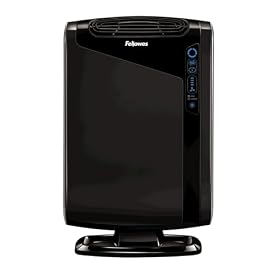
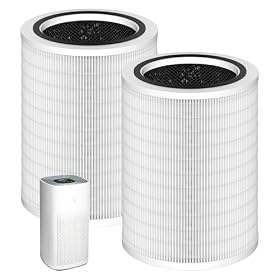
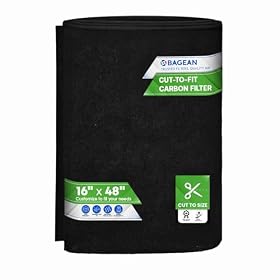
For a 400-square-foot room with an 8-foot ceiling, look for an air purifier with at least about 267 CFM of smoke CADR. A higher CADR can provide faster cleaning or compensate for high ceilings, open doors, smoke, or severe allergies.
A 400-square-foot room generally needs an air purifier with at least about 267 CFM of smoke CADR for typical 8-foot ceilings. That is based on the Association of Home Appliance Manufacturers (AHAM) sizing guideline of a smoke CADR equal to at least two-thirds of the room’s floor area. For faster cleaning, higher ceilings, open layouts, wildfire smoke, or serious allergy concerns, choosing a unit rated around 300 to 400 CFM or more is often more practical.
The key specification is CADR
CADR, or clean air delivery rate, measures how quickly an air purifier supplies filtered air. It is usually listed in cubic feet per minute (CFM) for three pollutants:
Smoke: The most useful rating for very fine particles, including much of the particulate matter in smoke.
Dust: A measure of larger airborne particles.
Pollen: Relevant to seasonal allergens and larger particles.
For a 400-square-foot room, compare the smoke CADR first. A purifier advertised for “400 square feet” may not perform as quickly as another purifier with a higher CADR, because manufacturers can use different room-size assumptions.
Minimum CADR calculation
Using the AHAM guideline:
400 square feet × 2/3 = about 267 CFM
Treat 267 CFM as a reasonable minimum target for a standard room, not necessarily the ideal maximum. A purifier rated closer to 300–400 CFM gives you more cleaning capacity and may let you run it at a quieter speed during normal use.
Adjust the size for ceiling height and room layout
Floor area alone does not describe how much air the purifier must clean. A 400-square-foot room with 10- or 12-foot ceilings contains more air than one with an 8-foot ceiling.
A useful calculation is:
Room volume = length × width × ceiling height
Air changes per hour = CADR × 60 ÷ room volume
For example, a 400-square-foot room with an 8-foot ceiling contains about 3,200 cubic feet of air. A 267-CFM purifier would provide roughly five air changes per hour under ideal conditions, before accounting for airflow losses, furniture, doors, and the difference between laboratory ratings and real placement.
Choose a larger-capacity purifier if:
The ceiling is higher than 8 feet.
The room connects to a hallway, kitchen, or other open area.
Doors usually remain open.
You are filtering wildfire smoke or heavy indoor particulate pollution.
Someone in the home has significant asthma or allergy sensitivity.
You want effective cleaning at a lower, quieter fan speed.
If the room is open to other spaces, calculate the combined area rather than sizing only for the section where the purifier sits.
Product prices and availability are accurate as of the date/time indicated and are subject to change. Any price and availability information displayed on Amazon.com at the time of purchase will apply to the purchase of this product.
What type of filter should it have?
For dust, pollen, pet dander, and fine particles, look for a purifier with a true HEPA filter or a clearly stated high-efficiency particle filter. HEPA filtration addresses particles; it does not remove every gas or odor.
An activated-carbon filter can help with odors and some gaseous pollutants. However, carbon performance depends on the amount and thickness of carbon, not merely whether the product includes a thin carbon-coated sheet. If odors or smoke gases are a major concern, compare the filter construction and replacement guidance rather than relying only on the word “carbon.”
A washable or permanent pre-filter can catch hair and larger dust before they reach the main filter. It does not replace the need for the primary particle filter.
Higher-capacity purifier for open layouts or smoke
Product prices and availability are accurate as of the date/time indicated and are subject to change. Any price and availability information displayed on Amazon.com at the time of purchase will apply to the purchase of this product.
Features that affect the buying decision
Noise and fan-speed control
A purifier only cleans air while it is running. Check whether the product lists noise levels at multiple fan speeds, not just in sleep mode. A high-CADR unit can be useful because you may be able to run it at a lower setting for routine use, then increase the speed when air quality worsens.
Replacement filter availability
Check the replacement filter price, replacement interval, and whether filters are readily available before buying the purifier. Filter life varies with fan speed, indoor dust, pets, smoke, and other conditions. A low purchase price can be less attractive if replacement cartridges are difficult to find or expensive.
Air-quality sensors
Particle sensors and automatic modes can adjust the fan when airborne particles change. They are convenient, but they do not substitute for adequate CADR. A sensor may not detect every odor or gas, and the purifier still needs to be correctly sized and positioned.
Placement
Place the purifier where air can enter and leave freely. Keep intake and exhaust openings away from walls, curtains, furniture, and clutter. Do not cover the unit or place it where a falling object, water, or excessive dust could create a hazard. Follow the manufacturer’s clearance and operating instructions.
Product prices and availability are accurate as of the date/time indicated and are subject to change. Any price and availability information displayed on Amazon.com at the time of purchase will apply to the purchase of this product.
Is a 200-CFM purifier enough for 400 square feet?
A 200-CFM purifier is below the usual 267-CFM target for a 400-square-foot room. It can still reduce airborne particles, particularly if used in a smaller enclosed section of the room, but it will clean the full space more slowly. It is a better fit when the actual enclosed area is smaller than 400 square feet or when the purifier is being used as supplemental filtration.
For a full 400-square-foot room, prioritize a smoke CADR of at least about 267 CFM. Consider more capacity if the room is open, ceilings are high, or the air problem is substantial.
Product prices and availability are accurate as of the date/time indicated and are subject to change. Any price and availability information displayed on Amazon.com at the time of purchase will apply to the purchase of this product.
One large purifier or two smaller units?
One properly sized purifier is usually simpler and may cost less to maintain. Two smaller units can make sense when:
The room has an awkward shape.
Airflow is blocked by walls or furniture.
You want filtration at opposite ends of the space.
You need to move one purifier between rooms.
Compare the combined CADR of two units, but also compare their total noise, energy use, and replacement-filter costs. Two advertised room-size ratings should not simply be added unless the CADR specifications support that conclusion.
Bottom line
For a typical enclosed 400-square-foot room with an 8-foot ceiling, choose an air purifier with a smoke CADR of at least about 267 CFM. A model in the 300–400 CFM range or higher provides a more useful margin for faster cleaning, open doors, high ceilings, smoke, pets, or allergies. Confirm the unit’s actual CADR, filter type, noise levels, room layout assumptions, and replacement-filter cost before buying.
FAQ
What CADR do I need for a 400-square-foot room?
Aim for at least about 267 CFM of smoke CADR for a typical enclosed room with an 8-foot ceiling. A rating around 300–400 CFM or higher provides more capacity for faster cleaning, high ceilings, open doors, smoke, or allergies.
Is a 400-square-foot room considered a large room for an air purifier?
It is a medium-to-large room for many portable air purifiers. Compare CADR rather than relying only on labels such as “large room,” because advertised coverage areas can use different assumptions.
Can I use a 200-CFM air purifier in a 400-square-foot room?
You can, but it will clean the space more slowly than a purifier meeting the roughly 267-CFM target. It may be suitable for a smaller enclosed area within the room or for supplemental filtration.
Should I buy an air purifier rated for more than 400 square feet?
Often, yes, if the room has high ceilings, open doorways, heavy smoke, pets, or significant allergy concerns. The important comparison is the unit’s CADR, especially its smoke CADR, rather than the advertised square-foot number alone.
Does a HEPA filter remove odors?
HEPA filtration removes particles but does not target most gases and odors. For odors, look for activated carbon, and compare the amount and construction of the carbon filter because a thin carbon layer may have limited capacity.