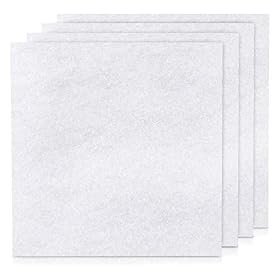
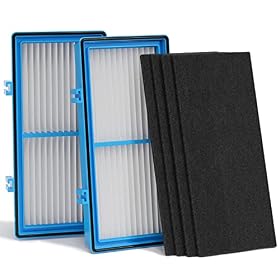
Replacement pre-filter foam can protect a room purifier’s main filter from dust, hair, and larger particles—but the wrong foam may restrict airflow or fit poorly. Learn what to measure and check before buying.
Replacement pre-filter foam for a room purifier should match the purifier’s filter compartment in length, width, thickness, and airflow resistance. Measure the original foam or the filter frame before buying, and confirm that the material is intended for air-cleaner pre-filtration—not generic craft foam or dense packing foam.
A foam pre-filter usually sits before the HEPA or other main filter. Its job is to catch larger debris such as hair, lint, dust clumps, and pet dander so the more expensive filter does not load as quickly. It is not a substitute for a HEPA filter and should not be expected to capture fine smoke, pollen, or microscopic particles on its own.
What to check before buying
Match the dimensions
Measure the original pre-filter or the opening where it sits. Record:
Length and width
Thickness
Whether the foam fits inside a frame, slides into a channel, or attaches to a grille
The location of any cutouts, corners, tabs, or retaining clips
If the replacement is too large, it may buckle or prevent the cover from closing. If it is too small, air can bypass the foam around the edges. A close fit is important because unfiltered air can reach the main filter through gaps.
Confirm the foam type
Look for foam described as an air-purifier, HVAC, appliance, or pre-filter material. The listing should identify the material and intended use when possible. Open-cell foam is commonly used for air filtration because it allows air to pass through while catching larger particles, but density and thickness vary.
Avoid choosing solely by color or appearance. Black foam, for example, may be a pre-filter, but color does not establish its filtration rating, airflow resistance, or compatibility.
Consider thickness and airflow
A thicker or denser foam is not automatically better. If it restricts airflow, the purifier may move less air, become louder, or trigger an airflow warning. Excessive restriction can also place more strain on the fan.
Use the original thickness as the starting point. If the manufacturer specifies a replacement part or foam grade, follow that guidance instead of substituting a visibly denser material. Do not stack multiple foam layers unless the purifier instructions specifically allow it.
Check whether it is washable
Washable foam can be convenient when the pre-filter collects pet hair and coarse dust. It must be fully dry before installation. Damp foam can promote odors or microbial growth and may damage the purifier if moisture reaches electrical components.
Some foam pre-filters are intended to be vacuumed or replaced rather than washed. Follow the purifier’s care instructions. Do not assume that every foam sheet is washable, even if it appears similar to the original.
Replacement foam versus a complete filter
A foam sheet is appropriate when the purifier’s pre-filter is a separate, removable layer and the rest of the filter assembly remains usable. Replacing only the foam may be economical when the frame is intact and the HEPA or carbon filter has not reached the end of its service life.
The foam is permanently bonded to the HEPA or carbon filter
The filter frame is cracked, warped, or no longer seals
The main filter is visibly loaded, damaged, or overdue for replacement
The purifier uses a proprietary multi-layer cartridge
You cannot reproduce the original shape or fit reliably
Replacing the foam alone does not restore exhausted HEPA or activated-carbon media. If the purifier still has weak airflow or poor odor control after a correctly fitted pre-filter is installed, the main cartridge may be the issue.
Product prices and availability are accurate as of the date/time indicated and are subject to change. Any price and availability information displayed on Amazon.com at the time of purchase will apply to the purchase of this product.
How to install replacement pre-filter foam
Unplug the purifier before opening the filter compartment.
Remove the old foam and note its orientation and attachment points.
Clean dust from the grille and filter frame with a vacuum or dry cloth.
Compare the replacement with the old piece before trimming it.
If trimming is necessary, use a sharp utility knife and cut on a stable surface away from your body.
Install the foam without folds, gaps, or excessive compression.
Reinstall the main filter and cover according to the purifier’s instructions.
Run the purifier briefly and check for unusual noise, warning lights, or weak airflow.
Do not use loose foam where it can contact the fan. Do not tape over intended air passages, and do not use adhesives that can release odors into the airflow unless the manufacturer permits them.
Product prices and availability are accurate as of the date/time indicated and are subject to change. Any price and availability information displayed on Amazon.com at the time of purchase will apply to the purchase of this product.
When a universal foam sheet makes sense
A universal sheet can work for a purifier with a simple, accessible pre-filter that can be cut to size. It is most suitable when the original foam is a flat rectangle and the filter compartment does not depend on molded edges or specialized clips.
A model-specific replacement is safer when the purifier has a shaped filter, a tight gasket, a sliding frame, a sensor-controlled airflow path, or a cartridge with multiple layers. The product description should identify compatible purifier models or provide exact dimensions. If it only gives a vague size such as “fits most room purifiers,” verify the measurements before ordering.
Product prices and availability are accurate as of the date/time indicated and are subject to change. Any price and availability information displayed on Amazon.com at the time of purchase will apply to the purchase of this product.
Troubleshooting after installation
The purifier sounds louder
Turn it off and unplug it. Check that the foam is not too thick, folded, installed backward, or pressed tightly against the intake grille. Compare it with the original thickness. A dense substitute can reduce airflow and increase fan noise.
Airflow is weak
Check for a clogged intake grille, an overloaded main filter, or foam that is too restrictive. Make sure the filter cover is fully seated and that no packaging film remains on the filter. If airflow remains weak with the foam removed briefly for diagnosis, reinstall the original filter arrangement and inspect or replace the main cartridge according to the manual.
Dust appears around the filter edges
Look for gaps between the foam and its frame. The foam may be undersized, compressed unevenly, or missing a retaining edge. Replace it with a closer-fitting piece rather than adding loose layers that could block airflow or move into the fan.
The purifier has an odor
Confirm that washable foam is completely dry and that no adhesive or chemical-smelling material was added. Carbon media may also be exhausted, while a dirty interior grille can retain odors. If the smell persists, stop using the purifier and consult the manufacturer, particularly if the odor resembles overheating or burning.
When to replace the purifier instead
A replacement foam insert is reasonable when the purifier is otherwise operating normally and compatible filter parts are available. Consider replacing the entire unit when the fan, controls, filter door, or housing is damaged; replacement cartridges are unavailable; or a correctly fitted filter does not resolve persistent airflow or electrical problems.
Disconnect the purifier if it sparks, overheats, trips a circuit, produces a burning smell, or makes a new grinding or rattling noise. Electrical repairs should follow the manufacturer’s instructions and, when needed, be handled by a qualified professional.
FAQ
Can I use any foam as a pre-filter for an air purifier?
No. Use foam intended for air filtration or approved by the purifier manufacturer. Generic craft, packing, or upholstery foam may restrict airflow, shed material, release odors, or fit poorly.
Can replacement pre-filter foam be cut to size?
Some flat universal foam sheets can be cut to size, but the finished piece must fit without gaps, folds, or excessive compression. A model-specific replacement is preferable for shaped frames, gaskets, clips, or proprietary filter cartridges.
How often should pre-filter foam be replaced?
Replace it when it becomes damaged, permanently compressed, difficult to clean, or too clogged to pass air normally. Cleaning intervals and replacement timing depend on the purifier’s instructions and household conditions such as pets, smoke, and construction dust.
Can I wash air-purifier pre-filter foam?
Only if the foam and purifier instructions allow washing. Rinse it as directed and let it dry completely before reinstalling it. Never operate the purifier with damp foam.