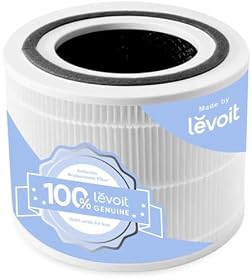
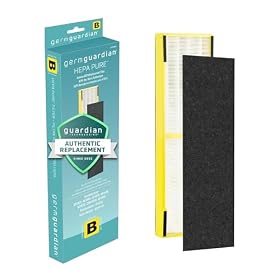
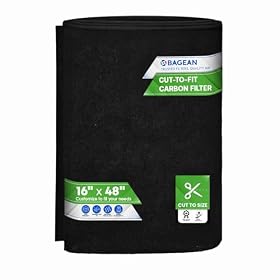
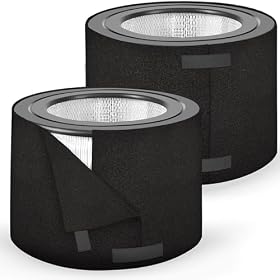
HEPA-only air purifiers are usually the simpler choice for dust, pollen, pet dander, and smoke particles. UV-equipped models may add another treatment step for some microorganisms, but UV does not replace effective particle filtration and can introduce safety and maintenance questions.
What do you need help with?
Open an answer, or tell us what we should cover next.
Answered in this guide
Choose between a UV and HEPA-only air purifier
Choose a HEPA-only purifier for common particles such as dust, pollen, pet dander, and smoke. Consider UV only as an enclosed supplemental feature when its added treatment and maintenance are worth the extra complexity.
Match purifier features to your air-quality problem
Prioritize HEPA filtration for dust, pollen, pet dander, and smoke particles. UV may support microorganism treatment, but it does not replace effective filtration and adequate airflow.
See whether UV makes an air purifier more effective
UV does not automatically improve overall purification. It can add a supplemental treatment step, but the purifier still needs enough airflow and an effective filter to remove airborne particles.
Compare clean-air delivery, room coverage, filter construction, replacement availability, noise, energy use, and UV-lamp maintenance. For particle removal, airflow and filtration matter more than simply having a UV lamp.
Choose between a portable purifier and a whole-house unitRead this guide →
Requests help us prioritize the next guide. No email required.
One anonymous request per topic.
A HEPA-only air purifier is usually the better starting point for dust, pollen, pet dander, and smoke particles because it physically captures airborne particles. A UV air purifier adds ultraviolet light intended to reduce certain microorganisms inside the unit, but its usefulness depends on the lamp design, exposure time, airflow, and the purifier's underlying filtration. UV does not remove dust or odors by itself.
What is the difference?
HEPA-only air purifiers
A HEPA filter traps airborne particles as air passes through it. Depending on the filter and the purifier's design, this can include:
Dust and fine dust
Pollen
Mold spores
Pet dander
Many smoke particles
Some airborne bacteria and other microorganisms carried on particles
HEPA filtration does not sterilize the room. It continuously removes particles from the air, so performance depends on airflow, room size, operating time, filter condition, and how well the unit prevents air from bypassing the filter.
UV air purifiers
A UV air purifier uses an ultraviolet lamp, commonly described as UV-C, inside the airflow path. The intended purpose is to damage or inactivate certain microorganisms that receive enough UV exposure.
UV light is not a substitute for filtration. It does not capture settled dust, pollen, pet hair, or smoke. It also may not be effective against airborne microorganisms if air moves past the lamp too quickly or if the lamp is not positioned and maintained correctly.
Many UV-equipped purifiers also include a HEPA filter and may include an activated-carbon filter. In that type of combination unit, the HEPA filter handles particles, carbon helps with some gases and odors, and UV is an additional treatment feature.
Which one is better for common air problems?
Air-quality concern
More important feature
Why
Dust and pollen
HEPA filtration
These are particles that a properly sized HEPA purifier can capture.
Pet dander
HEPA filtration
Dander is a particle problem; UV does not collect it.
Smoke particles
HEPA filtration plus adequate airflow
HEPA captures particles, while carbon may help with some smoke odors and gases.
Household odors
Activated carbon
UV is not an odor filter, and HEPA alone has limited odor-removal ability.
Mold spores in the air
HEPA filtration
A purifier can reduce airborne spores, but it will not fix moisture or mold growth.
Concern about airborne microorganisms
HEPA filtration first; UV may be an additional feature
UV effectiveness depends on dose, airflow, lamp condition, and internal design.
Allergies
HEPA filtration
Removing allergens from the air is the primary goal.
Product prices and availability are accurate as of the date/time indicated and are subject to change. Any price and availability information displayed on Amazon.com at the time of purchase will apply to the purchase of this product.
UV versus HEPA for allergies, pets, and smoke
For allergies, a HEPA-only model is generally the more direct choice. Look for a purifier with enough clean-air delivery for the room and operate it consistently. A UV lamp does not improve the unit's ability to capture pollen or dander unless the purifier also has an effective particle filter.
For pets, HEPA filtration is useful for dander and fine particles. A washable or accessible pre-filter can also help catch larger hair before it reaches the main filter. Activated carbon may help with some pet odors, but its capacity varies with the amount and quality of carbon.
For smoke, prioritize particle filtration and airflow. A carbon stage can help with some odors and gases, but a small carbon sheet should not be treated as equivalent to a substantial carbon bed. UV is not the main feature to prioritize for smoke.
Product prices and availability are accurate as of the date/time indicated and are subject to change. Any price and availability information displayed on Amazon.com at the time of purchase will apply to the purchase of this product.
Does UV make an air purifier more effective?
Not automatically. A UV lamp can be a useful supplemental feature, but the purifier still needs to move enough air through an effective filter. A unit with weak airflow, an undersized filter, or poor sealing may perform worse for everyday particle removal than a well-designed HEPA-only model.
UV performance is especially dependent on:
The type and intensity of the lamp
How long air remains exposed to the light
The distance between the lamp and airflow
Dust buildup on the lamp or surrounding surfaces
Whether the lamp output declines with age
Whether the airflow passes through the intended treatment area
Marketing language such as “UV,” “germicidal,” or “sanitizing” does not by itself establish how much treatment the air receives. Check the manufacturer's technical information, safety documentation, and maintenance instructions.
Product prices and availability are accurate as of the date/time indicated and are subject to change. Any price and availability information displayed on Amazon.com at the time of purchase will apply to the purchase of this product.
Safety considerations with UV models
Choose a design that keeps the UV source enclosed. Do not operate a purifier with a damaged housing, removed cover, or bypassed safety switch. Direct exposure to some ultraviolet light can harm eyes and skin.
Also check whether the model has an ozone-related certification or emissions information. Some air-cleaning technologies can produce ozone, which is an indoor irritant. Do not assume that every purifier marketed with UV or “air sanitizing” technology is ozone-free. If ozone is a concern, look for clear manufacturer documentation and an independent safety certification where available.
Never modify the lamp, disable an interlock, or substitute a bulb unless the manufacturer specifically allows that replacement. Unplug the purifier before opening any service panel, and follow the manual for lamp and filter replacement.
Product prices and availability are accurate as of the date/time indicated and are subject to change. Any price and availability information displayed on Amazon.com at the time of purchase will apply to the purchase of this product.
What specifications matter most?
Clean-air delivery and room coverage
For particle removal, airflow and filtration matter more than the presence of a UV lamp. Compare the purifier's clean-air delivery information with the room where it will operate. Manufacturer room-size claims may use different assumptions, so treat them as estimates rather than guarantees.
A purifier placed in a large open area may not perform like the same unit in a small closed bedroom. High ceilings, open doors, frequent outdoor-air infiltration, and indoor pollution sources can all increase the required capacity.
Filter construction and replacement availability
Confirm that replacement HEPA, pre-filter, and carbon components are available for the model. A purifier that cannot be maintained easily may become less effective or more expensive to keep running.
Check whether the pre-filter is washable or disposable, but do not wash a filter unless the manufacturer says it is washable. Washing a non-washable HEPA or carbon filter can damage it and reduce performance.
Noise and operating modes
A purifier needs to run often to continuously reduce airborne particles. A quieter unit may be easier to operate in a bedroom or office, while a higher fan setting may clean air faster but produce more noise. Sleep modes can reduce noise, but they may also reduce airflow.
Energy use and UV-lamp maintenance
A UV-equipped model may have a lamp that requires periodic replacement even if the purifier appears to be running normally. Ask how the lamp is monitored, how often it should be replaced, and whether replacement parts are readily available. If a lamp is optional, compare the cost and maintenance burden with the expected benefit.
When should you choose each type?
Choose a HEPA-only purifier when:
Your main problems are allergies, dust, pollen, pet dander, or smoke particles.
You want the simplest maintenance routine.
You prefer to avoid UV lamps or possible ozone concerns.
You want to focus your budget on filtration, airflow, and replacement filters.
You need a purifier for a bedroom, office, or other regularly occupied room.
Consider a UV-equipped purifier when:
It also has effective particle filtration and suitable airflow.
You specifically want an additional enclosed UV treatment stage.
The manufacturer provides clear information about lamp maintenance and safety.
The product has credible information about ozone emissions or certification.
You accept that UV will not replace cleaning, ventilation, moisture control, or regular filter replacement.
How to get better results from either type
Size the unit for the actual room. Use the manufacturer's airflow or clean-air information, not just a broad room-size label.
Place it with clear airflow. Keep intake and outlet openings away from walls, curtains, furniture, and clutter.
Run it consistently. Intermittent operation leaves more time for particles to accumulate.
Keep doors and windows in mind. Outdoor air, cooking, candles, fireplaces, and smoking can overwhelm a small purifier.
Maintain the pre-filter and main filter. Follow the cleaning and replacement schedule in the manual.
Address the source. Fix leaks and moisture problems, ventilate when appropriate, and remove visible mold through suitable remediation rather than relying on a purifier.
Do not treat either type as a substitute for medical or public-health guidance. A purifier can improve indoor air but cannot guarantee disease prevention.
Bottom line
For most homes, a correctly sized HEPA-only air purifier is the more straightforward choice for common airborne particles, allergies, pets, and smoke. A UV air purifier can be reasonable when UV is an enclosed supplemental feature backed by clear safety and maintenance information. However, the UV lamp should not persuade you to overlook the fundamentals: effective filtration, sufficient airflow, good sealing, available replacement filters, and regular operation.
FAQ
Is a UV air purifier better than a HEPA-only purifier?
Not necessarily. HEPA filtration is generally more important for dust, pollen, pet dander, and smoke particles. UV may provide an additional treatment step for some microorganisms, but its effectiveness depends on lamp intensity, airflow, exposure time, and maintenance.
Can UV air purifiers remove dust and allergies?
UV light does not capture dust or allergens. Those jobs require particle filtration, usually with a HEPA filter, along with enough airflow for the room.
Do HEPA air purifiers kill viruses and bacteria?
HEPA filters capture airborne particles, including some particles carrying microorganisms, but they are not the same as sterilization. Do not treat a HEPA purifier as a guarantee of disease prevention.
Can UV air purifiers produce ozone?
Some air-cleaning technologies can produce ozone, but this depends on the specific design. Check the manufacturer's emissions information and relevant independent safety certification rather than assuming all UV models are ozone-free.
Does a UV air purifier replace a HEPA filter?
No. UV light and HEPA filtration do different jobs. For dust, pollen, pet dander, and smoke particles, an effective particle filter and adequate airflow remain essential.
How often should a UV lamp or air purifier filter be replaced?
Follow the manufacturer's schedule. Replacement intervals vary by design, operating hours, air quality, and filter condition. Do not assume a lamp or filter remains fully effective indefinitely just because the purifier still turns on.